
How Tension Fuels Forward Head Posture: Unraveling the Hidden Link

How Tension Fuels Forward Head Posture

Tension and forward head posture (FHP) are more interconnected than you might think.

If you have been struggling with chronic neck pain, stiffness, or even tension headaches, chances are that tension might be at the root of your problem.

Forward head posture is one of the most common postural issues today, particularly for those glued to screens, but muscle tension from stress or repetitive habits is a key factor that is often overlooked.

In this article, we would uncover how tension contributes to FHP, dissect the mechanics behind it, and discuss scientifically backed ways to correct it.

In this Article:

  1. Understanding Forward Head Posture
  2. How Tension Builds and Sustains FHP
  3. The Science Behind Muscle Tension and Posture
  4. Emotional Stress: A Silent Contributor to Poor Posture
  5. Physical vs. Emotional Tension: Their Combined Impact on FHP
  6. Corrective Strategies for Tension-Induced FHP
  7. FAQs on Tension and Forward Head Slide
  8. Conclusion: The Critical Role of Tension in Forward Head Posture

A Quick Look at Text Neck

Forward head posture occurs when the head protrudes ahead of the shoulders rather than resting directly over them. In a neutral spine position, the ears should align with the shoulders.

For every inch your head moves forward, the pressure on your neck increases significantly—roughly 10 pounds of extra load on the cervical spine per inch.

This leads to musculoskeletal strain, particularly in the neck, upper back, and shoulders.

While FHP is often attributed to poor ergonomics or excessive screen use, the role of tension, especially chronic tension, is a significant yet underexplored factor in FHP.

Chronic tension tightens muscles like the trapezius, levator scapulae, and the suboccipital group, pulling the head forward into an unnatural position.

How Tension Builds and Sustains vulture neck posture

How Tension Builds and Sustains FHP?

Tension, whether physical or emotional, accumulates in specific muscle groups, particularly in the neck and upper shoulders.

This creates a snowball effect—tense muscles become shortened and stiff, which in turn disrupts the muscle balance necessary to keep the head properly aligned.

Over time, this muscle imbalance becomes habitual, manifesting as forward head posture.

One major contributor to this is stress.

When you are tense, your body reacts by tightening muscles. It is a natural response meant for short bursts of action (the fight-or-flight mechanism), but when tension becomes chronic, it impacts posture by holding the muscles in a semi-permanent state of contraction..

The Science Behind Muscle Tension and Posture

The mechanics of muscle tension reveal why it so easily translates into FHP. When muscles are under constant tension, they shorten and lose flexibility.

The suboccipital muscles, in particular, become overly tight during FHP. These muscles are located at the base of the skull and connect to the cervical spine, and their role in stabilizing the head is crucial.

Studies show that people with forward head posture have higher levels of tension in these muscles compared to those with neutral head posture.

An electromyographic (EMG) study noted that individuals with FHP exhibited up to 42% more muscle activation in the suboccipital muscles compared to people without postural issues.

Moreover, tension in the sternocleidomastoid (SCM) and upper trapezius muscles contributes to a forward pull of the head, forcing the deep neck flexors to weaken.

As these muscles weaken, they are less capable of supporting the head’s weight, exacerbating the forward tilt and increasing tension even further.

Emotional Stress is A Silent Contributor to Poor Posture

Emotional Stress: A Silent Contributor to Poor Posture

Emotional stress is a massive but silent contributor to FHP.

Research shows that emotional tension has a direct impact on muscle tension, often leading to poor posture.

When you are anxious or stressed, you may unconsciously shrug your shoulders or clench your jaw, which pulls the head forward. This repetitive stress-induced tension reinforces bad postural habits.

Emotional stress also activates the body’s fight-or-flight response, leading to muscle contractions even when no physical threat is present.

The upper trapezius muscles, in particular, are vulnerable to stress-related contractions, which further pull the head forward.

Physical vs. Emotional Tension: Their Combined Impact on FHP

Physical tension from poor ergonomics or repetitive tasks can combine with emotional tension, making FHP a complex postural issue to resolve.

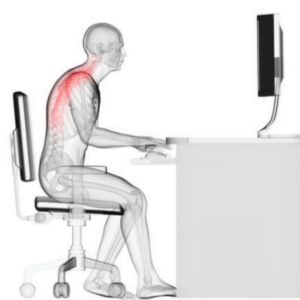
Prolonged use of screens or sitting in a slouched position causes physical tension, while emotional stress can lead to chronic tightening of the neck and shoulder muscles.

For example, someone who sits at a desk for hours may not only experience muscle fatigue from the physical strain but also deal with stress-related tension, compounding the problem.

The longer the posture remains unchecked, the more ingrained the muscle tension becomes, resulting in a chronic FHP.

Corrective Strategies for Tension-Induced FHP

Fortunately, forward head posture caused by tension is reversible.

Here is a scientifically backed approach:

Stretching Tight Muscles:

Focusing on stretching the tight muscles around the neck and upper back can reduce tension. Stretch the upper trapezius, sternocleidomastoid, and pectoral muscles regularly. A simple stretch like the doorway pec stretch can help release tension in the chest muscles, allowing the shoulders to retract and the head to move back into alignment.

Strengthening Weak Muscles:

Targeting weakened muscles is just as important. Strengthening the deep neck flexors with exercises like chin tucks can restore the balance between the front and back neck muscles, helping to pull the head back into place​.

Posture Awareness:

Frequent posture checks throughout the day can help reverse FHP. Set reminders to correct your posture by aligning your head over your shoulders and tucking your chin slightly.

Stress Management Techniques:

Since emotional stress plays a significant role in muscle tension, it is essential to incorporate relaxation techniques into your routine.

Practices like diaphragmatic breathing, yoga, and meditation can help reduce overall muscle tension​.

Ergonomic Adjustments:

Your work environment should support proper posture. Make sure your computer screen is at eye level and that your chair provides good lumbar support.

Adjusting the height of your desk and chair to ensure your arms are parallel to the floor can also reduce tension on the neck and shoulders.

FAQs on Tension & Forward Head Slide:
Q-1: How does muscle tension cause forward head posture and neck pain?

A-1: Muscle tension plays a major role in causing forward head posture (FHP) and neck pain. In the United States, posture-related issues are increasingly common, with surveys suggesting that over 60% of adults report frequent neck pain, often linked to poor posture.

When muscles like the upper trapezius and levator scapulae become tight, they pull the head forward out of its natural alignment. At the same time, weaker muscles in the deep neck flexors fail to stabilize the head properly. This imbalance creates a cycle where tension increases strain on the cervical spine.

Biomechanically, for every inch the head moves forward, the effective weight on the neck can increase by up to 10 pounds, leading to chronic discomfort. Over time, this tension not only causes pain but also reinforces poor posture habits, making correction more challenging without targeted intervention.

Q-2: What is the connection between stress tension and forward head posture alignment?

A-2: Stress and tension are closely linked to forward head posture alignment. In the U.S., studies indicate that over 70% of adults experience daily stress, which often manifests physically as muscle tightness in the neck and shoulders.

When the body is under stress, it naturally contracts muscles as part of the “fight or flight” response. This leads to sustained tension in the upper body, pulling the head forward and rounding the shoulders. Over time, this posture becomes habitual.

Work environments in states like California and New York, where desk jobs are common, have reported higher rates of stress-related posture issues. Addressing stress through relaxation techniques and posture awareness can significantly reduce tension and improve alignment.

Q-3: How do tight neck muscles lead to forward head posture problems?

A-3: Tight neck muscles restrict movement and pull the head out of its neutral position, leading to forward head posture. In the U.S., prolonged screen time—averaging over 7 hours per day for adults—is a major contributor to muscle tightness.

Muscles at the front of the neck shorten while those at the back become overstretched. This imbalance forces the head to jut forward, increasing strain on the spine. Tightness also limits the ability to correct posture voluntarily.

Over time, this condition can lead to stiffness, reduced mobility, and chronic pain. Stretching and strengthening exercises are essential to restore balance and prevent further deterioration.

Q-4: What is the role of muscle imbalance and tension in forward head posture development?

A-4: Muscle imbalance and tension are key factors in the development of forward head posture. In the U.S., sedentary lifestyles contribute significantly, with over 25% of adults reporting little to no physical activity.

When certain muscles become overactive and tight while others weaken, the body loses its natural alignment. For example, tight chest muscles and weak upper back muscles can pull the shoulders forward, indirectly affecting head position.

This imbalance creates a feedback loop where poor posture increases tension, and tension further worsens posture. Corrective exercises that target both flexibility and strength are essential for breaking this cycle and restoring proper alignment.

Q-5: How do stress and tension contribute to tech neck and poor posture?

A-5: Stress and tension significantly contribute to “tech neck,” a modern term for posture issues caused by excessive device use. In the U.S., smartphone usage exceeds 85% among adults, leading to prolonged periods of looking down at screens.

This position increases tension in the neck and shoulders, gradually pulling the head forward. Stress further amplifies this effect by tightening muscles, making it harder to maintain good posture.

Over time, tech neck can lead to chronic pain, headaches, and reduced mobility. Awareness and ergonomic adjustments, such as raising screens to eye level, can help reduce tension and prevent posture-related problems.

Q-6: Can chronic tension worsen forward head posture over time?

A-6: Yes, chronic tension can significantly worsen forward head posture over time. In the U.S., long-term desk work and high stress levels contribute to persistent muscle tightness, which reinforces poor posture habits.

When tension becomes chronic, muscles adapt to the shortened or lengthened positions, making it harder to return to proper alignment. This can lead to structural changes in the spine and increased discomfort.

Studies suggest that individuals with chronic neck tension are more likely to develop long-term postural issues, emphasizing the importance of early intervention. Regular stretching, strengthening, and stress management are key to preventing progression.

Q-7: How does cervical spine tension affect posture and head alignment?

A-7: Cervical spine tension directly impacts posture and head alignment by limiting mobility and increasing strain. In the U.S., neck pain is one of the most common musculoskeletal complaints, affecting millions of adults annually.

Tension in the cervical spine can cause stiffness and reduce the ability to maintain a neutral head position. This often results in the head drifting forward, increasing pressure on the spine.

Over time, this misalignment can lead to degenerative changes and chronic discomfort. Addressing cervical tension through targeted exercises and ergonomic adjustments is essential for maintaining healthy posture.

Q-8: What is the relationship between upper trapezius tension and forward head posture?

A-8: The upper trapezius muscle plays a significant role in forward head posture. In the U.S., many individuals experience tightness in this muscle due to prolonged sitting and stress.

When the upper trapezius becomes overactive, it elevates the shoulders and pulls the head forward. This creates additional strain on the neck and contributes to poor posture.

Research indicates that individuals with forward head posture often exhibit increased activity in the upper trapezius, highlighting its role in the condition. Stretching and strengthening exercises can help restore balance and reduce tension.

Q-9: How does prolonged screen time tension lead to forward head posture?

A-9: Prolonged screen time is a major contributor to forward head posture. In the U.S., adults spend an average of 6–8 hours daily on digital devices, often in poor ergonomic positions.

Looking down at screens increases tension in the neck and shoulders, gradually pulling the head forward. This repetitive strain leads to muscle imbalances and reinforces poor posture habits.

Over time, this can result in chronic pain and reduced mobility. Taking regular breaks, adjusting screen height, and practicing good posture can help mitigate these effects.

Q-10: How can you relieve tension to correct forward head posture naturally?

A-10: Relieving tension is essential for correcting forward head posture naturally. In the U.S., posture correction programs emphasize a combination of stretching, strengthening, and lifestyle changes.

Effective strategies include stretching tight muscles, strengthening weak ones, and improving ergonomics. For example, exercises targeting the deep neck flexors and upper back can help restore alignment.

Stress management techniques such as deep breathing and relaxation can also reduce muscle tension. Studies show that individuals who follow structured posture correction programs can see a 30–40% improvement in alignment within a few weeks, making these approaches highly effective.

Free Tip of the Day:

Tension is a hidden but powerful driver of forward head posture, affecting millions of people across the United States.

From stress and prolonged screen time to muscle imbalances and chronic tightness, multiple factors contribute to this growing issue.

With over 60% of adults experiencing neck pain and device usage at an all-time high, addressing tension has become essential for maintaining healthy posture.

The good news is that targeted strategies—such as stretching, strengthening, ergonomic adjustments, and stress management—can significantly improve alignment and reduce discomfort.

By understanding how tension fuels forward head posture, individuals can take proactive steps toward better posture, reduced pain, and long-term spinal health.


The Critical Role of Tension in Forward Head Posture

The Critical Role of Tension in Forward Head Posture

In summary, tension—whether physical or emotional—is a significant factor that fuels forward head posture.

By understanding how stress and tension affect muscle behavior and disrupt postural alignment, we can take proactive steps to correct the issue.

From managing emotional stress to stretching and strengthening targeted muscles, the road to correcting FHP is a multi-faceted approach that addresses the underlying causes of tension.

According to bestforwardheadposturefix.com research, “The key takeaway is that FHP is not just about poor ergonomics or screen time; it is also about how we carry tension in our bodies”.

Recognizing this link allows for more effective solutions to not just correct nerd neck but to prevent it from recurring.

References:

Scroll to Top