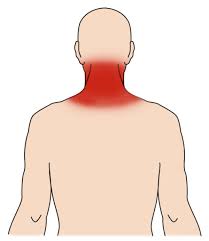
Have you ever experienced a dull ache between your shoulder blades after hours of hunching over a computer or staring at your phone?
Your neck might not be the only issue.
When your head moves forward, the muscles around your neck, shoulders, and upper back may have to adjust how they work to help stabilize your head and upper body.
Research has found differences in muscle activity associated with forward head posture, although the exact pattern varies depending on the movement and the individual.
This does not necessarily mean that everyone with forward head posture will experience neck or upper-back pain. Research has found an association between forward head posture and neck pain in adults, but the relationship is complex and does not establish that posture alone causes pain.
A systematic review and meta-analysis found that adults with neck pain tended to show greater forward head posture than asymptomatic adults, while also noting that factors such as age and differences between studies can affect the relationship.
Let’s take a closer look at what happens to the muscles between your neck and shoulders when your head stays forward for prolonged periods.
We’ll cover which upper-back muscles are involved, how prolonged screen use may contribute to muscle fatigue, what the research says about forward head posture and upper-back pain, and what you can do to reduce prolonged strain.
Article Contents
- What Is Forward Head Posture?
- Which Upper-Back Muscles Are Involved?
- How Does Forward Head Posture Strain the Upper Back?
- The Trapezius and Forward Head Posture
- The Rhomboids and Forward Head Posture
- The Levator Scapulae and Upper-Back Tension
- How Text Neck and Screen Use Can Contribute
- Can Forward Head Posture Cause Upper-Back Pain?
- Does Forward Head Posture Cause Muscle Imbalance?
- What Can You Do About Upper-Back Strain?
- When Should You See a Healthcare Professional?
- Frequently Asked Questions
- Bottom Line
- References
Medical Disclaimer:
This article’s information is purely educational.
Observing home posture and muscle strain information isn’t a substitute for a professional assessment by a qualified healthcare professional.
It can’t diagnose an underlying medical condition either. If you have chronic or severe pains, numbness, weakness, symptoms after an injury, or other worrying symptoms, it is best to consult an appropriate healthcare professional.
Read our detailed medical review process to learn more.
What Is Forward Head Posture?
Forward head posture (FHP) describes a head position in which the head is positioned farther forward relative to the trunk than is typical for that individual.
Because posture changes with sitting, standing, walking, smartphone use, and other activities, forward head posture is not necessarily a fixed position.
Researchers can also assess head and neck alignment using measurements such as the craniovertebral angle (CVA).
FHP is sometimes described informally as forward neck posture or “nerd neck.” “Text neck” is another commonly used term, although it is better understood as a description of posture and movement patterns associated with prolonged device use rather than a specific medical diagnosis.
If you’d like to know the additional signs that can accompany FHP, make sure to check our guide to forward head posture symptoms.
Which Upper-Back Muscles Are Involved?
There are a number of muscles around the neck, shoulder blades, and upper back that help control head, neck, and shoulder position.
Some of these muscles include:
Trapezius
This is a large muscle that stretches from the base of the skull and neck to the thoracic spine laterally and to the shoulder.
The trapezius is made up of different parts, all of which have different roles, one of which is to control shoulder blades movement. Other roles are to allow head and neck movement.
Most studies have shown that the activity levels of trapezius muscles were different in people with forward head posture. The levels differed depending on the task and specific muscles being evaluated.
What about the upper trapezius?
The upper trapezius is often discussed in relation to forward head posture because it helps coordinate the neck, shoulders, and shoulder blades.
However, research does not support a simple rule that everyone with FHP develops an overactive or “tight” upper trapezius. Muscle activation depends on the position, movement, task, and individual.
Rhomboids
The Rhomboids, major and minor, are located between the shoulder blades and the spinal column. Their primary function is to bring the shoulder blades together and stabilize them.
Head and upper body position changes can affect the way the muscles around the scapula interact.
The rhomboids also act with the trapezius and other scapular muscles to control shoulder-blade position and movement.
Head, neck, thoracic, and scapular posture are mechanically linked, and so alterations in one can affect the recruitment of the others.
However it should be noted that the findings do not support the assumption that every individual who develops forward head posture will have weak rhomboids.
The variations in activation are more complex than simple cases of tight versus weak.
Levator Scapulae
Levator scapulae is a muscle that connects the upper part of the cervical region with the scapula.
It plays a role in raising the scapula and moving it. It also helps in moving the neck.
Because of its position and role in neck and scapular movement, the levator scapulae can be involved in discomfort or increased muscle activity during certain prolonged neck and shoulder positions.
Upper Thoracic Extensors
The muscles around the upper thoracic region also play a part in posture, as they control trunk extension and neck extension.
When the head and upper trunk are held in a different position for an extended period, the activity demands placed on these muscles may change.
Forward head posture is not a single-muscle problem. It involves several muscles working together around the neck, shoulders, and upper back.
These muscles do not work independently. The neck, shoulder blades, thoracic spine, and upper-back muscles work together as part of a connected movement system.
As a result, a change in head position can affect how different muscles contribute to movement and stabilization.
However, this does not mean that forward head posture automatically makes one muscle “tight” and another “weak.” Muscle activity can vary depending on the task being performed, head and shoulder position, movement, pain, fatigue, and individual anatomy.
How Does Forward Head Posture Strain the Upper Back?
The easiest way to think about this problem is to consider position, mechanics, and muscle activity.
Your head does not float independently in space, but rather is constantly positioned by the muscles that move and stabilize the neck, as well as the rest of the torso.
Moving your head forward changes the relationship between your head, the cervical spine, shoulders, and the rest of your torso.
This can have an effect on the way these muscles work to stabilize the segment.
A systematic review of the literature on the effects of postures on head position concluded that altered positions could affect patterns of muscular activity, proprioception, breathing, and pain in the neck.
Here are several ways forward head posture may contribute to upper-back muscle strain, fatigue, or altered muscle activity:
The Muscles Have to Adapt to a Different Head Position
When the head moves forward, the muscles that control the head and neck do not always stop.
They might instead continue working in order to hold the new position.
Studies have found differences in the activity of certain muscles, including the trapezius, splenii, and sternocleidomastoid, in people with and without FHP during specific movements of the neck.
These findings help explain why prolonged forward head positioning may be associated with feelings of fatigue or discomfort in the neck and upper-back region in some people.
Prolonged Holding Can Increase Muscle Fatigue
The length of time of the position matters.
Looking down at your phone for a few seconds is very different from looking down at your phone for hours at a time, over and over again.
In one study done on adults with FHP, it was found that increased time spent using the smartphone was related to more fatigue in the upper trapezius and cervical erector spinae and increased self-reported pain.
This does not mean that there is a magic number where text neck starts after X amount of time, but that length and repetition may factor into it.
The Shoulder Blades May Be Part of the Picture
Head and neck posture do not exist apart from your shoulder and upper back.
Therefore, changes to your upper-body posture may also lead to changes in the position and movement of the scapulae, which could also mean the muscles around your shoulder blades have to work differently.
Studies have been done on people with FHP and rounded shoulders that look at the difference in upper extremity muscle activity when their head was placed in different positions.
That is also a reason why upper-back pain may come along with neck pain or radiate into the neck rather than just staying as a localized pain in the neck.
Prolonged Static Posture Can Feel Different From Normal Movement
Your body is not designed to remain in the same position.
Even a good pose can be uncomfortable if you hold it in place for an extended period of time without adjusting.
This is especially true for sitting at a desk or using a smartphone for too long at a time.
Rather than blaming muscle fatigue on one specific posture or angle, it is more useful to consider several factors together:
- how far forward your head is in the position,
- how long you are holding it,
- how often you repeat the movement,
- how much you are moving throughout the day,
- if other conditions such as pain or reduced mobility contribute to the issue
This provides a more realistic way to think about postural muscle fatigue.
The Trapezius and Forward Head Posture
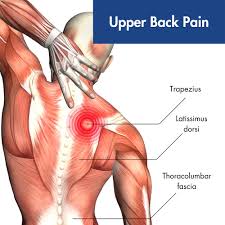
The trapezius muscle is often implicated in upper-back tension.
This is unsurprising, given that it plays a role in controlling the motion of the shoulder blades, in addition to participating in the coordination of the neck and upper torso.
Studies which have investigated the effects of FHP have noted alterations in the pattern of activation of the trapezius muscle.
For example, one study used high-density surface electromyography to examine the descending trapezius in young adults with habitual FHP and a control group. The researchers found differences in trapezius activation between the groups.
A separate study found differences in the activity of the middle trapezius between individuals with and without FHP when performing forward protraction and retraction of the neck.
That said, it is not accurate to claim that FHP universally results in the trapezius becoming “tight” in all individuals.
Muscle activity is influenced by:
- the exact head position
- the task being performed
- shoulder position
- movement
- individual anatomy
- pain and fatigue
So if your upper trapezius feels tense after prolonged computer or phone use, FHP may be one factor worth considering, but it is not necessarily the only explanation.
The Rhomboids and Forward Head Posture
The rhomboids are located between the shoulder blades and the spine.
Their main role is to help control the movement and position of the scapulae.
Because the neck, thoracic spine, shoulder blades, and surrounding muscles work together as part of the same movement system, changes in one area can influence how the others move and stabilize.
However, one of the most widespread mistakes about forward head posture is considering that the altered alignment causes the rhomboids to become “weak,” while the trapezius becomes “tight” or “overactive.”
The fact is that it depends on the movement pattern that is being analyzed, and there is no evidence that FHP makes the rhomboids weaker and the trapezius stronger in all cases.
A better way to think about it is that forward head posture can alter the way the muscles around the neck, shoulder blades, and upper back coordinate with one another.
The Levator Scapulae and Upper-Back Tension
The Levator Scapulae connects the upper part of the cervical spine to the upper part of the scapula.
It raises and controls the shoulder blade and has a role in neck movements.
When the neck and shoulders are held in the same position for too long, the levator scapulae may become more active or contribute to the feeling of tension in the upper shoulder and neck region.
Muscle tension does not necessarily mean that it is the source of the discomfort, though.
If you have recurring discomfort in the area around the upper shoulder or the neck, there may be several factors related to the condition, like seating, workload, movement patterns, muscle function, and other muscular or skeletal conditions.
How Text Neck and Screen Use Can Contribute
“Text neck” is a colloquial term commonly used when discussing neck or upper-body discomfort associated with prolonged smartphone or device use. The term generally refers to the combination of sustained device use, forward or downward head positioning, and limited movement rather than to a specific medical diagnosis.
It is not simply the phone itself that matters. How you use the device, how long you remain in one position, and how often you change position can all influence the amount of physical demand placed on your neck and upper back.
For more information, see our guide to how cellphone screen position affects neck posture.
Can Forward Head Posture Cause Upper-Back Pain?
Forward head posture may contribute to neck or upper-back discomfort in some people, but it is not accurate to say that FHP automatically causes pain.
Research has found an association between FHP and neck pain in adults, but the relationship is complex and other factors can contribute to symptoms. A systematic review and meta-analysis found that adults with neck pain tended to show greater FHP than asymptomatic adults, while also noting the influence of factors such as age and differences between studies.
Does Forward Head Posture Cause Upper-Back Muscle Imbalance?
The term ‘muscle imbalance’ can often appear in a discussion about postures. But the term can mean several different things depending on the context.
Muscles could be displaying differing activity levels in various head and shoulder positions, or differences in endurance, strength, or coordination of movement.
Studies have shown that FHP can be connected to altered muscle activity.
But it is not completely accurate to say that everyone with FHP will have the same exact imbalances.
Your activity patterns, general activity levels, pain, injuries, working surroundings, and much more can contribute to individual differences. That is why it is more useful to consider the entire movement pattern rather than automatically labeling one group of muscles as “tight” and another as “weak.”
How Can You Reduce Upper-Back Strain From Forward Head Posture?
The first step is not to try to force your head back or keep your head upright
Think about what causes you to be in that position in the first place.
For example:
Change Positions Frequently
If you are sitting for a prolonged time, try standing or moving around instead of sitting in the same position.
Check Your Workstation
Your computer monitor, keyboard, chair, and posture can all contribute to the problem.
See our page on computer screen position and forward head posture for more information.
Upper-Back Mobility and Strengthening
Thoracic mobility, strengthening, and neck or scapular control exercises may be useful components of a broader program for people with FHP, depending on their individual needs.
Neck and Scapular Stabilization Exercises
Therapeutic exercise, including exercises that target the neck and scapular region, has been studied as part of rehabilitation for FHP and neck pain. Systematic reviews have found improvements in measures such as craniovertebral angle and, in some studies, pain.
For example, you can learn more about chin-tuck exercises for forward head posture and scapular retraction exercises for fixing neck posture in our related guides.
Don’t chase a “perfect” posture
The goal is not to hold your head and shoulders in one rigid position all day.
A healthier approach is usually to develop comfortable movement habits, improve strength and mobility where appropriate, and to avoid spending excessive amounts of time in one position.
A Quick Recap of these Helpful Strategies:
- changing positions regularly rather than remaining at the computer for long uninterrupted periods
- adjusting your monitor and workstation so you are not repeatedly leaning forward to see the screen
- taking brief movement breaks during prolonged computer or phone use
- incorporating appropriate neck, upper-back, and scapular exercises
- building general strength and mobility according to your individual needs
- paying attention to whether a particular activity consistently triggers discomfort
When Should You See a Healthcare Professional?
Upper-back pain that comes back after a long day at the keyboard does not necessarily indicate that you have a severe medical condition.
Nevertheless, it is appropriate to seek professional help if the pain is persistent, severe, or worsening.
Consider seeking medical or physical therapy evaluation if you experience:
- persistent or significant neck or upper-back pain
- numbness or tingling
- unexplained weakness
- significant restriction of movement
- symptoms following an injury
- pain that repeatedly interferes with sleep
- balance or coordination problems
- symptoms that interfere with normal daily activities
A physical therapist can assess your posture, neck mobility, shoulder and upper-back function, and other factors. You can also learn more about how a physical therapist evaluates forward head posture.
If other conditions may be the cause, a physician can determine whether more testing is necessary.
Frequently Asked Questions:
How does forward head posture affect the upper back muscles?
Forward head posture alters the position of the head relative to the neck and trunk. The active musculature in the head, neck, and shoulder girdle can undergo adjustments in this posture, and these may become fatigued, resulting in pain or discomfort. Studies have associated forward head posture (FHP) with characteristic changes in the activation patterns of the trapezius and other cervical muscles.
Can forward head posture cause upper back discomfort?
Forward head posture can be one of several factors contributing to neck and upper back discomfort, but it is not the sole precipitating event. Studies have shown an association between FHP and neck pain in adults, although analysis of this relationship is complex.
Can forward head posture cause upper-back muscle strain?
Forward head posture may contribute to altered muscle activity, fatigue, or discomfort when the position is prolonged. However, having upper-back pain or discomfort does not necessarily mean that FHP is the cause. Other factors, including prolonged sitting, repetitive activities, workload, previous injuries, and other musculoskeletal conditions, can also contribute.
Why does my upper back hurt after sitting at a computer?
Upper-back discomfort after computer use can have several possible contributors. Sitting for long periods, limited movement, workstation setup, neck and shoulder positioning, and previous musculoskeletal problems may all play a role. Forward head posture may be one contributing factor, but it is not necessarily the only explanation.
What are the best upper-back exercises for forward head posture?
There is no single exercise that is most effective for everyone.
For example, depending on individual needs, a rehabilitation program can include exercises that focus on the neck control, scapular movement, strengthening of the upper-back muscles, and thoracic mobility.
Systematic reviews have found that therapeutic exercise can improve measures such as the craniovertebral angle and may also improve neck pain in people with forward head posture.
What muscles on the upper back are affected by forward head posture?
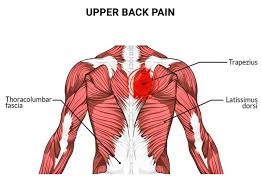
The trapezius, rhomboids, levator scapulae, and other muscles in the periscapular region can be active during FHP. The specific pattern depends on the individual, their postural and functional demands, activity, and other factors.
Does forward head posture cause tightness in the trapezius?
It can contribute to altered activation of this large upper back muscle, but forward head posture is not a condition that automatically creates tightness in the trapezius. There are studies showing a connection between FHP and changes in the activation of the trapezius.
Can text neck cause upper back muscle soreness?
Looking down at one’s phone can be a source of muscle fatigue in the neck and upper back. One study found that longer smartphone use was associated with greater muscle fatigue and pain in adults with FHP.
Why does my upper back hurt from the computer?
The causes for discomfort and muscle soreness in the upper back while sitting at the computer are multiple, and FHP could be one of them, but it is not the only possible reason.
Does doing exercises for the upper back help with forward head posture?
Exercises are a valid component of a comprehensive rehabilitation program for individuals with FHP.
A review article evaluated the role of therapeutic exercise in patients with forward head posture and concluded that it helped reduce the altered position of the head (CVA angle), as well as neck pain, in most studies.
Exercises for the upper back muscles have to be chosen based on individual needs and not assumed to be beneficial for everyone, because not all of the patterns are the same.
Should I squeeze my shoulder blades together to improve forward head posture?
It is generally not necessary to keep your shoulder blades squeezed together throughout the day. Holding them in one rigid position can create unnecessary tension and does not account for the normal movement of the shoulder blades.
A better approach is to develop comfortable movement habits, improve strength and mobility where appropriate, and adjust your workstation and daily activities so that you are not spending long periods in one position.
Can forward head posture reshape the shoulder blades?
FHP can be associated with changes in the position and movement of the shoulder blades. However, there is an element of individual variability in this pattern, as forward head posture also takes place in people with different postures of the thoracic spine and shoulder girdle.

Bottom Line
Forward head posture can contribute to altered muscle recruitment patterns in the neck, shoulders, and upper back. Altered muscle recruitment has been identified in individuals with forward head posture, and increased muscle fatigue has been associated with prolonged smartphone use in adults with forward head posture.
Forward head posture does not necessarily cause upper-back or neck pain, as individual factors can influence how a person responds to prolonged postural loading.
If you spend prolonged periods working at a computer or using a mobile device, focus less on achieving an “ideal” posture and more on staying active, varying your position regularly, adjusting your workspace, and developing appropriate strength and mobility.
References
- The Effect of Forward Head Posture on Muscle Activity During Neck Protraction and Retraction — PubMed
- Influence of Forward Head Posture on Muscle Activation Pattern of the Trapezius Pars Descendens Muscle in Young Adults — PubMed
- Effect of Duration of Smartphone Use on Muscle Fatigue and Pain Caused by Forward Head Posture in Adults — PubMed
- The Relationship Between Forward Head Posture and Neck Pain: A Systematic Review and Meta-Analysis — PubMed
- The Impact of the Position of the Head on the Functioning of the Human Body: A Systematic Review — PubMed
- Is Neck Pain Related to Sagittal Head and Neck Posture? A Systematic Review and Meta-Analysis — PubMed
- Effectiveness of Therapeutic Exercise on Forward Head Posture: A Systematic Review and Meta-Analysis — PubMed
- Effects of Scapular Stabilization Exercise on Neck Posture and Muscle Activation in Individuals With Neck Pain and Forward Head Posture — PubMed
- Why Trust Us?