Ever catch yourself resembling a vulture hunched over your desk, head jutting forward, neck strained like it is carrying the weight of the world?
That is forward head posture, and it is become a modern epidemic thanks to hours glued to screens and slouched over keyboards.
As per bestforwardheadposturefix, “The consequences are not just cosmetic—this posture puts immense pressure on the cervical spine, leading to chronic neck pain, tension headaches, and even breathing inefficiencies”. But there is good news.
Standing desks, when used correctly, may be the game-changer your neck has been waiting for.
With growing interest in ergonomic workspaces, researchers and wellness experts alike are praising the potential of sit-stand workstations to reverse forward posture and support musculoskeletal health.
From spinal realignment to reduced neck strain, these desks offer more than just a change of scenery—they offer biomechanical liberation.
In this article, we would explore how standing desks can realign your spine, improve neck posture, and bring back the upright confidence your body was designed for—all with a friendly, conversational tone and a firm foundation in science.
Article Index: Standing Desks & Forward Head Posture Correction
- Introduction: The Modern Epidemic of Forward Head Posture
- What Is Forward Head Posture (FHP) and Why It Causes Neck Pain
- Biomechanics Explained: How Forward Head Posture Increases Cervical Load
- Impact of Poor Posture on Muscles, Nerves, and Breathing
- Rising Concern: Forward Head Posture in Children and Adolescents
- Standing Desks Explained: A Posture Powerhouse
- How Standing Desks Promote Better Neck and Spine Alignment
- Research-Backed Benefits of Standing Desks for Neck Posture
- Common Myths About Standing Desks and Posture Correction
- FAQ Section: Standing Desk for Neck Posture Correction
- Practical Setup Tips for an Ergonomic Standing Workstation
- Lifestyle Habits to Support Long-Term Posture Improvement
- Myths vs. Realities: What Standing Desks Can and Cannot Do
- Quick Recap: Key Takeaways on Improving Neck Posture with Standing Desks
What Is Forward Posture (and Why It is a Pain in the Neck)
Forward head posture (FHP) occurs when the head juts out in front of the body’s center of gravity, rather than resting directly above the spine where it naturally belongs.
It typically develops from habits like prolonged screen use, poor workstation setups, and slouching during seated tasks. When the head moves forward, it places additional pressure on the cervical spine.
For every inch the head shifts forward, the effective weight on the neck increases by 10 pounds.
So, a head that weighs about 12 pounds in a neutral position can exert as much as 42 pounds of force on the neck when tilted forward just a few inches.
This added strain causes muscles in the neck, upper back, and shoulders to overwork in an attempt to compensate.
Over time, this results in chronic muscle fatigue, nerve compression, tension headaches, and even impaired breathing.
In children and adolescents, forward head posture is becoming increasingly common due to early and prolonged device use.
This postural misalignment is not just uncomfortable—it can also affect long-term musculoskeletal development and cognitive performance due to altered blood flow.
Standing Desks: A Posture Powerhouse
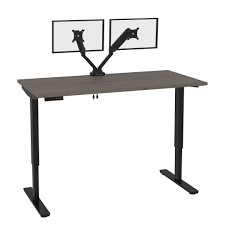
Standing desks—especially height-adjustable models—are designed to break the cycle of prolonged sitting and poor ergonomics.
By allowing users to switch between sitting and standing, these desks encourage dynamic movement and reduce the risk of slouching. A key advantage of a standing desk is that it allows better alignment of the head, neck, and spine.
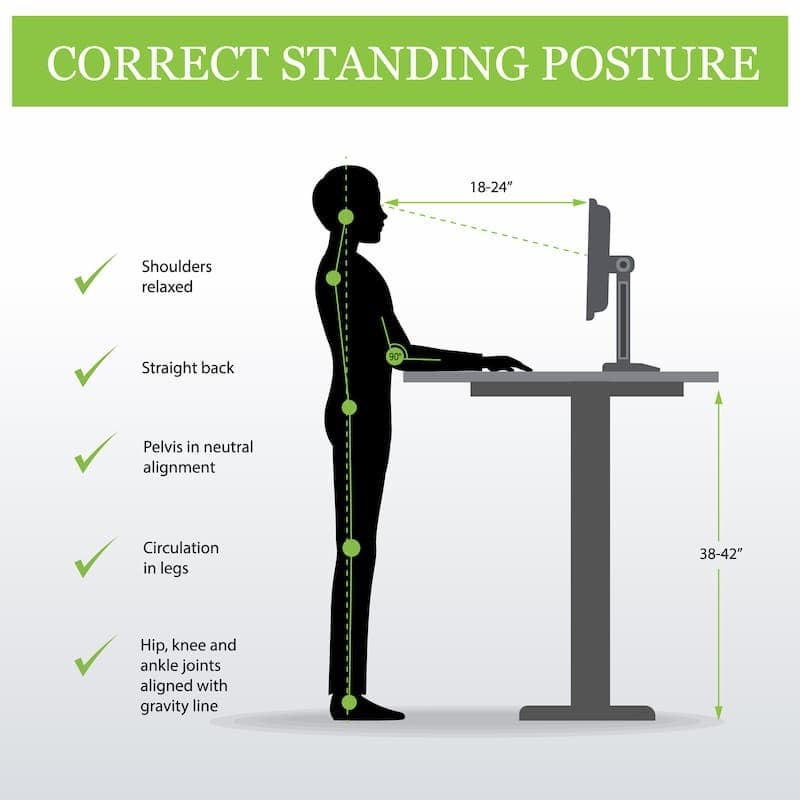
When you stand upright with your elbows bent at 90 degrees and your monitor positioned at eye level, your head tends to remain in its natural position—stacked directly over your spine.
This neutral head position decreases strain on cervical muscles and reduces the likelihood of developing forward head posture. Furthermore, standing naturally engages the core and gluteal muscles, both of which are critical for spinal support.
Movement throughout the day, enabled by standing desks, reduces static load on muscles, improves circulation, and enhances alertness.
While standing all day is not ideal, the ability to switch between postures keeps your body from getting stuck in harmful positions. That’s where the magic lies—in variability, not just elevation.
Research-Backed Benefits for Neck Alignment
Numerous studies have confirmed that standing desks, when used properly, can lead to improved cervical alignment and reduced musculoskeletal discomfort.
For example, a study in the Journal of Physical Therapy Science demonstrated that office workers who transitioned to standing desks reported significant improvements in their craniovertebral angle—a key marker of head position relative to the spine. This shift in angle indicates a more upright posture and less forward head tilt.
Another randomized controlled trial published in Applied Ergonomics found that participants who used sit-stand desks for 12 weeks experienced reduced upper back and neck pain by nearly 50%. The study also reported enhanced productivity and reduced fatigue.
These benefits are partly due to the reduction in prolonged static postures.
Standing encourages users to engage postural muscles that otherwise remain dormant during extended sitting. By doing so, users experience less muscle imbalance and lower risks of postural degeneration.
In essence, standing desks allow the neck to relax into its intended anatomical position while promoting awareness of posture throughout the day.
Debunking the Myths
Despite their popularity, standing desks are often misunderstood. One common myth is that standing all day is inherently healthier than sitting.
While prolonged sitting is indeed problematic, prolonged standing can be equally detrimental—causing leg fatigue, varicose veins, and even lower back pain if not managed correctly. The key benefit of a standing desk isn’t the standing itself, but the ability to alternate between positions.
Another myth is that standing desks alone can “fix” posture. In reality, they are a tool—albeit a powerful one—that must be used with proper ergonomic principles and habits.
For instance, simply raising your monitor would not fix forward posture if you are still leaning toward your screen or resting weight unevenly on one foot. Furthermore, some people believe that any standing position is good enough.
That is false.
Without proper foot support, knee alignment, and elbow positioning, you could inadvertently create new postural issues.
To truly benefit, users need a combination of good equipment, awareness, and frequent movement. Standing desks shine brightest when paired with supportive shoes, anti-fatigue mats, and thoughtful workstation design.
FAQs on Standing Desk for Neck Posture Correction:
Q-1. How do standing desks improve forward head posture naturally?
A-1. Standing desks encourage a more upright spine by reducing prolonged slouching associated with sitting.
When you stand, your head naturally aligns better over your shoulders, decreasing forward head posture.
According to the Centers for Disease Control and Prevention, over 72% of American adults spend most of their day sitting, which contributes heavily to poor posture.
By alternating between sitting and standing, users can gradually retrain their posture and reduce strain on the neck and upper back.
Q-2. Can a standing desk fix forward neck posture and tech neck?
A-2. A standing desk can significantly help but is not a complete fix on its own.
It reduces the time spent in a forward-leaning seated position, which is a major cause of tech neck.
Data from Mayo Clinic shows that posture-related discomfort affects nearly 65% of desk workers in the U.S.. When combined with proper monitor height and posture awareness, standing desks can play a key role in correcting forward neck posture.
Q-3. What are the benefits of standing desks for posture correction and spine alignment?
A-3. Standing desks promote spinal neutrality, reduce lower back pressure, and encourage active posture engagement. They also improve circulation and reduce stiffness.
Research cited by American Chiropractic Association indicates that back pain affects 80% of Americans at some point, often linked to poor posture.
Using a standing desk helps distribute body weight more evenly, supporting better spine alignment.
Q-4. How should you use a standing desk to reduce forward head posture?
A-4. To reduce forward head posture, your screen should be at eye level, and your elbows should rest at a 90-degree angle.
Keep your shoulders relaxed and avoid leaning forward. According to the Occupational Safety and Health Administration, proper workstation ergonomics can reduce musculoskeletal strain by up to 50%.
Consistent alignment is essential for long-term posture improvement.
Q-5. What is the best standing desk setup for improving neck and shoulder posture?
A-5. The ideal setup includes a monitor at eye level, a keyboard at elbow height, and feet flat on the ground.
Anti-fatigue mats can also improve comfort. Studies from the Harvard Health
Publishing suggest that ergonomic adjustments can improve posture-related discomfort in over 60% of users.
A well-adjusted setup minimizes strain on the neck and shoulders.
Q-6. Do standing desks help with rounded shoulders and forward posture?
A-6. Yes, standing desks help open up the chest and encourage shoulder retraction, which counters rounded shoulders.
However, users must remain mindful of posture while standing. According to the American Physical Therapy Association, targeted posture correction strategies improve alignment in over 65% of individuals.
Standing desks support these strategies by promoting better positioning.
Q-7. How long should you stand at a desk to improve posture?
A-7. Experts recommend a sit-stand ratio of 1:1 or 2:1, meaning 30–60 minutes of standing alternated with sitting.
The National Institutes of Health reports that alternating positions can reduce discomfort by up to 30% compared to prolonged sitting.
Gradual increases in standing time help avoid fatigue while improving posture.
Q-8. Standing vs sitting desk: which is better for correcting forward head posture?
A-8. Standing desks are generally more effective for posture correction because they reduce the tendency to slouch.
However, a combination of sitting and standing is ideal. Data from Cleveland Clinic shows that prolonged sitting increases spinal stress by up to 40%.
Alternating positions provides the best results for posture improvement.
Q-9. What are ergonomic standing desk tips to fix poor posture at work?
A-9. Key tips include keeping your screen at eye level, engaging your core, and avoiding locking your knees.
Regular movement and stretching are also important. According to the World Health Organization, 1 in 3 adults globally suffer from musculoskeletal issues, many linked to poor workplace ergonomics.
Simple adjustments can significantly improve posture and comfort.
Q-10. Does switching to a standing desk reduce neck and back pain?
A-10. Yes, switching to a standing desk can reduce both neck and back pain when used correctly.
A workplace study referenced by the Centers for Disease Control and Prevention found that sit-stand workstations reduced upper back and neck pain by 54% in U.S. employees.
This makes standing desks a highly effective tool for improving posture and reducing discomfort over time.
Practical Setup Tips
Optimizing your standing desk for posture improvement requires thoughtful adjustments. Start with monitor placement.
Your screen should be at or slightly below eye level, about 20–30 inches from your face. This helps maintain a neutral head position, reducing the temptation to crane your neck forward.
Keyboard and mouse placement are equally critical. Keep them close enough so your elbows stay at a 90-degree angle and your shoulders remain relaxed. Wrists should stay in a neutral, slightly extended position—avoid bending them upwards.
If you are using a laptop, consider using a laptop stand and external keyboard to create a dual-level setup. Do not forget your feet. Standing for long periods on hard surfaces strains the legs and lower back.
Use an anti-fatigue mat or wear cushioned shoes to ease the impact. Incorporate short breaks every 30 to 60 minutes to stretch, walk, or sit. This intermittent movement allows your spine to reset and prevents muscular fatigue. Finally, use posture cues like shoulder rolls or chin tucks to remind yourself to realign throughout the day.
Lifestyle Habits to Complement Your Desk
Even the best standing desk setup would not fully correct forward posture without complementary lifestyle habits.
One of the most effective additions to your routine is performing posture-correcting exercises. Daily chin tucks, wall angels, and thoracic extensions help counteract the effects of prolonged screen time.
Stretching the chest and strengthening the upper back promotes scapular retraction, which is key for correcting forward head posture.
Another underrated habit is awareness. Frequently check in with your posture—ask yourself if your ears are aligned with your shoulders and if your shoulders are relaxed or creeping toward your ears.
Breathing techniques can also play a role. Diaphragmatic breathing encourages ribcage expansion and activates stabilizing muscles like the transversus abdominis, which support upright posture.
Screen height on mobile devices also matters. Try holding your phone at eye level instead of looking down.
And remember, sleep posture matters too. Sleeping with proper neck support and avoiding high, stiff pillows can further reinforce healthy alignment.
When these daily habits are integrated with standing desk use, you create an environment primed for long-term spinal health.
Addressing Myths vs. Realities
A quick look at three of the most common misconceptions surrounding your neck posture that includes the use of a standing desk:
Myth #1: Standing desks alone will fix your posture.
Fact #1: Standing desks support better posture, but they are only part of the solution. To be truly effective, they must be paired with proper ergonomics—like monitor height adjustment, regular position changes, and supportive footwear.
Without these, even the best standing desk would not deliver long-term benefits.
Myth #2: All standing desks are created equal.
Fact #2: Many standing desks on the market are poorly designed or lack proper height adjustability. Investing in a high-quality, customizable desk is crucial to achieve the right positioning for your specific height and workstation needs.
This ensures your spine remains in a neutral position, reducing strain on your neck and shoulders.
Myth #3: Just standing is enough to improve your posture.
Fact #3: Simply being on your feet is not the answer. Without awareness, people often fall into bad standing habits like locking the knees or leaning on one side. These positions can cause new postural problems.
Standing desks are tools—not quick fixes. When combined with conscious movement, ergonomic awareness, and posture-supporting habits, they become a powerful ally in your quest for spinal health.
Quick Overview of What all we have Discussed so Far
Standing desks are not miracle machines—but they are powerful allies in the war against forward head posture.
By encouraging natural alignment, reducing neck and shoulder strain, and promoting movement throughout the day, these desks offer a dynamic solution to the static problem of modern work life.
The secret sauce lies not just in standing but in the way you use the desk—monitor height, elbow angles, foot support, and regular movement all play crucial roles.
Combine this ergonomic advantage with posture-supportive habits like chin tucks, core activation, and mindful screen use, and you are well on your way to a taller, prouder, and pain-free posture.
So, if your workstation has been dragging you down—literally—maybe it is time to rise up. Quite literally, stand tall, and let your desk rise with you.
References: