Does forward head posture affect breathing? Learn how posture may affect breathing mechanics and lung function, what research shows, and when to consult a doctor.
Forward head posture (FHP) is a posture in which the head is positioned forward in relation to the trunk when viewed from the side. It is often associated with prolonged computer or smartphone use.
But can forward head posture actually affect breathing?
Yes. Studies suggest that forward head posture may be associated with changes in measures of respiratory function, including FVC (forced vital capacity) and FEV1 (forced expiratory volume in one second).
But it does NOT necessarily mean that every person who has a forward head posture will experience decreased oxygen in the blood, chronic lack of oxygen, or respiratory diseases.
It is not that simple.
Your head and neck, along with your rib cage, thoracic (upper back), and breathing muscles, form a coordinated system that allows you to breathe. Changes in head and body posture may influence how these structures work together during breathing.
This article explains what the research actually shows, what it does not show, and what you should do if you experience breathing difficulty.
Quick Answer: Does Forward Head Posture Affect Breathing?
Forward head posture may contribute to altered breathing mechanics and, by extension, lung-function measurements if the posture is sustained or significant.
Research has reported associations between forward head posture and measures including:
- Forced vital capacity (FVC)
- Forced expiratory volume in one second (FEV1)
- Other dynamic lung-volume measurements
- Thoracic movement
- Respiratory muscle activity
However, these findings should be interpreted carefully.
Lung-function measurements do not, by themselves, establish that a person has reduced blood oxygenation or that forward head posture is causing a respiratory disease.
For most, the question is not a matter of having a particular posture measurement but rather whether their posture contributes to symptoms or limited range of motion during activities or tasks of daily living.
Table of Contents
- Quick Answer: Does Forward Head Posture Affect Breathing?
- What Is Forward Head Posture?
- How Can Posture Affect Breathing Mechanics?
- What Does the Research Say About Forward Head Posture and Lung Function?
- What Does the 2024 Systematic Review Show?
- Does Forward Head Posture Lower Blood Oxygen?
- Can Poor Posture Make Breathing Feel Difficult?
- Does Sitting Slouched Affect Breathing?
- Can Forward Head Posture Affect the Diaphragm?
- Can Correcting Forward Head Posture Improve Breathing?
- What Can You Do If You Think Your Posture Affects Your Breathing?
- When Should You See a Doctor About Breathing Problems?
- Frequently Asked Questions
- Bottom Line
- References
- Why Trust Us
- Medical Disclaimer
What Is Forward Head Posture?
Forward head posture is a term used when a person holds their head forward in relation to the trunk.
It may be associated with adaptations in the cervical spine, upper back, shoulders, and thoracic posture.
Forward head posture can become more noticeable during activities such as:
- Working at a computer
- Looking down at a smartphone
- Reading
- Driving
- Sitting for long periods
- Performing tasks that require sustained attention in one position
Importantly, there is no single posture that every person should maintain throughout the day.
Because humans are constantly on the move, spending long periods in one position may be more relevant than occasionally adopting that position.
How Can Posture Affect Breathing Mechanics?
Adjusting your posture can affect the relationships between the head, neck, thoracic spine, rib cage, and respiratory muscles.
The posture can affect the movement of these elements.
Different positioning of the upper body is associated with specific mechanical changes.
Changes in Thoracic Movement
The thoracic spine and rib cage must move as a person breathes.
Research into forward head posture has found changes in thoracic movement and respiratory function compared with a more neutral head position.
An experimental study in healthy adults found altered upper- and lower-thoracic function and reduced measures of a number of respiratory function variables with forward head posture.
This does not mean that every person with forward head posture has altered pulmonary function.
It suggests that head posture may influence the mechanics of breathing.
Changes in Respiratory Muscle Activity
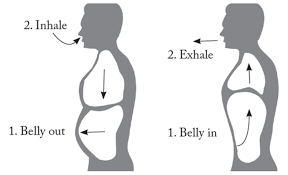
Breathing utilizes the diaphragm as well as muscles in the chest, abdomen, and neck.
Some studies have investigated whether forward head posture affects the work of the accessory muscles of respiration.
A small 2016 study that compared individuals with normal and forward head posture found differences in their forced vital capacity, forced expiratory volume in one second, and respiratory muscle activity.
Due to the small sample size of 26 participants, these findings cannot be considered definitive proof that forward head posture causes clinically significant breathing abnormalities in all cases.
However, they do demonstrate an association between posture and lung function.
Changes in Rib-Cage Position
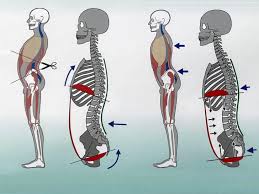
A prolonged slouched or forward-head position can cause altered posture of the upper body and a displacement of the rib cage.
This could affect the free movement of the chest and the lower thorax during breathing.
It is one reason why a person may feel that taking a deep breath is easier after they stop slouching.
But it does not necessarily mean that their blood oxygenation has improved.
What Does the Research Say About Forward Head Posture and Lung Function?
This is where the distinction between evidence and exaggerated claims becomes important.
Several relatively small studies have investigated the relationship between FHP and respiratory function.
A 2016 study found that participants who presented with forward head posture had lower forced vital capacity and forced expiratory volume in one second than the comparison group.
Another study that enrolled young adults found correlations between the craniovertebral angle and several measures of respiratory function, including vital capacity, FVC, FEV1, peak expiratory flow, and maximal voluntary ventilation.
Studies have also investigated the effects of forward head posture on thoracic shape and respiratory function. In one study of healthy men, several spirometric measurements were lower when participants were instructed to assume a forward head position compared with a neutral head position.
These findings are interesting, but the individual studies were relatively small.
What Does the 2024 Systematic Review Show?
A 2024 systematic review studied the link between forward head posture and dynamic lung volumes in young adults.
The review included 6 studies – 4 were comparison studies and 2 were correlation studies. Participants numbered 115 across the comparison studies.
The researchers identified decreases in FVC and FEV1 across the comparison studies and noted positive relationships between the craniovertebral angle and dynamic pulmonary volumes.
However, there were only a small number of studies included.
Overall, the evidence suggests a potential relationship between forward head posture and pulmonary function, but it does not show that forward head posture causes chronic oxygen deficiency or respiratory disease.
Does Forward Head Posture Lower Blood Oxygen?
Not necessarily.
This is an important distinction to make.
There’s a difference between:
- breathing mechanics
- lung volumes
- pulmonary function test results
- oxygen saturation
- oxygen delivery to tissues
For example, a study might find that a certain posture is associated with reduced FVC (forced vital capacity).
But that doesn’t necessarily mean that the person’s blood oxygen saturation is reduced.
The fact that you feel it’s harder to take a deep breath while slouching doesn’t mean that your body is deprived of oxygen.
If you’re having symptoms like shortness of breath, abnormally low oxygen saturation, chest pain, blueish lips or skin, fainting, or any other troubling symptoms, these aren’t things to brush off as “just” forward head posture.
Can Poor Posture Make Breathing Feel Difficult?
It can.
Some people find that breathing feels different when they are slouched rather than sitting or standing more upright.
One possible explanation is mechanical.
Adjusting your posture can affect the relationships between the head, neck, thoracic spine, rib cage, and respiratory muscles
As such, you may find that:
- A deep breath is easier to take in one posture than another
- Your chest feels more constricted in a slouched position
- You unconsciously adjust your posture when taking a deep breath
- That sitting for long periods of time makes it harder to breathe comfortably
However, subjective difficulty with breathing can have many potential explanations.
Anxiety, asthma, infections, cardiovascular problems, deconditioning, anemia, and other medical conditions can also cause shortness of breath or difficulty taking deep breaths.
As such, individuals should not automatically assume that breathing difficulties are caused by poor posture, especially if the difficulties persist or appear out of nowhere.
Does Sitting Slouched Affect Breathing?
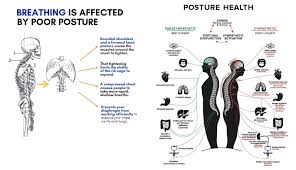
A slouched sitting position may affect the position and movement of the trunk and rib cage.
Studies on posture and pulmonary function indicate that body position can influence certain measures of respiratory function.
This is especially pertinent given the number of hours many of us spend sitting at the computer.
Rather than focusing on maintaining a rigid “perfect posture”, you might try:
- changing positions,
- taking regular breaks,
- adjusting your workspace,
- keeping commonly used items within easy reach,
- avoiding prolonged periods in one position
- incorporating appropriate physical activity
For more information, see our guide to positioning your computer screen to reduce forward head posture.
Can Forward Head Posture Affect the Diaphragm?
The diaphragm is the major muscle of inspiration.
It is influenced by the posture of the trunk, rib cage and abdominal contents.
Therefore, postural relationships may influence the mechanical environment in which the diaphragm works.
However, it would not be correct to say that forward head posture simply “compresses the diaphragm” or inhibits its ability to function.
In fact, the research cited is better interpreted as saying that posture can influence respiratory mechanics and measurements of respiratory function.
This is a more accurate interpretation than suggesting that forward head posture causes diaphragm dysfunction.
Can Correcting Forward Head Posture Improve Breathing?
Possibly, but the evidence is limited and cannot guarantee a specific enhancement of the breathing function or oxygen level in all patients.
The literature search included studies concerned with the effects of exercise and breathing interventions on individuals with forward head posture and neck pain.
A 2025 systematic review and meta-analysis of five randomized controlled trials involving 204 participants found that breathing interventions improved the craniovertebral angle moderately, but the overall quality of the evidence was very low due to the substantial heterogeneity and limitations in the available studies.
This implies that breathing interventions might be considered by practitioners working with patients with forward head postures during the functional recovery stage, but they should not be specifically advocated for general oxygenation or normalization of breathing.
The same principle applies to posture exercises: they are most appropriate when they address an individual’s specific movement, strength, or motor-control limitations.
What Can You Do If You Think Your Posture Affects Your Breathing?
You don’t have to sit rigidly upright all the time. Try instead to make changes in factors that you can control.
Here are a few suggestions:
Change Positions Frequently
Don’t sit in the same position for too long.
Stand up and stretch, or change positions every hour or so.
Think About Your Workstation
If you work regularly at a computer, your desk setup can play a large role in forward head posture.
Your monitor, keyboard, and mouse placement; your chair; and even your desk height might contribute to the way that you hold your head and upper back.
Our guide to ergonomics for forward head posture can help you think about what might be contributing.
Follow an Appropriate Exercise Program
Depending on your needs, an appropriate exercise program might include exercises to improve your cervical motor control, strengthen your upper back, work on your shoulder mobility, or work on other areas.
You might want to review our guide to forward head posture exercises for more information.
Think About Breathing Exercises
Breathing exercises might be a part of some rehab programs, particularly if you’re working with a clinician to address breathing pattern disorders or issues with your movement.
On the other hand, breathing exercises shouldn’t be used as a substitute for medical care if you have sudden or mysterious shortness of breath.
Work On Your Entire Movement Pattern
Forward head posture rarely occurs in isolation.
A physical therapist might work with you on range of motion and movement patterns in your neck, upper back, and shoulders, as well as your muscle strength and endurance.
They might also look at your work and home setup.
If you are experiencing persistent symptoms, you can learn more about how a physical therapist evaluates forward head posture.
When Should You See a Doctor About Breathing Problems?
Do not assume that breathing problems are related to posture.
If you are experiencing any of the following symptoms, you should get medical evaluation:
- new or unexplained difficulty breathing
- worsening shortness of breath
- chest pain or tightness
- fainting or near fainting
- bluish lips or skin
- wheezing or other abnormal breathing sounds
- severe or sudden breathing difficulty
- shortness of breath at rest
- shortness of breath that limits your usual activities
These symptoms can have numerous causes, some of which require medical evaluation.
If you are experiencing neck pain or decreased motion in the neck or other musculoskeletal symptoms or signs, a physical therapist could help address those.
Frequently Asked Questions
Does posture affect breathing?
Yes. Body position can affect the mechanics of breathing. Studies have found associations between forward head posture and measures such as FVC and FEV1. However, this does not necessarily mean that poor posture causes reduced blood oxygen levels.
Can forward head posture cause shortness of breath?
Forward head posture may affect breathing mechanics, but it is not possible to conclude that posture alone is causing shortness of breath. Breathing symptoms can have many different causes.
Does slouching reduce lung capacity?
Research suggests that slouched or forward-head positions may affect some measures of lung function, but the evidence should not be interpreted as showing that regular poor posture causes lung disease.
Can forward head posture reduce oxygen levels?
Current research does not establish that ordinary forward head posture causes a significant reduction in blood oxygen levels. Changes in pulmonary-function measurements are not equivalent to changes in oxygen saturation.
Can correcting your posture help with breathing?
Improving posture may make breathing feel more comfortable for some people and may influence breathing mechanics. However, this does not mean that posture correction will resolve an oxygen-level problem.
Does forward head posture affect the diaphragm?
Forward head posture may influence the mechanics of breathing, but the available evidence does not justify saying that it causes diaphragm dysfunction.
Can bad posture cause shallow breathing?
Forward head posture may be associated with changes in breathing patterns, including shallower breathing in some circumstances. However, shallow breathing can have many possible causes.
Should I see a physical therapist for my forward head posture?
If your forward head posture is accompanied by neck discomfort, restricted range of motion, or difficulty with everyday activities, a physical therapist may be able to help assess the contributing movement and functional factors.
The assessment can help determine whether exercises or other interventions are appropriate for your individual needs.
Bottom Line
Forward head posture can affect breathing mechanics and may be associated with changes in some measures of pulmonary function.
Studies have reported diminished values of forced vital capacity and FEV1, and a 2024 systematic review found decreased dynamic lung volumes were reported in multiple studies of forward head posture in young adults.
However, this evidence should not be overblown.
Forward head posture does not necessarily imply that your blood oxygen is low, that you suffer from chronic oxygen deficiency, or that you even have a respiratory disease.
If you feel that your breathing is different in certain postures, adjusting your posture is reasonable. Appropriate exercise and ergonomic adjustments to your workstation may help address relevant musculoskeletal factors.
However, persistent severe or unexplained difficulties in breathing require an examination by a medical professional.
References:
- 2016 FHP/respiratory-function study
PubMed - 2018 FHP/respiratory-muscle study
PubMed - 2024 systematic review
Springer Nature - 2025 systematic review and meta-analysis
PMC