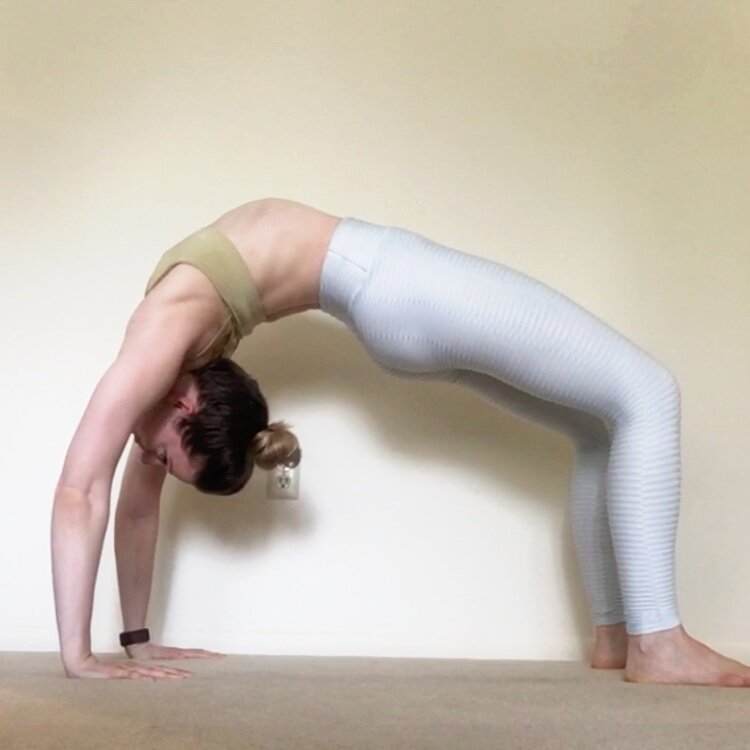
A visible bump at the base of the neck can have several possible causes.
It may be associated with postural changes, a rounded upper back, changes in the spine or an accumulation of fatty tissue known as a dorsocervical fat pad.
Because these causes are different, the appropriate approach depends on what is responsible for the prominence.
Bridge Pose may be a useful addition to a general exercise routine. It works the gluteal muscles, hamstrings and muscles involved in trunk stability. However, there is insufficient evidence that practising Bridge Pose alone can remove a neck hump, reduce a dorsocervical fat pad or reverse a structural spinal curve.
In this article, we will explain what a neck hump may indicate, which muscles Bridge Pose works, how to perform the exercise safely and when to seek medical advice.
Article Index
- What Is a Neck Hump?
- Neck Hump vs Buffalo Hump vs Dowager’s Hump
- What Causes a Neck Hump?
- Can Bridge Pose Help a Neck Hump?
- What Muscles Does Bridge Pose Work?
- How to Perform Bridge Pose Correctly
- Common Bridge Pose Mistakes
- Other Exercises and Habits That May Support Better Posture
- When Should You Seek Medical Advice?
- Frequently Asked Questions
- Bottom Line
- References
What Is a Neck Hump?
A neck hump is a general term used to describe a noticeable prominence around the junction of the neck and upper back. It is not a specific medical diagnosis.
The appearance may be associated with different conditions, including:
- Postural changes: A forward head position or rounded upper back can make the area around the base of the neck appear more prominent.
- Kyphosis: An excessive forward curve of the upper spine can produce a rounded-back appearance.
- Dorsocervical fat pad: A collection of fatty tissue at the back of the neck can create a visible lump.
These are very different causes. The prominence could be due to your posture, spinal curvature or fat. Each cause will affect different tissues and may need to be managed differently.
If you are also experiencing a forward head position, you can learn more about the common signs in our guide to Forward Head Posture Symptoms.
Neck Hump vs Buffalo Hump vs Dowager’s Hump
The phrases neck hump, buffalo hump and dowager’s hump are often used interchangeably. However there are key differences to be aware of.
Buffalo hump
A buffalo hump is a commonly used term for a dorsocervical fat pad, which is an accumulation of fatty tissue at the back of the neck, near the junction with the upper back.
Possible causes include elevated cortisol levels, long-term use of certain corticosteroid medicines, some medical treatments and conditions that affect fat distribution. Obesity may also contribute in some individuals.
While exercising can help your overall health and weight, Bridge Pose cannot specifically target fat loss in the back of the neck. If you have an unexplained fat pad you should consult a healthcare professional. MedlinePlus explains the possible causes of a dorsocervical fat pad and why identifying the underlying cause is important.
Dowager’s hump
Dowager’s hump is a commonly used term for a pronounced rounding of the upper back, often associated with kyphosis. Kyphosis describes an excessive forward curvature of the upper spine.
Some forms of kyphosis are related to posture, while others result from structural changes to the vertebrae. Osteoporosis-related compression fractures can contribute to an increased forward curvature of the spine.
Posture-related prominence
If someone sits or stands with their head forwards and shoulders rounded regularly they may show a more prominent curve between their neck and upper back.
Improving posture habits, movement patterns and the strength of relevant muscles may help some individuals improve their alignment and reduce discomfort. However, you should not automatically assume that a prominence is due to poor posture.
The NHS explains that kyphosis can have postural or structural causes, and that treatment depends on its type and severity. Read the NHS guide to kyphosis for further information
Read the NHS guide to kyphosis.
What Causes a Neck Hump?
The appearance of a neck hump can be associated with several factors.
Forward head posture and rounded shoulders
When the head is habitually positioned forwards, the muscles of the neck and upper back may adapt to help support it.
Prolonged desk work, looking down at a phone and a poorly arranged workstation may encourage sustained postures that contribute to discomfort and postural changes. However, not all neck humps are caused by these habits.
For practical workstation advice, see our guide to adjusting computer screen position for forward head posture.
Kyphosis and spinal changes
Kyphosis is an excessive forward curvature of the upper spine. It may be postural or associated with structural conditions, age-related changes, injury or osteoporosis.
If the curve is structural and involves changes to the shape of the vertebrae, it may not be reversible simply by changing your exercise routine.
Dorsocervical fat accumulation
There are many reasons why a dorsocervical fat pad can form, such as some medications, an over-production of the cortisol hormone and diseases which affect fat distribution.
If you spot any new or unexplained tissue build up at the back of your neck, don’t automatically assume it’s caused by bad posture or being overweight.
Reduced activity and muscle conditioning
An inactive lifestyle can contribute to reduced muscle strength and physical fitness. Increasing general activity and performing appropriate strengthening exercises may help improve physical capacity and movement.
However, reduced muscle strength and physical fitness should not automatically be assumed to be the cause of a visible neck hump.
Can Bridge Pose Help a Neck Hump?
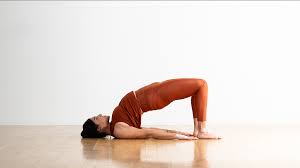
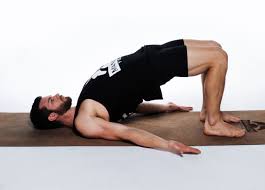
Bridge Pose is a floor-based exercise performed while lying on your back with your knees bent and feet flat on the floor. You then lift your hips while keeping your upper back and shoulders supported.
It is often used to strengthen hip and core muscles. Depending on how you perform the pose the muscles which stabilise the pelvis and lower back will also be activated.
So, can Bridge Pose remove a neck hump?
There is insufficient evidence to establish that Bridge Pose directly reduces a neck hump or corrects forward head posture. It is better understood as a general strengthening exercise that may complement a broader programme tailored to an individual’s needs.
Here is what the exercise may contribute:
- Hip and gluteal strength: The movement challenges the gluteal muscles, which help extend the hips.
- Trunk stability: Maintaining a controlled position requires coordination of the abdominal and back muscles.
- General movement capacity: Practising controlled movements may help build confidence and strength in the hips and trunk.
- Exercise variety: Bridge Pose can complement other exercises selected to address a person’s mobility, strength and functional needs.
A 2025 narrative review examined variations in muscle activation during supine bridge exercises. Although this research helps explain which muscles are involved, it does not demonstrate that Bridge Pose can treat or remove a neck hump. Read the research review.
Bridge Pose cannot selectively reduce fat around the neck. It should also not be expected to reverse structural changes to the vertebrae.
What Muscles Does Bridge Pose Work?
The traditional supine bridge primarily challenges muscles involved in hip extension and trunk stabilisation.
These include:
- Gluteus maximus: Helps extend the hip as you lift your pelvis.
- Hamstrings: Assist with hip extension and help control the movement.
- Erector spinae: Help support and stabilise the spine.
- Abdominal muscles: Help control the trunk and maintain a stable position.
- Other trunk stabilisers: Muscles such as the multifidus and obliques may contribute to spinal and pelvic control.
Bridge Pose is not primarily a neck-strengthening exercise. The head and neck should remain relaxed and supported throughout the movement.
This distinction is important because claims that Bridge Pose directly corrects neck alignment or strengthens the neck extensors sufficiently to remove a hump are not supported by the available evidence.
How to Perform Bridge Pose Correctly
The following steps explain how to perform a basic supine bridge.
Step 1: Lie on your back
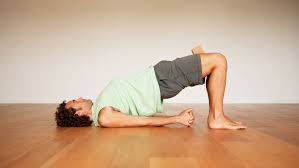
Lie on your back on an exercise mat. Bend your knees and place your feet flat on the floor, approximately hip-width apart.
Step 2: Position your arms
Place your arms at your sides with your palms facing down. Keep your shoulders and upper back relaxed.
Step 3: Prepare your trunk
Gently engage your abdominal muscles to help stabilise your trunk. Do not hold your breath.
Step 4: Lift your hips
Press through your feet and slowly lift your pelvis. Raise your hips to a comfortable height without excessively arching your lower back.
Step 5: Keep your neck relaxed
Keep your head, neck and shoulders supported on the floor. Do not move your head and do not press through your neck.
Step 6: Lower with control
After holding the position comfortably, slowly lower your hips to the starting position. Rest briefly between repetitions.
Start with a small number of comfortable repetitions. Increase gradually only when you can maintain good technique without discomfort. There isn’t a set number of reps to do Bridge Pose for treating a neck hump.
For a demonstration of the basic movement, see Mayo Clinic’s Bridge Pose instructions.
Common Bridge Pose Mistakes
Technique is more important than trying to raise your hips as high as possible.
Common mistakes to watch out for:
Forcing the lower back into an arch
Raising your hips too high may cause excessive extension of your lower back. Raise your pelvis only as high as you can while maintaining control.
Pushing through the neck
Do not strain your neck as you raise your hips. Ensure that your head and shoulders are supported. Do not forcefully push your head into the floor.
Letting the knees move outwards or inwards
Try to keep your knees lined up with your feet. Avoid allowing your knees to collapse inwards.
Holding your breath
Make sure to breathe normally throughout. Holding your breath can make the exercise feel unnecessarily difficult.
Continuing despite pain
Stop the exercise if you experience sharp pain, increasing neck discomfort, dizziness or other unusual symptoms. If you are unsure if this exercise is suitable for you please consult a qualified healthcare professional.
Other Exercises and Habits That May Support Better Posture
If your neck prominence is related to postural factors, a broader approach may be more useful than relying on one exercise.
The appropriate exercises depend on your symptoms, range of movement, strength and the underlying cause of the prominence.
Chin tucks
Chin tucks are commonly included in exercise programmes for people with forward head posture. This involves gently drawing your head backwards while keeping your chin level.
Perform the movement in a controlled manner, without forcing your neck into a painful position.
Read our guide to Chin Tucks for Forward Head Posture.
Scapular retraction exercises
Scapular retraction exercises involve gently drawing your shoulder blades towards each other. They can help to increase awareness and strength in this area.
Although they don’t directly help to reduce a hump on your neck, they may be included in a wider programme to improve your shoulder and upper back function.
Learn more in our guide to Scapular Retraction Exercises.
Chest stretching
Gentle chest stretching may help reduce tightness and improve shoulder mobility.
Stretch to a comfortable position.
See our guide to Chest Stretching Exercises.
Neck mobility exercises
Gentle movements can help keep you comfortable. Don’t overstretch or force your head into certain positions.
Our guide to Neck Stretching Exercises explains some basic options.
Review your daily workstation habits
Position your screen so that you do not need to repeatedly bend your neck when working at a computer.
Change positions regularly rather than trying to maintain one supposedly perfect posture throughout the day.
When Should You Seek Medical Advice?
A visible bump at the base of the neck should not automatically be assumed to be caused by poor posture.
Consider arranging a medical assessment if:
- The bump has appeared recently or is increasing in size.
- You have an unexplained fatty-looking area behind your neck.
- You have persistent or worsening upper-back or neck pain.
- Your upper-back curve is becoming more pronounced.
- You have a history of osteoporosis, spinal injury or long-term corticosteroid use.
- You experience numbness, tingling, weakness or other new neurological symptoms.
A healthcare professional can assess your spinal alignment and flexibility, review your medical history and determine whether further investigations are necessary.
If a dorsocervical fat pad is identified, treatment will depend on its underlying cause. Do not stop or change prescribed medication without first consulting the clinician responsible for your treatment.
Treatment of kyphosis will depend on the cause and severity. Some people may benefit from physiotherapy to improve their posture, relieve pain and stiffness, but this will not always correct a spinal deformity.
Frequently Asked Questions
Can Bridge Pose remove a neck hump?
There is no good evidence that Bridge Pose alone can remove a neck hump. It can strengthen muscles involved in hip and trunk stability, but a neck hump may be caused by a fat pad, a spinal curve or postural changes. Treatment depends on the cause.
Is Bridge Pose good for forward head posture?
Bridge Pose is not a specific forward head posture correction exercise. It mainly works the hips and trunk. A suitable exercise programme may include other movements selected to address neck control, upper-back strength, mobility and daily posture habits.
Does Bridge Pose strengthen the neck muscles?
Bridge Pose is not primarily a neck-strengthening exercise. During the movement, the head and neck should remain relaxed and supported on the floor.
What is the difference between a buffalo hump and a dowager’s hump?
A buffalo hump generally refers to a dorsocervical fat pad, which is an accumulation of fatty tissue behind the neck. Dowager’s hump is commonly used to describe a rounded upper back associated with kyphosis. The two appearances can look similar but have different underlying causes.
Can exercise reduce a posture-related neck hump?
Appropriate exercise may help improve strength, movement and postural control in some people whose appearance is related to posture. However, exercise cannot be assumed to correct every spinal curve or remove a fat pad.
How often should beginners practise Bridge Pose?
There is no scientifically established frequency for Bridge Pose specifically to reduce a neck hump. Beginners should start with a comfortable amount of exercise, prioritise good technique and increase gradually. A physiotherapist can help determine an appropriate programme if you have pain or an existing condition.
Can osteoporosis cause a neck hump?
Osteoporosis can weaken the vertebrae and increase the risk of compression fractures. These fractures can contribute to an increased forward curve of the upper spine, known as kyphosis. This is different from a fatty deposit behind the neck.
When should a neck hump be checked by a doctor?
Arrange an assessment if the bump is unexplained, new, growing, painful or accompanied by other symptoms. A clinician can help distinguish a fat pad from a spinal or postural problem.
Bottom Line
Bridge Pose can be a useful general strengthening exercise, but it should not be presented as a proven way to remove a neck hump.
The most important step is understanding what is causing the prominence. Posture-related changes, kyphosis and a dorsocervical fat pad are different conditions and should not be treated in the same way.
If the prominence is related to posture, an appropriate exercise programme targeting the neck, shoulders and upper back may help improve movement, strength and comfort. However, an unexplained or increasingly noticeable bump, particularly one accompanied by other symptoms, should be assessed by a healthcare professional rather than managed through exercise alone.
References
- Hump on upper back (dorsocervical fat pad). Information on the definition, possible causes and assessment of a dorsocervical fat pad.
- Kyphosis. Information on causes, assessment and treatment options for kyphosis.
- Cleveland Clinic. Buffalo Hump. Overview of dorsocervical fat pad hypertrophy and its possible causes.
- Colonna S, et al. Supine Bridge Exercise: A Narrative Review of the Literature (Part I). Cureus. 2025;17(3). Review of bridge exercise variations and muscle involvement.
- Mayo Clinic. Bridge Pose. Demonstration of the exercise and basic technique.
- Mayo Clinic. Exercises to improve your core strength. Guidance on performing the bridge exercise as part of core strengthening.
Medical and editorial note: This article is for general educational purposes and is not a substitute for individual medical advice, diagnosis or treatment. Exercise suitability varies between individuals. For information about our editorial standards, see our Why Trust Us page and Medical Review Process.