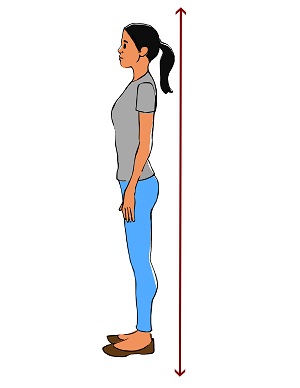
If your head tends to sit in front of your shoulders, you may have heard this posture described as “vulture neck.
It is an informal term commonly used online to describe a forward-positioned head and neck, sometimes accompanied by rounded shoulders or a more rounded upper back. It is not a formal medical diagnosis, but it can overlap with what healthcare professionals describe as forward head posture (FHP).
The good news is that posture can often be improved by combining targeted exercises with ergonomic changes and greater awareness of how you position your body during the day.
We don’t need to be constantly yanking our head back or holding ourselves in an overly stiff position. It is more about improving the strength, endurance, mobility, and control of the muscles around the neck, shoulders, and upper back.
Article Contents
- What Is Vulture Neck?
- What Causes Vulture Neck?
- Can Vulture Neck Be Corrected?
- How to Fix Vulture Neck: 5 Exercises and Posture Techniques
- How to Improve Vulture Neck During the Day
- Common Mistakes to Avoid
- When Should You See a Healthcare Professional?
- Frequently Asked Questions
- Bottom Line
What Is Vulture Neck?
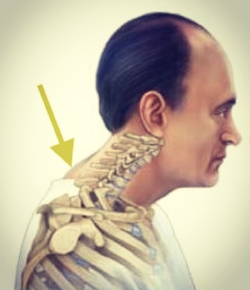
Vulture neck is an informal term commonly used online to describe a forward-positioned head and neck. It overlaps substantially with forward head posture, although the two terms are not necessarily identical in every context.
From the side, the ears may appear positioned farther forward relative to the shoulders. Your chin may also be pulled forward, especially when looking down at a phone, a laptop or any other screen.
It often overlaps with forward head posture (FHP).
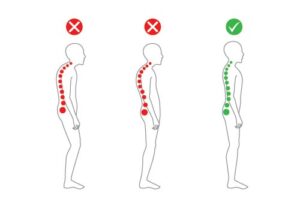
However, posture is a complicated subject and simply trying to force your ear into alignment with your shoulder is not necessarily the best approach. Everyone carries a different body shape and spinal curvature. Each person has different default positioning.
What matters is whether a particular posture is associated with discomfort, restricted movement, excessive muscle tension, or difficulty with everyday activities.
If you’re unsure whether your posture actually fits the pattern of forward head posture, you can learn more about how to check forward head posture using commonly described posture assessments.
What Causes Vulture Neck?
Vulture neck usually develops gradually, rather than as a result of a single movement.
Some common contributors to vulture neck include:
Prolonged Screen Use
Looking down at a phone or leaning toward a laptop can repeatedly place the head and neck in a forward or flexed position.
When this position is repeated for long periods, it may become a familiar resting position for some people.
Poor Sitting Habits
Slouching can lead to changes in the position of the upper back and shoulders, which may make it easier for the head to drift forward.
Limited Movement
Being sedentary for long periods of time can cause stiffness, and reduced mobility in the upper back and neck.
Weakness or Poor Endurance
The muscles that help control the head, neck, shoulders, and upper back need sufficient strength and endurance to support comfortable movement and positioning.
Tight or Stiff Areas
Limited mobility in the chest or upper back may also affect how comfortably you can position your head and shoulders.
There is rarely one muscle or one exercise that can address the entire posture pattern.
Can Vulture Neck Be Corrected?
In many people, posture can be improved through a combination of strengthening, mobility work, movement practice, and changes to the positions they spend the most time in.
The amount of improvement possible will vary from person to person.
Someone who spends 8 hours a day hunched over a laptop will require a slightly different approach to someone whose problem is more related to restricted upper back mobility (or some other cause).
Rather than looking for a single exercise that “fixes” vulture neck, think of correction as a combination of:
- strengthening the neck and upper back
- practicing good head and shoulder positioning
- mobility work where required
- modifying prolonged sitting/monitor height
- taking more breaks from sitting
- developing better postural awareness
It is not about standing rigidly like a soldier all day. Good posture should be reasonably comfortable and allow you to move naturally.
How to Fix Vulture Neck: 5 Exercises and Posture Techniques
The following exercises and drills can help you practice more comfortable positioning of the head, neck, shoulders, and upper back.
In all cases, proceed with caution, and avoid sudden or uncomfortable movements. None of these drills should cause sharp, severe, or worsening pain.
Standing Chin Retraction
Chin retraction – also known as a “chin tuck” – is among the easiest motions to use for practicing the practicing controlled head positioning without forcing the neck.
General Instructions:
- Stand in a comfortable position, with the shoulders relaxed.
- Look forward.
- Gently draw the chin back – as if creating a small double chin – while keeping the eyes level.
- Avoid pulling the head back forcefully.
- Breathe normally and maintain this comfortable position briefly before continuing with your activity.
There should be a small degree of motion in this drill, but it should not be forced or uncomfortable.
The goal is to move the head back, not down towards the chest.
Start with a few comfortable repetitions and gradually increase the amount of practice as tolerated.
This movement is commonly used to practice better head and neck control. For a more detailed explanation of technique and how chin tucks may fit into a broader routine, see our guide to chin-tuck exercises for forward head posture.
Standing Wall Alignment Drill
Using a wall for feedback can be a helpful tool for re-learning correct standing posture.
General Instructions:
- Stand comfortably with your back near a wall and use the wall as a reference point.
- Notice where your head and upper back naturally sit rather than forcing them against the wall.
- Keep the feet planted comfortably.
- Allow the shoulders to relax, rather than aggressively pushing them back against the wall.
- Keep the eyes level.
- Gently adjust the head and upper back into a more comfortable position, if possible.
- Again, avoid pushing the head and upper back uncomfortably against the wall.
The point of this drill is feedback and awareness – not proof of forward head posture.
For additional information on posture assessment, see our guide to forward head posture testing.
Scapular Retraction
The muscles around the shoulder blades play an important role in controlling the upper body.
Scapular retraction exercises can be used to practice moving the shoulder blades together, in a controlled manner.
General Instructions:
- Stand facing forward, with the arms relaxed at the sides.
- Keep the neck muscles relaxed.
- Gently draw the shoulder blades toward each other without shrugging.
- Hold for a brief moment, then return to the starting position.
- Avoid shrugging the shoulders up towards the ears.
- Once again, this is a controlled motion, not an aggressive one.
For additional information, see our guide to upper-back strengthening for neck posture.
Upper-Back Mobility
Upper-back mobility can be one factor affecting how comfortably you position your head and shoulders.
If the tissues in this region are particularly tight, it may be necessary to gently work through a comfortable range of motion in this region.
Improving neck posture isn’t necessarily about working on the neck alone. Mobility and strengthening work for the surrounding areas can also be useful, so you may want to explore these upper-back exercises for forward head posture.
One simple exercise to begin with is a controlled upper-back extension, using an appropriately firm surface for support.
General Instructions:
- Sit or lie in a comfortable position and use a suitable firm support to gently encourage movement through the upper back.
- Keep the movement focused on the upper back rather than forcing the neck backward.
- Hold for a brief moment, then return to the starting position.
- Repeat, as needed, without forcing the motion.
The goal of this exercise is to gently improve mobility and range of motion, rather than aggressively stretching the upper back.
If uncomfortable or concerning symptoms such as pain, numbness, or dizziness occur, discontinue the exercise and seek professional advice, if necessary.
The Standing Posture Reset
The standing posture reset is less of an exercise, and more of a series of suggestions that can be used throughout the day.
The best time to use it is whenever you realize you’ve been slouching forwards for too long.
General Instructions:
- Feet: Keep the feet planted comfortably.
- Rib cage: Keep the rib cage relaxed, rather than forcing it forward and upwards.
- Shoulders: Allow the shoulders to relax, rather than constantly pulling them back.
- Head: Gently bring the head toward a comfortable neutral position without forcing it backward.
- Chin: Keep the eyes level, rather than jutting the chin outwards.
- Hold for a moment, then return to the starting position.
You should not hold this position for an excessively long time in any case.
How to Improve Vulture Neck During the Day
Exercises are just one aspect of improving posture.
If your daily activities involve frequently leaning forward with your head, it’s probably wise to improve these as well.
Raise Your Screen!
If your screen is too low, you might be finding yourself leaning forward or extending your neck to look at it.
Adjust your screen so that you can work comfortably without repeatedly leaning your head and neck toward it. Consult this resource on computer screen position and forward head posture for more information.
If you regularly work at a computer, adjusting the height and position of your monitor may make it easier to work comfortably without repeatedly leaning your head toward the screen.
Our guide to computer screen position and forward head posture explains this setup in more detail.
Bring Your Phone Closer
Next time you are using your phone, try bringing it closer to eye level instead of constantly dropping your head to look at it.
The goal isn’t to hold your phone at eye level all day. It’s simply to avoid spending long periods with your head repeatedly bent forward.
Move Around Frequently
Even a comfortable posture can become uncomfortable if you stay in it for too long.
Stand up and stretch.
Walk around for a bit.
Do whatever you need to change positions.
It is much healthier to move regularly than to attempt to maintain the “perfect” posture for hours at a time.
Don’t Overdo It
The number one mistake people make when learning proper posture is pulling themselves into a rigid military stance.
Aggressively pulling your shoulders back and pushing your chest forward can create unnecessary tension.
For best results, avoid exaggerated postures and focus on relaxing while maintaining a healthy position.
Consider Your Sleeping Habits
Did you know your sleep posture is actually part of your overall posture?
A pillow that is too high, too low, or otherwise uncomfortable may place your neck in an awkward position for prolonged periods.
Your sleeping position is another factor worth considering if you’re trying to improve your overall neck posture. For more practical guidance, see our article on sleeping position for forward head posture.
Common Mistakes When Trying to Fix Vulture Neck
There are a few common errors in posture correction that you may want to avoid:
Mistake 1: Looking for an Overnight Fix
Posture is the result of a series of repeated movements. A single exercise session will not give you a lasting improvement in your posture.
Mistake 2: Trying to Force your Head Back as Far as it Goes
Your goal is not to push your head as far backward as possible.
Use gentle, controlled movements and stay within a comfortable range.
Mistake 3: Performing Only One Exercise
While doing chin tucks correctly can assist in correcting some postures, it will not improve all aspects of posture. Other components, like neck mobility and upper back muscle activation, may also need to be addressed.
A well-rounded program will incorporate posture-specific mobility, muscle building or activation exercises, ergonomic adjustments, and regular practice throughout the day.
Mistake 4: Only Focusing on Exercises
Correcting posture is not just about doing one or two exercises. Sitting in one position for a few minutes and then returning to your desk and staying there for the rest of the day will not yield significant improvement. You need to take your newly acquired posture knowledge and apply it to your entire day.
Mistake 5: Focusing only on Your Physical Appearence
Having a nicer posture does not only mean having a nice-looking back. While it is important to be able to see an improvement in the way you look in clothes that accentuate your posture, good posture has other visible benefits, too.
Pay attention to useful outcomes such as:
- comfortable movement
- reduced stiffness
- improved exercise control
- better awareness of your positioning
- greater tolerance for everyday activities
How Long Does It Take to Improve Vulture Neck?
There is no hard-and-fast rule for how long it takes to correct vulture neck.
Some people find that they can consciously improve their posture during a posture drill – but that doesn’t necessarily mean that the underlying pattern has been altered for good.
If a particular posture has been reinforced over a long period, changing the movement pattern may take consistent practice.
Your progress can depend on:
- how long you’ve had the posture problem
- your usual activity and movement levels
- how consistent you are with your daily exercises
- your level of fitness and mobility
- your workstation set-up
- whether pain or another condition is involved
Rather than aiming to achieve a particular result within a certain time frame, try to notice gradual improvements in range of motion, comfort and control.
If you’re experiencing nagging or persistent discomfort, it’s important to investigate the cause rather than simply trying to exercise through it.
When Should You See a Healthcare Professional?
Posture exercises are not appropriate for every type of neck problem.
Consider speaking with a healthcare professional, such as a physical therapist or physician, if you have:
- persistent or worsening neck pain
- significant restriction of neck movement
- numbness or tingling
- weakness in your arms or hands
- pain from an injury
- limitations in your daily activities
- unusual headaches
- if your symptoms worsen with self-care
A physical therapist can evaluate your range of motion, strength, and function to design an individualized treatment and workout plan if needed.
Do not assume that every neck symptom is caused by posture.
Frequently Asked Questions About Vulture Neck:
Is vulture neck the same as forward head posture?
Actually, no.
“Vulture neck” is an informal term rather than a formal medical diagnosis. It is commonly used to describe a forward-positioned head and neck and may overlap substantially with what is called forward head posture. The two terms are not necessarily identical in every context.
What is the fastest way to correct vulture neck?
There is no single fastest method that works for everyone. A practical approach is to combine gentle neck-control exercises, upper-back strengthening, mobility work, ergonomic adjustments, and regular movement breaks.
Are chin tucks good for vulture neck?
Chin tucks can be useful, but they should not be treated as a standalone cure. They can help you practice controlled head positioning, while other factors such as upper-back strength, mobility, movement habits, and workstation setup may also need attention.
Can I do any exercises for vulture neck without equipment?
Definitely. Most of these exercises can be performed without equipment. Chin retraction, standing posture drills, scapular mobility and control, and even some very light resistance band or dumbbell exercises are all great places to start.
Does looking down at a phone cause vulture neck?
Prolonged phone use can place the head and neck in more flexed or forward positions, particularly when you remain in the same position for long periods. Vulture neck is an informal description of a forward-positioned head and neck.
If you spend long hours looking down at your phone, it’s best to periodically change the position of the phone and move around more frequently.
Will good posture alleviate neck pain?
Sometimes, yes. Neck discomfort can have many causes, and posture may be only one contributing factor. But there are a number of other reasons why you might experience discomfort or pain in the neck region. If the pain persists for a long time, it’s best to get a professional opinion, rather than attempting to self-diagnose.
Bottom Line: How to Fix Vulture Neck
If you are dealing with vulture neck, focus on gradual changes, not forcing a certain position.
Think about simple exercises such as chin retractions, movements for scapular-control, and upper-back mobility, and the daily habits and positions that may be contributing to your posture, such as screen time, sitting with low monitors, or a lack of movement.
Don’t forget that there aren’t any magic bullets, braces, or one-size-fits-all solutions that will make the problem go away.
A better approach is to work on movement, and to think about what keeps you in uncomfortable positions, rather than just avoiding a single bad habit.
With time and practice, and potentially the help of professionals, you can learn to move in new ways.
Vulture neck does not need to dictate how you work, move, or sit. Start with small corrections, practice them regularly, and build from there.
References:
- Therapeutic Exercise for Forward Head Posture in Neck Pain Patients: A Systematic Review and Meta-Analysis (2026)
- Impact of Therapeutic Exercise on Craniovertebral Angle in Forward Head Posture: A Systematic Review and Meta-Analysis (2026)
- Effectiveness of Therapeutic Exercise on Forward Head Posture: A Systematic Review and Meta-analysis (2018)
- The Relationship Between Forward Head Posture and Neck Pain: A Systematic Review and Meta-Analysis (2019)
- Treatment of Chronic Neck Pain in Patients with Forward Head Posture: A Systematic Narrative Review (2023)
- The Impact of the Position of the Head on the Functioning of the Human Body: A Systematic Review (2020)
- Why trust us?
- For educational purpose only