
If you spend long hours hunched over a computer, phone, or tablet, you may notice that your neck becomes stiff or less mobile.
A simple neck tilt exercise moves the head gently from side to side and can help maintain comfortable neck mobility while gently stretching the muscles along the side of the neck.
Neck tilts can be part of an exercise routine designed to address forward head posture (often referred to as nerd or tech neck), but a neck tilt is a mobility and stretching movement, and as such it shouldn’t be used as an isolated corrective exercise.
Mobility exercises such as neck tilts can be combined with strengthening exercises, other appropriate mobility work, and changes to prolonged sitting or screen-use positions as part of a broader approach to managing forward head posture.
Quick Answer: Can Neck Tilts Help Forward Head Posture?
Neck tilts may help maintain or improve comfortable side-to-side neck movement and may help with feelings of stiffness, but they do not correct forward head posture on their own.
A neck tilt involves gently bending the head toward one shoulder while keeping the shoulders relaxed and relatively level. This creates a gentle stretch along the opposite side of the neck.
If forward head posture is a concern, a broader exercise approach may include cervical control or stabilization exercises, upper-back strengthening, appropriate mobility work, and changes to prolonged positions that encourage the head to remain forward.
Article Index:
- Introduction
- Quick Answer: Can Neck Tilts Help Forward Head Posture?
- What Is a Neck Tilt Exercise?
- How to Do a Neck Tilt Exercise Safely
- How Long Should You Hold a Neck Tilt?
- What Should You Feel During a Neck Tilt?
- Can Neck Tilts Fix Nerd Neck?
- Neck Tilts vs. Chin Tucks: What’s the Difference?
- Exercises That Can Complement Neck Tilts
- Neck Tilts and Screen-Related Posture
- Common Neck-Tilt Mistakes
- How Often Should You Do Neck Tilts?
- When Should You Stop Neck Tilts?
- Frequently Asked Questions
- Bottom Line
- References
- Why Trust Us
- Medical Disclaimer
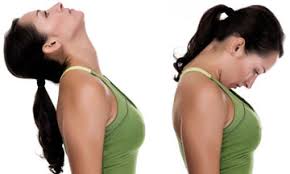
What Is a Neck Tilt Exercise?
A neck tilt, also known as cervical lateral flexion, is a controlled movement in which you gently move your head toward the shoulder on the same side while keeping the shoulder relaxed.
For example, when you tilt your head to the right, you should feel a gentle stretch along the left side of your neck.
The movement has to be slow and controlled. One must not push the head down with a hand to make the stretch deeper.
Neck tilts can be used as part of a broader mobility routine to maintain or improve the range of motion in the neck, not to force the head into the position.
How to Do a Neck Tilt Exercise Safely
You can perform a neck tilt while sitting or standing.
Step 1: Start in a comfortable position
Sit or stand upright with your feet supported and your shoulders relaxed.
Keep your head facing forward and avoid pushing your chin forward.
You do not need to force your spine into a perfectly straight position. Aim for a comfortable, relaxed starting posture.
Step 2: Slowly tilt your head
Gently bring your right ear toward your right shoulder.
Do not lift the shoulder to meet the ear.
Keep your face generally facing forward rather than turning your head as you tilt.
Step 3: Move only as far as comfortable
Continue until you feel a gentle stretch along the opposite side of your neck.
The movement should not produce sharp pain, strong pulling, dizziness, or other unusual symptoms.
You do not need to reach a specific angle.
Step 4: Return to the starting position
Slowly bring your head back to the center.
Avoid dropping or quickly snapping your head back into position.
Step 5: Repeat on the other side
Perform the same controlled movement toward the opposite shoulder.
Keep the movement smooth and comfortable on both sides.
How long should you hold a neck tilt?
There is no established amount of time that you should hold each stretch when you are doing neck tilts to improve your posture. Aim for a gentle stretch without forcing yourself to hold an uncomfortable position.
If you are just learning to do these stretches, it is best to be conservative with the range of motion and gently encourage your body to move. The point is to stimulate controlled movement, not force yourself into an extreme position.
What Should You Feel During a Neck Tilt?
You may feel a mild stretching or pulling sensation along the side of your neck opposite the direction of the tilt.
For example, if you tilt your head to the right, you may feel a gentle stretch along the left side of your neck.
You should not need to feel:
- Sharp or severe pain
- Burning or electric sensations
- Increasing pain that travels into an arm
- Significant dizziness
- Numbness or tingling
- Sudden weakness
More stretching is not always better. If something feels wrong, stop! Do not try to ignore it and carry on.
Can Neck Tilts Fix Nerd Neck?
This is where the distinction between neck mobility and posture correction is important.
“Nerd neck” is an informal name for forward head posture. Forward head posture is a posture where the head is more forward relative to the trunk when viewed from the side.
A neck tilt causes the head to move laterally. It does not directly train the person to bring the head over the trunk backwards.
Therefore, it would not be accurate to say that neck tilts alone “fix” nerd neck.
They may still have a useful role because maintaining comfortable neck mobility can be one part of a broader exercise program.
Research on therapeutic exercise for forward head posture suggests that exercise programs can improve some measures of head and neck posture.
However, these studies typically investigate broader exercise programs or combinations of exercises rather than establishing a specific neck tilt as a stand-alone solution.
Neck Tilts vs. Chin Tucks: What’s the Difference?
Neck tilts and chin tucks are often confused due to the involvement of the neck, but they train different movement patterns.
Neck tilt
The movement pattern of the neck tilt involves laterally flexing the head.
A neck tilt can be used to work on side-to-side neck mobility and gently stretch the muscles along the side of the neck.
Chin tuck
A chin tuck involves gently drawing the head backward while keeping the gaze relatively level. It is different from bending the head forward or tilting it sideways.
Chin tucks are commonly included in exercise programs that focus on cervical muscle control and stabilization.
If you are interested in chin tucks, see our guide to chin-tuck exercises.
Why does the distinction matter?
If your goal is to address forward head posture, you may want to do more than just neck tilts.
A full exercise program for forward head posture may include neck control exercises, upper back strengthening, and mobility.
Exercises That Can Complement Neck Tilts
Neck tilts can be one small part of a broader forward-head-posture exercise routine.
Depending on your needs, you may want to incorporate other exercises into your routine, such as:
Chin-Tuck Exercises
Chin tucks focus on controlled head and neck positioning and are different from a side-to-side neck tilt.
Upper-Back Strengthening
Exercises like rows and scapular exercises can target muscles around the upper back and shoulder blades.
Chest and Upper-Body Mobility
If you spend long periods sitting, appropriate mobility exercises may help you move more comfortably.
General Movement
Regularly changing position and moving throughout the day may be more useful than trying to maintain one “perfect” posture for hours.
For a broader routine, see our guide to Forward Head Posture Exercises.
Neck Tilts and Screen-Related Posture
Long periods of computer or phone use can encourage you to remain in the same position for extended periods.
Instead of working to keep your head perfectly upright, focus on creating a workspace where you can be comfortable and switch positions often.
For computer use, consider:
- Positioning the screen so you do not have to repeatedly look far downward.
- Keeping the display directly in front of you.
- Adjusting font size or display scaling instead of moving the screen unnecessarily close.
- Avoiding prolonged static positions.
- Taking regular movement breaks.
- Changing your sitting position throughout the day.
For more information, see our guide to positioning your computer screen to reduce forward head posture.
For broader workstation advice, see our guide to ergonomics for forward head posture.
Common Neck-Tilt Mistakes
A simple-looking movement, which is a tilt of the neck, can have multiple common errors that make the movement uncomfortable or alter the goal of the mobilization.
Shoulder Elevation
Avoid raising the shoulder toward the ear when performing the movement.
Strive to keep the shoulders relaxed as you perform the exercises.
Rotation of the Head
A side tilt is not a rotation, which means that the head should be kept generally facing forward as it is moved toward the side.
Aggressive Pulling with Your Hand
Using your hand to force your head farther into the stretch is unnecessary and may increase discomfort or irritation.
Your hand may be used to assist only when it does not apply an aggressive pulling force.
Using Momentum
Momentum compromises range of motion control, which is detrimental to the desired effect of such mobilizations.
Instead, move the head slowly and deliberately.
Stretching through Pain
More range of motion is not always better, especially if the additional degrees of motion cause discomfort or strange sensations.
Perform the movement within a comfortable range of motion and do not force the neck into pain or unusual symptoms.
Expecting One Exercise to Correct Posture
Forward head posture involves more than simply moving the neck into side bends.
How Often Should You Do Neck Tilts?
There is no established number of neck tilts per day that has been proven necessary for correcting forward head posture.
Rather than focusing on a specific number, prioritize controlled, comfortable movement.
If you would like to incorporate neck tilts into your exercise routine, the number of repetitions and your progress should be individualized based on your current condition, mobility, the types of exercises you are doing, and your overall health.
If you are experiencing constant neck discomfort or a diagnosed problem with your neck, a physical therapist or other qualified healthcare professional can help you design an appropriate exercise plan.
When Should You Stop Neck Tilts?
Stop the exercise if it causes significant or worsening symptoms.
You should also get professional help if you experience:
- Persistent or worsening neck pain
- Pain radiating into an arm
- New numbness or tingling
- Weakness in an arm or a hand
- Significant dizziness when moving your neck
- The symptoms persist or worsen despite reducing the activity
Neck exercises aren’t always helpful or appropriate for all neck issues, so recurring or unexplained symptoms shouldn’t just be stretched out

Frequently Asked Questions About Neck Tilt Exercises
Are neck tilts good for posture?
Neck tilts may help maintain or improve side-to-side neck mobility, but they are not a stand-alone exercise for correcting posture. For forward head posture, they can be combined with appropriate strengthening, cervical control exercises, movement, and ergonomic changes.
Can neck tilts help with nerd neck?
Neck tilts may help with neck mobility and feelings of stiffness, but they should not be presented as a stand-alone solution for nerd neck. Forward head posture may require a broader combination of exercises and movement strategies depending on the individual.
What’s the difference between a neck tilt and a neck stretch?
A neck tilt is the motion of your head to the side towards your shoulder, and when performed gently and held can be considered a side stretch. They’re often used interchangeably, but the emphasis is different: tilt refers to the motion, and stretch describes the purpose of the motion.
Can I do neck tilts at home?
Yes, they’re an easy exercise to perform anywhere without equipment. You can do them seated or standing, but if you have chronic issues or a diagnosed condition, it is best to talk with a qualified healthcare professional before attempting any exercise.
Should I do neck tilts every day?
It’s not necessary to do them daily, but it depends on your particular condition and what you’re using the exercise for. It’s best to focus on good controlled movements rather than the quantity.
What Other Exercises Can Help With Forward Head Posture?
Depending on your condition, a variety of movements can be beneficial, including chin tucks or range of motion for the cervical spine, strengthening of the upper back and stabilizing muscles, mobility work for the mid-back and scapula, and more.

Bottom Line
A neck tilt exercise is a simple way to work on side-to-side neck mobility and gently stretch the muscles along the side of the neck.
It can be a useful part of a broader mobility and exercise routine, but it should not be considered a stand-alone solution for nerd neck or forward head posture.
If forward head posture is your concern, consider combining appropriate neck mobility with exercises that address cervical control and upper-back strength. It is also worth paying attention to how long you remain in one position while working at a computer or using your phone.
Most importantly, keep the movement controlled and comfortable. If neck tilts cause significant pain, dizziness, numbness, tingling, or weakness, stop the exercise and discuss your symptoms with a qualified healthcare professional.
References:
- American Physical Therapy Association (APTA) — Neck Pain and Exercise Resources
- Mayo Clinic — Neck Pain: Symptoms and Causes
- NHS — Neck Pain and Stiff Neck (https://www.nhs.uk/symptoms/neck-pain-and-stiff-neck/)
- Cleveland Clinic — 8 Posture Exercises To Sit and Stand Straighter
Why Trust Us?
Learn more about how we research and review information on forward head posture and related topics on our Why Trust Us page.
Medical Disclaimer:
This article is intended for educational purposes only and does not replace an evaluation or treatment plan from a qualified healthcare professional. Learn more on this by reading our Medical Disclaimer Page.