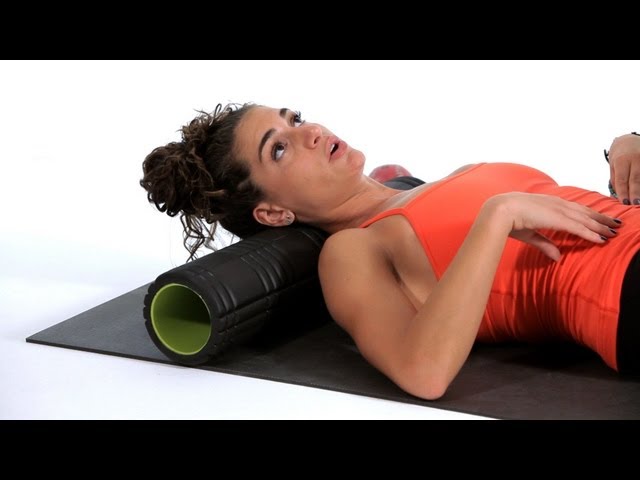
A foam roller may help with upper-back mobility and temporary muscle stiffness, but it has not been established as a stand-alone treatment for forward head posture.
If your head tends to sit forward relative to your shoulders, you can consider foam rolling as one part of a broader approach that may include appropriate exercises, regular movement, and adjustments to your workstation.
The key is understanding what foam rolling may help with and what it cannot be expected to correct. It can be a useful mobility tool for some people, but it should not be presented as a proven way to correct forward head posture on its own.
This article explains the potential benefits, precautions, and complementary exercises that may help you build a more balanced approach to neck posture.
Table of Contents
- Can a Foam Roller Help Forward Head Posture?
- What Does the Research Say?
- Why Upper-Back Mobility Matters
- How to Use a Foam Roller Safely
- What Foam Rolling Cannot Do
- Exercises to Combine With Foam Rolling
- Common Mistakes to Avoid
- When to Seek Professional Advice
- Frequently Asked Questions
- Bottom Line
Can a Foam Roller Help Forward Head Posture?
A foam roller may support a forward head posture exercise routine, but it should not be relied on to correct head position by itself.
Forward head posture describes a position in which the head sits farther forward relative to the shoulders and trunk. It may occur alongside rounded shoulders, reduced upper-back mobility, or neck discomfort, although these features do not necessarily occur together.
A foam roller applies pressure to the tissues and can be used for performing specific mobility drills. Some studies indicate that using a foam roller can improve people’s normal range of motion in joints.
However, these studies don’t show that rolling the upper back will relieve the forward head posture or alleviate the associated neck pain.
A more realistic approach would be using a foam roller as a mobility tool followed by specific drills and exercises that teach your body to hold the more optimal head position.

What Does the Research Say?
Research suggests a cautious approach rather than promises of guaranteed correction.
A 2024 systematic review and meta-analysis found that foam rolling can improve one’s range of motion in some populations. The included studies looked at general mobility outcomes, not at whether foam rolling alone could correct a forward head posture.
Research into forward head posture has also looked at broader therapeutic exercise programmes. A 2018 systematic review and meta-analysis found that corrective exercise programmes may improve measurements relating to head posture and neck pain in people with forward head posture, while a 2026 review also found potential benefits from therapeutic exercise, but with a caveat that there was limited certainty in those findings.
These findings support an important distinction:
- What foam rolling may help with: mobility and temporary feelings of muscle stiffness.
- What has not been established: that foam rolling alone permanently corrects forward head posture.
- What may be worth combining it with: a suitable programme of neck, shoulder, and upper-back exercises.
You can read the research in the references at the end of this article.
Why Upper-Back Mobility Matters
The neck and upper back support each other well during everyday activities like reading, working at a computer, staring at your phone, etc. If you feel like you can’t move freely in your own upper back, it can affect your ability to be comfortable in various postures.
A foam roller can help you practice moving within your thoracic spine (upper back).
This doesn’t mean that having a stiff upper back is the sole culprit for developing forward head posture. Posture is a complicated mechanism in the body, and there are numerous factors that contribute towards it; the remedy is individualized.
Upper-back mobility work is meant to allow you to move comfortably, not force your neck into an artificially desirable position.
How to Use a Foam Roller Safely
For this purpose, try focusing on the upper back rather than rolling directly over the neck. If you want a detailed walkthrough of upper-back rolling technique, see our guide to rolling your upper back for text neck posture.
In general, here are some precautions to take:
- Get a comfortable roller. A basic, moderately firm foam roller should suffice for most people. You don’t need an aggressively firm or heavily-textured roller.
- Position the roller across the upper back. Use a stable floor surface and move into position slowly. Avoid rolling directly over the neck (cervical spine), the base of the skull, or the lower back.
- Support your head. If you find yourself having to lean back quite far, support your head with your hands and avoid letting it flop backwards.
- Make small, controlled movements. Use slow, deliberate movements to move through a comfortable range rather than rapidly rolling over the same spot multiple times.
- Apply only tolerable pressure. Foam rolling shouldn’t cause sharp pains, tingling, numbness, dizziness, or other strange sensations that radiate down one’s arms or otherwise.
- Avoid rolling if doing so causes worsening symptoms. Don’t try to force a stiff area to release.
If you have an injury to the neck, osteoporosis, recent spinal surgery or other procedure, unexplained medical symptoms, or a condition which might otherwise make it unsafe to use a foam roller, consider getting individual advice from a qualified medical practitioner before attempting any of these stretches.
Important: Do not place a foam roller directly under the neck and roll back and forth over the cervical spine. Avoid putting excessive pressure over the front or sides of the neck as well. The neck is a sensitive area and shouldn’t be subjected to forceful self-massage.
What Foam Rolling Cannot Do
It is important to recognize that foam rolling can never provide a guaranteed result before you start using a roller.
Foam rolling cannot guarantee that your head will return to a particular position. It does not necessarily strengthen the muscles involved in controlling head and shoulder movement, change your daily habits, or identify the cause of persistent neck pain.
Temporary relief after foam rolling also does not necessarily mean that the underlying cause of your symptoms has been addressed.
If you want to improve your forward head posture, remember to use a foam roller as just one component of your rehabilitation program. Instead, pick and choose the movements and positions that best address the specific condition and your own personal needs, and be sure to modify your working postures as needed.
For example, you may find it helpful to review how to adjust computer screen position and take regular movement breaks during prolonged computer use.
Exercises to Combine With Foam Rolling
A good posture routine might also include mobility drills, strengthening, and changes to your daily activities. You don’t have to do everything at once.
Chin Tucks
Chin tucks involve gently drawing your head backward while keeping your gaze level. They help you practise controlled head positioning and activate the muscles involved in neck control. Move within a comfortable range rather than forcing your head backward.
Read our guide to chin-tuck exercises for forward head posture.
Scapular Retraction
This is an exercise where you gently pull your shoulder blades together while keeping your shoulders relaxed. It helps you learn to control the muscles that move your shoulder blades.
Learn how to perform scapular retraction exercises.
Thoracic Mobility
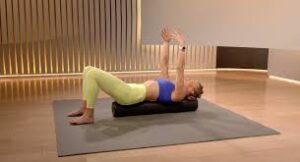
Exercises that gently stretch your upper back by extending and rotating your thoracic spine (upper back) can help you to loosen up your muscles and practice moving your torso. Choose an exercise that allows you to move within a comfortable range.
Regular Movement and Screen Adjustment
If you find yourself spending a lot of time on screens, varying your position, taking regular breaks, and adjusting your workspace can help to reduce the strain on your neck and upper back. You shouldn’t have to sit in one position for too long.
For more options, see our guide to forward head posture exercises.
An effective routine depends on a number of factors, including the symptoms you’re experiencing and your general level of fitness. If you’re not sure which type of exercises are right for you, a physical therapist can help you to design a routine that will work for you.
Common Mistakes to Avoid
Rolling directly over the neck: the roller should be kept over the upper back, without forcing it over the cervical spine.
Using too much pressure: increased pressure does not necessarily enhance the result; a trial movement should be used to assess the response, and the roller should not be used if there is pain or unusual sensation.
Looking for an instant result: a single session may alter the perception of movement, but it will not improve the habitual posture.
Foam rolling instead of strengthening: mobility drills and strengthening are two separate activities; a roller is not a replacement for the development of stability and control.
Ignoring the signs: recurring or escalating discomfort indicates the need to seek professional assessment rather than increasing the pressure and range of motion.
A rigid approach to drills: a painful movement should not be continued; the technique should be modified or the exercise abandoned; the routine should be individual, taking into account the current condition.
When to Seek Professional Advice
Consider consulting a qualified healthcare professional if neck discomfort persists, keeps returning, interferes with everyday activities, or worsens despite modifying your routine.
Seek prompt medical assessment for new or worsening arm or leg weakness, persistent numbness or tingling, or other unusual neurological symptoms. Sudden severe symptoms, a significant injury, difficulty walking, or loss of bladder or bowel control warrant urgent medical attention.
Sudden extreme symptoms, significant injury, inability to walk, or loss of bladder or bowel control should also be evaluated right away.
A physical therapist will evaluate your range of motion, strength, symptoms, and activities before developing a programme of recommended exercises.
You can also read about how a physical therapist evaluates forward head posture.
Frequently Asked Questions:
Can a foam roller fix forward head posture?
A foam roller may be a good tool for mobility exercises, but there is no proof that foam rolling alone can cure forward head posture. It is more of an optional addition to an otherwise appropriate exercise programme.
Should I put a foam roller under my neck?
Do not roll directly over the cervical spine, and do not push with excessive pressure into the neck. If you want to use a roller to aid posture-related mobility, focus on a proper upper-back exercise and utilise safe technique.
How often should I use a foam roller?
There is no known proven schedule for foam-rolling that has been proved to correct forward head posture. Take it easy at first, and work out what feels right for you. It does not mean that more or longer rolling equals better results.
Does foam rolling reduce neck pain?
Foam rolling might help some people to feel less stiff, but the evidence does not suggest that it is a proven treatment for every cause of discomfort. If your situation worsens, stop using the roller, and see a professional instead.
Is foam rolling better than stretching?
It depends on the situation, but neither option is proven to be overall superior to the other. Multiple studies show that both rolling and stretching can improve range of motion, depending on the intervention and what is being measured.
Can I improve forward head posture without a foam roller?
Yes, you can. The use of a roller is entirely optional. It might depend on the person and their situation, but an appropriate routine, general movement, and adjustments to the working environment can all be beneficial without the use of any special tools.
Bottom Line
A foam roller can help with upper-back mobility, but is it a definitive solution to forward head posture? Use it wisely, avoid rolling directly over the neck, and don’t expect miracles.
In order to effectively address forward head posture, foam-rolling should be combined with mobility work and the development of proper motor patterns and control throughout the neck, shoulders, and upper back, as well as regular movement and an ergonomic workstation setup.
Consult a medical professional if symptoms persist or if you have concerns beyond the scope of this article.
References
- Konrad A, et al. Static Stretch Training versus Foam Rolling Training Effects on Range of Motion: A Systematic Review and Meta-Analysis. Sports Medicine. 2024.
- Sheikhhoseini R, et al. Effectiveness of Therapeutic Exercise on Forward Head Posture: A Systematic Review and Meta-analysis. Journal of Manipulative and Physiological Therapeutics. 2018.
- Xing Y, et al. Therapeutic Exercise for Forward Head Posture in Neck Pain Patients: A Systematic Review and Meta-Analysis. Journal of Pain Research. 2026.
- Cleveland Clinic. Foam Rolling: What It Is and How to Do It.
Why Trust Us?
Learn about our approach to research, content quality, and editorial standards on our Why Trust Us page.
For Educational Purposes Only
This article is for general educational purposes and is not a substitute for individual medical advice, diagnosis, or treatment. Read our medical review process and educational disclaimer.