
If you are still wondering, which muscles in my neck were damaged the most by my forward head posture then, you have come to the right place.
I am going to answer this question using my personal experience.
Basically, I developed bad neck posture because I was working for a multi-national corporation. I am not blaming the job. It’s just that my job profile required me to sit in front of the computer screen for hours daily.
This in turn meant that I was literally glued to the screen for hours. As time passed, my back started to slouch as my head was constantly shifting forward. It was as though it wanted to take a closer look at my computer screen.
This is what finally led to what we term as a crane neck posture.
I stated to feel a lot of unwanted pressure on the back and side of the neck. With time, my throat started to pain and I had a tough time sitting on my laptop chair for more than 20 minutes tops at one go.
So, I realized I needed to visit the doc.
Well, here is what I found:
Points Covered in this Article:
1) What Went Wrong with My Neck Posture?
2) Impact of My Forward Head Posture on My Cervical Flexors
3) Impact of My Bad Neck Posture on My Shoulder Blade Muscles
4) Impact of My Forward Neck on My Upper Thoracic & Lower Cervical Muscles
5) FAQs on Text Neck and Muscle Pain
6) How was My Overall Experience?
What Went Wrong with My Neck Posture?
A good neck posture in one wherein I am capable of seeing what lies right in front of me without having to bend my neck or raise it. Simply put, my head should be sitting right above my shoulders.
My ears should be in line with my shoulder blades. Well, they can be half an inch behind my shoulder blade as well.
Nonetheless, the ears should not be in front of the front shoulders.
Unfortunately, my ears always were 3 inches ahead of my body’s vertical line.
I later learnt that every inch that my head exceeded my body’s vertical line, added 12 pounds of unwanted weight onto my spine.
So, I was adding 35 pounds (or even more) of extra weight onto my cervical spine.
So, What Went Wrong?
I have already discussed the role of my laptop in gifting me a text neck. Nonetheless, I had coupled it with my awful habit of watching reels in my spare time.
I either sat on a couch or lay on the bed watching reels for hours. The posture was again not ideal. My head always shifted forward while I watched the videos on my cellphone.
So, my cellphone screen height was to blame for my nerd neck.
The end result was that in a few years, I had developed a permanent slouch.
So, even when I took a walk, my head would be two to three inches in front of my shoulders.
Impact of My Forward Head Posture on My Cervical Flexors
Well, now, let me disclose the muscles that were impacted the most by my vulture neck posture.
The first was a muscle that is located right in front of my cervical spine. This is also known as the longus colli and the longus capitus.
Both these muscle groups comprise of the cervical flexor muscle (the deep ones to be precise). In layman terms, these muscles are right in front of your cervical spine. They help provide stability to the neck.
In my case, the cervical flexors muscles were lengthened.
This is because I was constantly stretching my neck forwards. So, both the longus colli and the longus capitus stretched beyond their limit and became longer than normal.
The end result was a stiff and painful neck. It also resulted in my neck losing its optimal control mechanism.
So, when I asked the doctor, he said, “the lengthening of my cervical flexors was because I tucked my chin to my chest. This was because my head was shifting forward constantly from its normal position.”
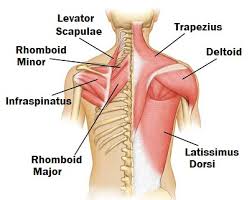
Impact of My Bad Neck Posture on My Shoulder Blade Muscles
The second most affected muscle was the one located on my shoulder blade. These are also termed as the retractor muscles located on the shoulder blade.
These muscles help push my chest out and pull my shoulder blades in. This helps me maintain optimal posture – shoulders “in” and chest “out”.
My forward neck posture put extreme pressure on both my rhomboid muscles and the trapezius (the mid portion to be precise) muscles. As my shoulder blade retractors weakened, my shoulders hunched forward.
This lead to pain in the neck and the upper back area. It also forced my head to push forward even when I am performing a simple task such as walking down the alley.
Impact of My Forward Neck on My Upper Thoracic & Lower Cervical Muscles
The final muscle groups to be affected by my poor neck posture were the erector spinae. These muscles comprise of the lower cervical muscle and the upper thoracic muscles.
Their role is to maintain a spine that is straight and strong. These muscles also help me rotate my spine while I am shifting and twisting. Unfortunately, my forward head posture forced the erector spinae to lengthen unnaturally.
When the lower cervical muscle and the upper thoracic muscles lengthened, my spine lost its natural strength. I therefore found it tough to maintain a straight posture. My thoracic spine was damaged owing to my forward head tilt.
My head slid forward, my shoulders hunched and my upper back slouched. There was considerable stiffness, pain and discomfort on my neck, shoulder and the upper back area.
FAQs on Text Neck and Muscle Pain:
Q-1: Which neck muscles are most affected by forward head posture and why?
A-1: Forward head posture (FHP) creates a clear muscle imbalance—some muscles weaken while others become tight and overactive. The most affected include the deep cervical flexors (which weaken) and the upper trapezius and suboccipital muscles (which tighten).
Research shows that for every 1 inch the head moves forward, the effective weight on the neck increases by up to 10 pounds, placing excessive strain on these muscles.
According to the American Physical Therapy Association, this imbalance is one of the leading causes of chronic neck pain in the U.S., affecting nearly 30% of adults annually.
Q-2: What are the symptoms of deep cervical flexor weakness in forward head posture?
A-2: The deep cervical flexors—specifically the longus colli and longus capitis—play a crucial role in stabilizing the neck. When weakened, symptoms include poor posture endurance, frequent neck fatigue, and difficulty maintaining a neutral head position.
Studies show that individuals with FHP have 30–50% reduced activation of these muscles. The Journal of Orthopaedic & Sports Physical Therapy highlights that this weakness leads to overcompensation by superficial muscles, increasing strain and discomfort.
People often report headaches and a “heavy head” feeling by the end of the day.
Q-3: Which muscles become tight in forward head posture?
A-3: Several muscles become chronically tight due to FHP, including the upper trapezius, levator scapulae, sternocleidomastoid, and suboccipital muscles.
These muscles work overtime to hold the head in a forward position. Research indicates that muscle tightness can increase resting tension by 20–40%, leading to stiffness and reduced mobility.
The National Institutes of Health notes that prolonged muscle shortening contributes to pain and reduced blood flow, which may worsen symptoms over time.
Q-4: What is the full muscle imbalance pattern in forward head posture?
A-4: FHP follows a predictable pattern known as “upper crossed syndrome.” In this condition, the deep neck flexors and lower trapezius weaken, while the chest muscles and upper trapezius tighten.
Studies show this imbalance affects posture in over 60% of desk workers in the U.S. The American Chiropractic Association explains that this pattern disrupts normal alignment, leading to chronic pain and reduced functional capacity.
Correcting this imbalance requires both strengthening weak muscles and stretching tight ones.
Q-5: Which neck muscles are damaged from tech neck and how can they be fixed?
A-5: “Tech neck” primarily damages the deep cervical flexors while overloading the upper trapezius and suboccipital muscles. With Americans spending an average of 7+ hours daily on screens, this issue is rapidly increasing.
The Pew Research Center reports high digital device usage across all age groups. Fixing these muscles involves chin tucks, posture correction, and regular breaks.
Strengthening exercises can improve muscle function by up to 40% within 6–8 weeks, according to clinical studies.
Q-6: What happens when the longus colli and longus capitis become weak?
A-6: Weakness in these deep stabilizing muscles reduces the neck’s ability to maintain proper alignment.
This leads to increased reliance on superficial muscles, causing fatigue and pain. Research shows that weakness in these muscles is present in over 70% of individuals with chronic neck pain.
The Spine Journal emphasizes that targeted strengthening can restore function and significantly reduce discomfort.
Q-7: Why do suboccipital muscles become painful in forward head posture?
A-7: The suboccipital muscles at the base of the skull become shortened and overworked in FHP. This can lead to tension headaches and restricted neck movement.
Studies indicate that up to 50% of tension headaches originate from these muscles. The Cleveland Clinic notes that sustained contraction reduces blood flow, leading to pain and stiffness.
Q-8: How does forward head posture weaken neck stabilizer muscles over time?
A-8: Over time, FHP reduces activation of stabilizing muscles while increasing reliance on larger, superficial muscles. This leads to muscle fatigue and imbalance.
Research shows that prolonged poor posture can decrease stabilizer muscle strength by up to 35%. The Harvard Medical School highlights that consistent posture correction can reverse these effects gradually.
Q-9: What are the symptoms of upper trapezius strain from forward head posture?
A-9: Symptoms include neck stiffness, shoulder pain, and reduced range of motion. The upper trapezius becomes overactive, leading to chronic tension.
Studies show that 45% of office workers report upper trapezius pain due to poor posture. The American Academy of Orthopaedic Surgeons recommends stretching and strengthening exercises to relieve strain.
Q-10: Which muscles shorten and tighten the most in forward head posture?
A-10: The most affected muscles include the pectoralis major/minor, upper trapezius, and suboccipitals.
These muscles can shorten by up to 10–15% over time, limiting mobility. The National Academy of Sports Medicine explains that regular stretching can restore flexibility and improve posture.
Q-11: How does forward head posture affect the sternocleidomastoid and scalene muscles?
A-11: These muscles become overactive and tight, contributing to neck stiffness and even breathing inefficiency.
Research shows that poor posture can reduce lung capacity by up to 30%. The American Lung Association highlights the importance of posture in respiratory health.
Q-12: How can you identify damaged neck muscles from prolonged screen use?
A-12: Common signs include persistent neck pain, stiffness, headaches, and poor posture awareness.
Studies show that over 65% of adults experience neck pain related to screen use. The Mayo Clinic recommends posture assessments and ergonomic adjustments for early detection.
Q-13: Which muscles are overworked and inflamed in forward head posture?
A-13: The upper trapezius, levator scapulae, and suboccipital muscles are the most overworked. Chronic inflammation in these muscles can lead to long-term pain.
Research indicates that inflammation markers increase significantly in individuals with poor posture habits. The Johns Hopkins Medicine emphasizes early intervention to prevent chronic issues.
Q-14: What are the best exercises to fix weak and tight neck muscles from bad posture?
A-14: Effective exercises include chin tucks, scapular retractions, and chest stretches. Studies show that consistent exercise programs can reduce pain by 50–70% within 8–12 weeks.
The American Council on Exercise recommends combining strengthening and stretching for best results.
Q-15: Can forward head posture damage be reversed with proper treatment?
A-15: Yes, most damage from FHP is reversible with consistent effort. Research shows that posture correction programs can improve alignment and reduce pain in over 70% of cases.
The World Health Organization supports physical activity and ergonomic interventions as key solutions. Early action leads to faster recovery and long-term benefits.
Free Tip of the Day:
Forward head posture doesn’t just affect how you look—it significantly alters muscle function, leading to pain and long-term issues.
The good news?
With targeted exercises, awareness, and consistent habits, you can restore balance and protect your neck health effectively.
How was My Experience?
There is only one word to describe my experience – terrible!
Without a shadow of a doubt, the pain and discomfort that I experienced was not worth describing.
What I would like to state is that I needed forward head posture fix. All the muscle groups of my neck were affected by my bad neck posture.
Apart from the muscles I’ve mentioned above, my suboccipitals muscles were also weakened. This in turn hampered my neck rotation and normal head movement to a great extent.
The pain, stiffness and discomfort caused was coupled with weakened tendons and ligaments. I would thus state that my forward head posture imbalanced the muscles in my neck and upper back.
I would recommend all of you reading my article to make an effort to have a good head posture. Avoid working for long hours on the computer table. Do not spend too much time on the cellphone.
Finally, make a conscious effort to avoid sliding your head forward.
Recommended:
- https://bestforwardheadposturefix.com/how-military-neck-posture-strains-jaw-muscles/
- https://bestforwardheadposturefix.com/how-to-stretch-the-chest-muscles-to-open-the-shoulders-and-improve-posture/
- https://bestforwardheadposturefix.com/how-to-strengthen-neck-extensor-muscles-to-correct-posture/
- https://bestforwardheadposturefix.com/how-prolonged-laptop-use-strains-neck-muscles/
- https://bestforwardheadposturefix.com/how-long-texting-sessions-strain-neck-muscles/
- https://bestforwardheadposturefix.com/how-genetically-short-neck-muscles-cause-head-forward-position/
- https://www.spine-health.com/conditions/neck-pain/how-measure-and-fix-forward-head-posture
- https://www.healthline.com/health/bone-health/forward-head-posture#research
- why trust us?
- for educational purpose only