Yes, microbreaks at work reliably reduce fatigue and boost vigor, though they won’t fix a genuinely overloaded workday on their own. Start with a 30 to 60 second nonwork pause every 20 to 60 minutes, then add one 2 to 3 minute active break each hour. That single habit change is backed by meta-analytic and randomized trial evidence, and it pairs well with the neck-specific routines covered later in this guide.
TL;DR:
- Microbreaks of 10 minutes or less reliably boost vigor and decrease fatigue, with a small but consistent effect across various job types.
- Active microbreaks of 2 to 3 minutes hourly improve metabolic markers such as glucose regulation and insulin sensitivity over 12 weeks.
- Performance benefits depend on task complexity, with deep focus tasks less likely to improve from microbreaks, especially if content is work-related during the pause.
- Short visual resets every 20 to 30 minutes and active breaks hourly are the most supported, but adherence of around 80% or higher is key to seeing benefits.
- Neck-specific microbreaks, like chin tucks and scapular squeezes, are particularly helpful for counteracting forward head posture and reducing neck tension.
Table of Contents
- What the Research Says About Microbreaks at Work
- What Microbreaks Help With, and Where They Fall Short
- How Often and How Long Should You Take a Microbreak?
- Microbreak Activities That Actually Work
- How Should Managers Build a Microbreak Policy?
- What Does a Sample Microbreak Schedule Look Like?
- Why Forward Head Posture Makes Microbreaks Even More Important
- A Realistic Look at Making Microbreaks Stick
- Build Neck-Specific Microbreaks Into Your Routine
- Sources
What the Research Says About Microbreaks at Work
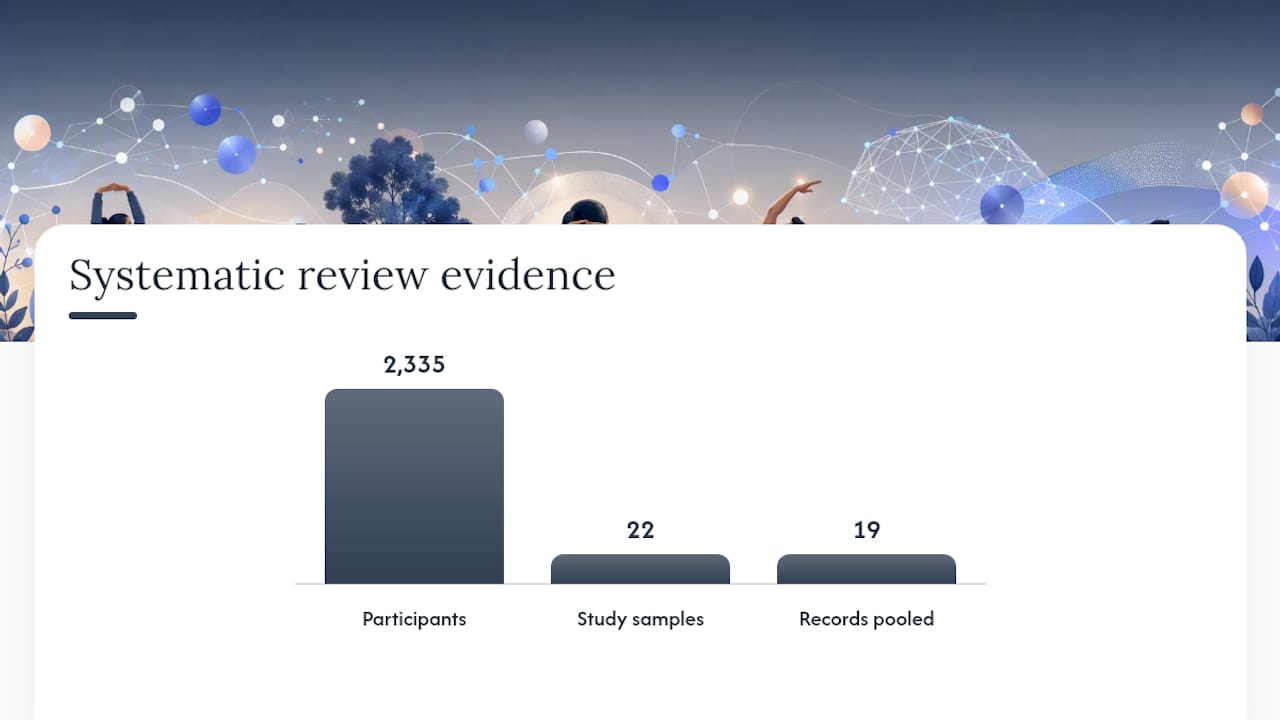
The strongest evidence on microbreaks at work comes from a systematic review and meta-analysis published in PLOS One, which pooled 19 records and 22 study samples covering 2,335 participants. The finding: microbreaks of 10 minutes or less produce a small but statistically real bump in vigor (d = 0.36) and a similar drop in fatigue (d = 0.35). Those effect sizes are modest by clinical standards, but they’re consistent across a wide range of jobs and break formats, which is rare in workplace wellness research.
Performance is where things get more interesting, and less tidy. The same review found that whether a microbreak improves output at all depends heavily on the task and how long the break runs. Longer microbreaks tended to help more with certain performance measures, but the relationship isn’t linear, and clerical or repetitive tasks responded differently than complex cognitive work.
A separate 12-week randomized controlled trial on hourly micro-exercise breaks adds a metabolic angle the meta-analysis didn’t capture. Eighty-six sedentary office workers took 3-minute movement breaks every hour; 79 completed the full assessment, a 91.9% completion rate. Researchers tracked fasting glucose, postprandial glucose, HOMA-IR (a marker of insulin resistance), waist circumference, systolic blood pressure, HDL cholesterol, and self-reported energy. All of them improved. Adherence to the hourly routine averaged 82%, which turns out to matter more than almost any other variable in this research.
Here’s the honest summary of what the evidence supports and what it doesn’t:
- Microbreaks reliably raise short-term vigor and lower fatigue across most job types.
- Hourly 3-minute active breaks improve metabolic markers like glucose and insulin sensitivity over a 12-week window.
- Performance gains are real but task-dependent. Don’t expect a 60-second pause to rescue a task that requires deep, uninterrupted focus.
- The break’s content matters. Work-related activities during a “break” don’t deliver the same recovery as genuinely stepping away.
The takeaway isn’t that microbreaks are a cure-all. It’s that they’re one of the few workplace interventions with both a meta-analysis and an RCT behind them, which puts them ahead of most productivity advice you’ll read this year.
What Microbreaks Help With, and Where They Fall Short
Microbreaks at work do a few things well and a few things not at all. Knowing the difference keeps expectations realistic and keeps you from writing off the practice the first time it doesn’t solve a deeper workload problem.
Where the evidence is solid:
- Short-term mood and energy lifts, especially when the break involves movement or a change of scenery.
- Reduced subjective fatigue, which shows up consistently across the PLOS One meta-analysis’s pooled samples.
- Metabolic improvements from hourly active breaks, including better glucose regulation and insulin sensitivity over a 12-week trial period.
- Lower musculoskeletal strain when breaks include stretching or postural resets, particularly for people who sit most of the day.
Where microbreaks won’t move the needle:
Complex, sustained cognitive work doesn’t automatically benefit from frequent interruption. If a task demands deep focus, a poorly timed break can cost you the ramp-up time it takes to get back into flow. Microbreaks also can’t compensate for chronic overwork. If your calendar is genuinely overbooked, a 90-second stretch won’t undo eight hours of back-to-back meetings.
There’s also a content trap worth flagging. The PLOS One review found that work-related activities during a break, like quickly answering one more email, are less restorative than genuinely nonwork activities such as walking, stretching, or looking out a window. Your brain doesn’t clock that as recovery time even if your calendar does.
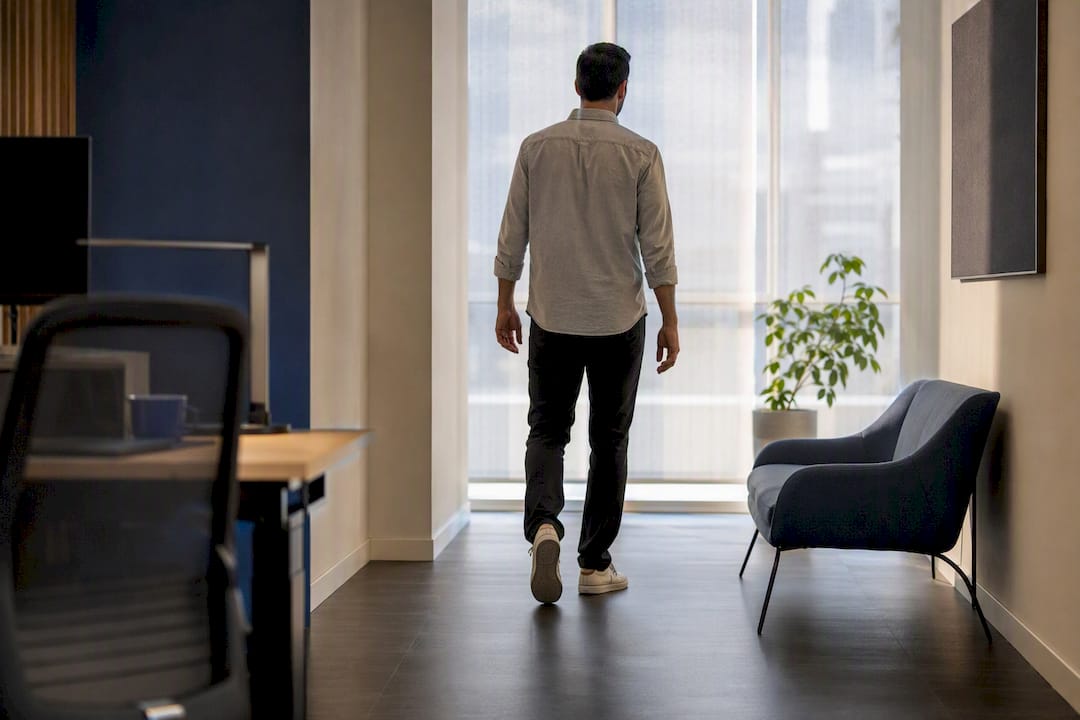
Safety and adherence deserve a mention too. Active breaks should stay low-impact, especially in office attire or tight spaces. Bodyweight movements that need no equipment and minimal room, think shoulder rolls or seated marches, tend to stick better than anything requiring a change of clothes or a trip to a gym.
Pro Tip: Treat your microbreak like a genuine mental exit, not a shorter version of work. Standing up to check Slack doesn’t count as recovery, even though it feels like a break.
How Often and How Long Should You Take a Microbreak?
Frequency and duration matter more than most people assume, and the research gives fairly specific guidance rather than vague “take breaks often” advice.
For visual and postural relief, a 30 to 60 second pause every 20 to 30 minutes is enough to reset eye strain and reduce static muscle tension. This is the lightest tier of microbreak, and it requires almost no disruption to your workflow.
For metabolic and musculoskeletal benefit, aim for a 2 to 3 minute active break every hour. This is the format tested in the RCT on hourly micro-exercise breaks, and it’s the tier that moved glucose, blood pressure, and HDL cholesterol numbers over 12 weeks.
Anything up to 10 minutes still qualifies as a microbreak under the definition used in the PLOS One meta-analysis. Beyond that, you’re into standard break territory, and that’s appropriate after a task that’s genuinely draining, like a two-hour negotiation call or a dense financial review.
- Every 20 to 30 minutes: 30 to 60 second visual or postural reset.
- Every 60 minutes: 2 to 3 minute active break (walking, stretching, bodyweight movement).
- After heavy cognitive load: consider a full break beyond 10 minutes rather than forcing a microbreak to do too much work.
- Adherence target: aim for 80% or higher consistency with your chosen routine. Research on adherence and musculoskeletal outcomes found that hitting roughly this threshold is what separates people who see real relief from people who don’t.
That last point is worth sitting with. The exact schedule matters less than whether you actually follow it.
Microbreak Activities That Actually Work
Not every microbreak activity targets the same problem. Eye strain, stiff shoulders, and mental fog need different fixes, so matching the activity to what you actually need makes the habit stick.
-
Physical resets. Shoulder rolls, seated or standing marches in place, and chair squats work in office clothes and tight spaces. These are the movements referenced in the micro-exercise RCT, and their low barrier to entry is part of why adherence hit 82% in that trial.
-
Breathing practices. Box breathing (four counts in, four counts hold, four counts out, four counts hold) or simple paced breathing at roughly 5 to 8 breaths per minute activates the parasympathetic nervous system and can noticeably lower stress in under two minutes. This pace is slower than most people breathe naturally, which is exactly the point.
-
Visual resets. The 20/20/20 rule (every 20 minutes, look at something 20 feet away for 20 seconds) reduces digital eye strain. A 40-second look at greenery, whether a plant, a park view, or even a photo, has been shown in experimental studies to help restore attention faster than looking at a blank wall.
-
Social or relational microbreaks. A quick, genuine check-in with a coworker or a short appreciative message can lift mood, but they’re not always the right tool. If you’re mentally drained rather than isolated, a solitary reset like a walk or breathing exercise tends to work better than another conversation.
Matching the activity to the goal is where most people go wrong. If you need attention restoration, go visual or take a short walk. If you need postural relief, go physical. If you need emotional recovery from a tense meeting, breathing or a brief walk outperforms scrolling your phone, which rarely counts as genuine rest.
Pro Tip: Keep a short list of two or three go-to microbreaks on a sticky note or phone reminder. Decision fatigue is real, and “what should I do for my break” can eat up the very time you were trying to reclaim.
If you want a short menu of habit ideas that double as social or reflective microbreaks, this guide on short prayers and habits for busy workdays offers a few low-effort formats worth adapting, even for a purely secular pause.
How Should Managers Build a Microbreak Policy?
Individual habits only get you so far. A workplace culture that treats pauses as suspicious kills adherence faster than any bad schedule, and building genuine permission is where most microbreak initiatives actually succeed or fail.
Start with meeting norms. Blocking 50-minute meetings instead of a full hour, or explicitly building a 2 to 3 minute pause into agendas longer than 45 minutes, sends a clear signal that short pauses aren’t slacking. The CDC’s Workplace Physical Activity Break Guide recommends a “start low and go slow” approach, meaning simple, low-cost activities before anything elaborate. Managers who visibly take their own microbreaks, rather than just approving them for others, are one of the cheapest levers for boosting team uptake.
Interestingly, research out of the University of Queensland found that combining a microbreak with a bit of light planning or “active strategizing,” rather than pure rest, produced the highest sustained energy and motivation. That’s a useful nuance for managers designing pilots: a break that includes 30 seconds of mental prioritization alongside the physical reset may outperform a break that’s purely passive.
A simple 4-week pilot works well for testing this at team level:
- Week 1: Introduce the concept. Share the goal (better focus and energy, not a productivity mandate) and ask for one self-reported energy rating per day (1 to 10 scale).
- Week 2 to 3: Run the routine daily. Use calendar nudges or a shared reminder rather than requiring check-ins, which can feel coercive.
- Week 4: Compare adherence rate and average energy score against baseline, and ask for open feedback on what stuck and what didn’t.
| Pilot element | What to track | Why it matters |
|---|---|---|
| Adherence rate | % of scheduled microbreaks actually taken | Predicts whether benefits will show up at all |
| Self-reported energy | Daily 1 to 10 rating | Cheap, fast signal that correlates with the meta-analysis’s vigor findings |
| Participation opt-in rate | % of team voluntarily joining | Flags whether the culture around breaks feels safe |
| Qualitative feedback | Open comments at week 4 | Surfaces barriers a number won’t catch |
Inclusion matters here too. Not every employee can do a standing march or a chair squat, so offer seated or stationary alternatives, and make sure private break options exist for people who don’t want a visible pause at their desk. A partner resource on high-performance productivity strategies covers additional energy-management tactics worth pairing with a formal pilot.
What Does a Sample Microbreak Schedule Look Like?
A workable schedule beats a perfect one you never start. Here’s a template built directly from the frequency guidance above.
-
Individual contributor, hourly rhythm: :20 past the hour, 30 to 60 second visual reset (look away from the screen). :00 on the hour, 2 to 3 minute active break (stretch, walk to refill water, shoulder rolls). Repeat through the workday, adjusting around meetings.
-
Team rhythm for meeting-heavy roles: Default to 50-minute meetings instead of 60. Add a manager script like: “Let’s take two minutes to stand and stretch before we move to the next agenda item.” This normalizes the pause without singling anyone out.
-
One-week pilot checklist:
- Day 1: Pick one visual and one active microbreak format. Set two calendar reminders.
- Days 2 to 4: Follow the routine, log a quick daily energy score (1 to 10).
- Day 5: Compare your energy scores to the previous week and note any missed breaks and why.
- Weekend reflection: Decide whether to keep the same routine or adjust timing before week two.
This structure works whether you’re testing it solo or rolling it out to a team of twelve. The evaluation questions matter as much as the schedule: did energy scores move, did the routine survive a busy day, and what got in the way when it didn’t.
Why Forward Head Posture Makes Microbreaks Even More Important
Sitting at a desk for hours pulls your head forward and down, especially when you’re staring at a laptop screen below eye level. That static position loads the cervical spine far more than an upright, neutral posture does, and it’s one reason neck stiffness and tension headaches creep in by mid-afternoon. A microbreak is a natural moment to interrupt that load before it compounds.
Three movements fit easily into a 30 to 180 second window and target the muscles that counteract forward head posture:
- Chin tucks: Gently draw your chin straight back, as if making a double chin, hold for 3 to 5 seconds, and repeat 8 to 10 times. This activates the deep neck flexors without straining the joint.
- Upper-back stretch: Interlace your fingers, round your upper back, and reach forward while dropping your chin slightly. Hold 15 to 20 seconds.
- Scapular squeeze: Pull your shoulder blades together and slightly down, hold 5 seconds, release. Repeat 10 times.
These prioritize scapular retraction and chin-tuck activation over aggressive neck stretching, which protects cervical structures while training the postural muscles that actually hold your head in place. For a full walkthrough, Bestforwardheadposturefix’s 3-minute daily neck alignment routine builds directly on these movements, and the guide on isometric neck exercises offers a slightly more advanced option once the basics feel automatic.
A Realistic Look at Making Microbreaks Stick
My own take, after going through this research, is that most people fail at microbreaks not because the science is weak but because they pick a schedule that’s too ambitious for a real workday. A hypothetical routine with five different break types sounds great on paper and falls apart by Wednesday.
What tends to work is picking one visual reset and one physical reset, attaching them to something that already happens every hour (a meeting ending, a coffee refill, a calendar chime), and letting that be the entire system for the first two weeks. The habit trick that matters most is removing the decision: if you have to think about what to do on your break, you’ll skip it on a busy day. Pre-decide it.
Anyone dealing with the neck tightness and dull headaches that come from hours of forward head posture should treat the chin tuck and scapular squeeze as the default physical microbreak rather than an optional add-on. It takes less time than checking a phone notification, and it directly counters the posture that caused the discomfort in the first place. For a deeper protocol once the basics feel routine, Bestforwardheadposturefix’s library of posture guides is worth a look.
— Madhukar
Build Neck-Specific Microbreaks Into Your Routine
The guidance above gets you started, but generic advice to “stretch more” doesn’t tell you which stretch actually corrects forward head posture versus one that just feels good for thirty seconds. Bestforwardheadposturefix fills that gap with structured, science-backed routines built specifically around cervical alignment, not generic office wellness tips repackaged from a productivity blog.

If you’ve been using microbreaks for general energy and fatigue relief, the next step is making a few of them posture-specific. Start with the 3-minute neck alignment routine, which fits neatly into the hourly active-break window covered earlier in this guide. For anyone whose desk setup is part of the problem, the site’s breakdown of how standing desks affect forward posture is worth reading alongside it. Visit Bestforwardheadposturefix to find the full routine and start applying it during your next scheduled break.
Sources
- “Give me a break!” A systematic review and meta-analysis on the efficacy of micro-breaks for increasing well-being and performance
- Micro-exercise breaks every hour: a feasible strategy to improve metabolic health in sedentary office workers
- Workplace Physical Activity Breaks resource guide — CDC