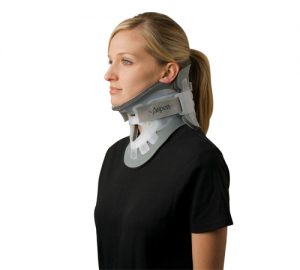
Forward head posture (also known as “nerd neck” or “tech neck”) is a position of the head in which the cranium is located forward relative to the shoulder girdle.
If you spend too much time looking down at a smartphone or a computer, you might notice “nerd neck” or develop discomfort in the neck and upper back.
You may be wondering whether a cervical brace can help bring your head into a more comfortable, neutral position.
There are some orthotic devices that can improve measured signs of forward head posture, but a regular medical cervical collar is not a proven effective treatment for “nerd neck.”
It is important to make a distinction between standard medical neck braces and posture-support braces and to take a look at the available research, as well as what other treatment options can be beneficial.
Article Index
- What Is Forward Head Posture (Nerd Neck)?
- Cervical Collar vs. Posture Corrector: What Is the Difference?
- What Does Research Say About Braces for Forward Head Posture?
- Can You Correct Nerd Neck by Wearing a Brace Alone?
- Safety Considerations Before Using a Cervical Brace
- Alternatives to Relying on a Brace
- When Should You Seek Professional Advice?
- Frequently Asked Questions
- Bottom Line
- References
What Is Forward Head Posture (Nerd Neck)?
A forward head posture is when your head is positioned in front of your shoulders instead of on top of them as it should. You may notice that you have this problem if you find yourself frequently looking down at your phone or bending over your desk.
It is important to remember that it doesn’t necessarily mean you have some kind of spinal disorder. We all shift positions constantly and there isn’t really a ‘correct’ way to sit or stand for prolonged periods of time.
Holding this position for extended periods may contribute to neck discomfort in some people. However, forward head posture alone does not establish the cause of chronic neck pain, which can have several contributing factors.
If you want to understand the signs in more detail, see our guide to forward head posture symptoms.
Cervical Collar vs. Posture Corrector: What Is the Difference?
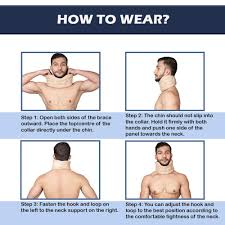
The terms “cervical brace,” “neck brace,” and “posture corrector” are sometimes used interchangeably online. They do not necessarily describe the same device.
Medical cervical collars
Medical cervical collars can be used to support or limit neck movements. Depending on the situation, a doctor may advise you to use one after an injury, a procedure or for another medical reason.
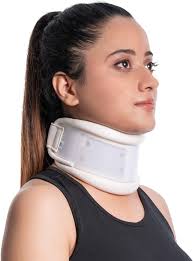
A soft collar and a hard collar also differ in the degree to which they limit motion. Neither should be worn as an everyday device to correct common forward head postures.
Posture-support devices and orthoses
Some orthotic devices designed for specific purposes can affect head or neck positioning. These devices differ in design, method of support, and use.
Research on these types of devices may have relevance to forward head posture, but these findings cannot be extrapolated to every available commercial neck brace or collar.
If you are considering the use of an external support device, you should read the manufacturer’s intended use and consult a qualified medical professional.
Our guide on how to use a posture-correction device correctly provides related information.
Active posture management
Active methods work to get you moving, and include exercising, when appropriate, and making changes to activities of daily living.
These techniques do not actively support the neck in its normal position, but rather focus on promoting normal movement and reducing the stresses placed on the neck and upper back.
The method used will depend on your specific symptoms, personal goals, and whether there is an underlying medical condition that may need to be addressed.
What Does Research Say About Braces for Forward Head Posture?
A relevant systematic review is the 2025 Effectiveness of orthotic devices in the treatment of forward head posture published in the Journal of Rehabilitation and Assistive Technologies Engineering.
The researchers evaluated ten studies on orthotic devices and concluded that while they showed improvements in the targeted measurements, the devices need to be further developed, and more research is needed to evaluate the devices’ effectiveness in the long term.
You can read the full systematic review on PubMed Central.
These findings are promising, but several limitations matter when interpreting them:
- Different devices were studied. The results do not establish that an ordinary foam collar or rigid medical neck brace will have the same effects.
- The studies used different approaches. Some interventions combined a device with exercise or other treatment, making it difficult to attribute every improvement to the device alone.
- Improved measurements do not automatically mean lasting correction. A change in a postural measurement during or after treatment does not prove that the result will persist indefinitely.
- More long-term research is needed. The review identified uncertainty about how well improvements are maintained over time.
The evidence suggests cautiously that some orthotic devices may indeed help in improving measured forward head posture, but the evidence does not support the universal use of a cervical brace for all sufferers of nerd neck.
What about the risks of wearing a rigid neck collar?
The researchers conducted a separate systematic review of 2022 to determine adverse events associated with hard-collar use for an extended period.
Researchers identified several problems, including pressure ulcers and dysphagia. The study has shown that evidence on the efficacy and harm of a prolonged collar was insufficient.
Read the systematic review on prolonged hard-collar complications.
This research concerns prolonged use of rigid collars for medical immobilisation. Its findings should not automatically be applied to every posture-support device, because these devices differ in design and intended use.
However, the findings highlight the importance of using each device appropriately and following relevant safety guidance.
In general, it cannot be said that an individual should use a brace in a specific manner on a regular basis, or that it is guaranteed to cure one of the forward head postures permanently.
Can You Correct Nerd Neck by Wearing a Brace Alone?
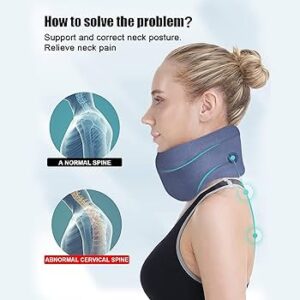
A brace may affect posture while you are wearing it, based on what is designed and how it is used. This does not necessarily mean it will address all of the underlying issues which lead to forward head posture, or that it will create a lasting effect after being worn.
For example, someone who regularly leans forward to look at a low laptop screen may continue doing so when not wearing the device. Someone else may experience discomfort in their neck due to another issue that may require further diagnosis.
Rather than relying on a brace alone, consider the factors affecting your comfort and daily activities. Depending on your circumstances, adjusting your screen position, changing positions regularly, and seeking professional advice when needed may be more appropriate.
Depending on the case, the most relevant options include:
- adjusting the screen or reading angle to avoid constant leaning forward,
- changing postures more often instead of staying in the same position for too long,
- exercising in cases when it’s possible and beneficial for the patient’s condition
- consulting a specialist if the discomfort persists or if the daily activities are limited.
These strategies cannot guarantee a particular postural outcome, but they may help support neck comfort and everyday function.
Safety Considerations Before Using a Cervical Brace
Before using a cervical brace, make sure to identify the type of device and its intended purpose.
Keep these precautions in mind:
- Do not use a rigid medical collar simply to push your head backward. If a collar has been prescribed for an injury or another medical condition, follow the instructions provided by your treating professional.
- Do not assume that longer wear is better. The appropriate duration depends on the device and the reason for using it. There is no universal daily schedule for correcting nerd neck.
- Do not force your neck into a position that causes pain. A device should not be used to forcefully pull your head backward or override discomfort.
- Pay attention to new or worsening symptoms. Stop using a non-prescribed posture device if it causes significant discomfort, skin problems, swallowing difficulty, breathing difficulty, or other concerning symptoms. Seek appropriate medical advice.
- Ask for professional guidance if you have an injury or an existing neck condition. This is particularly important before using a device that restricts neck movement.
A cervical brace cannot determine the cause of neck discomfort or replace a proper assessment. If a healthcare professional has prescribed a collar, consult them before changing how or when you wear it.
Alternatives to Relying on a Brace
If your aim is to manage forward head posture, apart from the recommendations a medical practitioner may give, you can also consider the following options.
Adjust your screen position
Adjust your screen so you can read comfortably without repeatedly leaning your head forward. You may be able to improve your viewing position by changing the text size, viewing distance, or screen height.
For computer users, our guide to fixing nerd neck by adjusting monitor height explains practical workstation adjustments.
Change positions throughout the day
Try not to remain in one position for too long. Stand up, walk briefly, or change your sitting position when practical. The key is to vary your posture throughout the day rather than trying to maintain one supposedly perfect position.
Consider suitable neck exercises
Appropriate exercises may help some people, depending on their symptoms and physical abilities. A qualified healthcare professional or physical therapist can help determine which movements are suitable for you.
You can read about chin tucks for forward head posture and gentle neck stretches.
Take it slow and do not push through any pain or discomfort; if an exercise makes your symptoms worse, stop doing it.
Get an assessment if the problem persists
A qualified physical therapist or other health care provider can help determine this by evaluating your symptoms, range of motion and activities of daily living as well as any pertinent medical history. This may help identify if posture, an exercise program, a device or other treatment options are right for you.
Our article explains how a physical therapist evaluates forward head posture.
When Should You Seek Professional Advice?
Consider getting a medical assessment for ongoing neck discomfort that is recurring, interrupting sleep, or impacting your ability to work or do things you usually do.
Get one right away if your neck pain is due to an injury, or is associated with new or worsening weakness in your limbs, significant numbness, trouble walking or coordinating movements. Sudden severe symptoms or difficulty breathing or swallowing require immediate attention.
These symptoms should not be treated with an over-the-counter posture brace. The next step depends on the symptoms and their underlying cause.
Frequently Asked Questions:
Can a cervical brace cure nerd neck?
Some purpose-designed orthotic devices may improve measured forward head posture, according to the 2025 systematic review discussed above. However, the evidence does not establish that a standard cervical collar can permanently correct nerd neck.
Is a neck brace the same thing as a posture corrector?
No. A medical cervical collar is designed to support or restrict neck movement for specific clinical purposes. A posture-support device is intended to influence positioning. Their designs, intended uses, and evidence bases differ, so they should not be treated as interchangeable.
How many hours per day should I wear a cervical brace for posture correction?
There is no universal daily wearing schedule for correcting forward head posture. The appropriate duration depends on the specific device and its intended purpose. If a cervical collar has been prescribed by a healthcare professional, follow their instructions and consult them before making changes.
Can a cervical collar cause any problems?
Prolonged use of rigid medical collars has been associated with complications, including pressure ulcers and difficulty swallowing. These findings do not mean that all posture-support devices carry the same risks. Use a device for its intended purpose and follow appropriate professional guidance.
What are the alternatives to a brace?
Depending on your circumstances, you can adjust your workstation, vary your sitting position throughout the day, and consider appropriate exercises. If discomfort persists, consult a healthcare professional to determine which approach is suitable for you.
Bottom Line
A cervical brace is not a guaranteed solution for nerd neck. Research suggests that certain orthotic devices may improve measured forward head posture, but results vary by device, and the evidence does not establish that a standard medical collar will permanently correct posture.
Before buying or using a brace, understand its intended purpose and consider whether professional advice is appropriate. Reviewing your daily habits, adjusting your screen position, and exploring suitable exercises or a professional assessment may help you find a practical approach to managing neck discomfort.
The goal is to find a safe, realistic approach that supports comfortable movement and everyday function without unnecessarily restricting your neck.
References:
- Hamzelouie R, Arazpour M, Bahramizadeh M, Abdollahi I, Biglarian A, Shokri Y. Effectiveness of orthotic devices in the treatment of forward head posture: A systematic review. Journal of Rehabilitation and Assistive Technologies Engineering. 2025. Read the full article on PubMed Central. DOI: 1177/20556683251362878.
- Brannigan JFM, Dohle E, Critchley GR, Trivedi R, Laing RJ, Davies BM. Adverse Events Relating to Prolonged Hard Collar Immobilisation: A Systematic Review and Meta-Analysis. Global Spine Journal. 2022;12(8):1968–1978. Read the full article on PubMed Central. DOI: 1177/21925682221087194.
Why Trust Us?
BestForwardHeadPostureFix.com aims to provide clear, evidence-informed educational content about neck posture, movement, and everyday habits. We distinguish research findings from assumptions and avoid presenting posture devices as guaranteed solutions.
Read our Why Trust Us page to learn more about our editorial approach.
Medical Disclaimer:
This article is for general educational purposes only. It does not diagnose a condition or replace advice from a qualified healthcare professional. Do not start, stop, or change the use of a prescribed cervical collar without consulting the clinician responsible for your care.
For more information, read our Medical Review Process.