- Most neck stiffness results from muscle strain, poor posture, or sleeping positions and improves with simple self-care. Serious symptoms like fever or neurological loss require immediate medical attention to rule out life-threatening conditions.
Most cases of neck stiffness trace back to muscle strain, poor posture, or an awkward sleep position — and the majority improve within a few days of simple self-care. That said, certain symptoms demand urgent attention, and knowing the difference matters.
Start here if your neck is stiff right now:
- Apply heat or ice for 15–20 minutes, move gently through your available range of motion, and take an over-the-counter analgesic (acetaminophen or ibuprofen) if needed.
- Avoid staying completely still. Gentle movement helps more than bed rest for most mechanical stiffness.
- If symptoms persist beyond two weeks or worsen, see a clinician.
Stop self-care and seek emergency care immediately if you have neck stiffness combined with any of these: fever, severe or sudden headache, nausea or vomiting, sensitivity to light, confusion, a skin rash, new arm weakness or numbness, or loss of bladder or bowel control. These can signal meningitis or another serious condition requiring immediate evaluation.
Pro Tip: If you can touch your chin to your chest without significant pain, meningitis is less likely — but any combination of the red-flag symptoms above still warrants an ER visit, not a wait-and-see approach.
Table of Contents
- What counts as a stiff neck, and how is it different from neck pain?
- What are the most common neck stiffness causes?
- When neck stiffness signals something more serious
- When should you seek urgent care vs. schedule a routine visit?
- Practical self-care and professional treatment options
- How to reduce your risk of recurring neck stiffness
- Why your neck stiffens: the mechanism behind the symptom
- Key Takeaways
- The part most people skip — and why it keeps the stiffness coming back
- Recurring neck stiffness often has a fixable root cause
- Useful sources and further reading
What counts as a stiff neck, and how is it different from neck pain?
A stiff neck is specifically a limitation in range of motion, usually accompanied by a sensation of tightness, locking, or resistance when you try to turn or tilt your head. That is different from diffuse neck aching, which can exist without any restriction in movement.
Clinically, stiffness often shows up as difficulty rotating the head to one or both sides, tightness that radiates into the shoulder or upper back, and localized soreness in the muscles along the back or side of the neck.
The levator scapulae — a muscle that runs from the cervical spine to the shoulder blade — is frequently involved and explains why neck stiffness so often comes with shoulder soreness.
How stiffness presents also depends on timing. Morning stiffness after sleep tends to develop gradually as you wake and loosen up.
Stiffness from an acute injury or sudden movement often hits immediately and may feel sharper. Stiffness that builds slowly over weeks, especially in older adults, points toward a different set of causes entirely.
What are the most common neck stiffness causes?
The vast majority of cases come down to a handful of everyday triggers. Understanding which one applies to you points directly to the right fix.
Muscle strain and soft-tissue sprain
This is the single most common cause. The levator scapulae and surrounding cervical muscles can be strained by a single awkward movement, sustained tension, or even a night in a poor position. The strain triggers a protective spasm that limits motion and creates that characteristic “locked” feeling.
Forward head posture and tech neck
Every inch your head drifts forward of your shoulders multiplies the effective load on your cervical extensors. Prolonged laptop use and looking down at a phone for extended periods are two of the most common drivers of this pattern.
The muscles fatigue under the extra load, tighten, and eventually resist movement. Research links sedentary behavior for extended periods without breaks to a significantly higher risk of neck pain and stiffness.
Sleep position, especially face-down
Sleeping face-down forces your head into sustained rotation for hours, which strains the cervical muscles and joints on one side.
Facedown sleep is a frequently overlooked cause of morning stiffness, and many people shift into that position without realizing it. A pillow that is too thick or too flat for your preferred sleep position compounds the problem.
Stress-related muscle guarding
Emotional stress causes a subconscious bracing response: the shoulders creep toward the ears, the neck muscles stay contracted, and that tension persists even during sleep. Mass General Brigham clinicians note this pattern as a common contributor to chronic stiffness that patients often do not connect to stress at all.
Overuse and repetitive movements
Cradling a phone between your ear and shoulder, carrying a heavy bag on one side, or performing repetitive neck movements at work all create asymmetric loading that accumulates into strain.
Pro Tip: Set a timer for every 20 minutes when working at a screen. Stand, roll your shoulders back, and do three slow chin tucks. That single habit interrupts the muscle-loading cycle before it builds into stiffness.
| Trigger | Typical symptom pattern | First-line home step |
|---|---|---|
| Muscle strain (levator scapulae) | Localized soreness, limited rotation to one side | Heat, gentle range-of-motion, OTC analgesic |
| Forward head posture / tech neck | Gradual tightness, bilateral, worsens through the day | Posture reset, screen height adjustment, micro-breaks |
| Facedown sleep position | Stiffness on waking, often one-sided | Switch to side or back sleeping, adjust pillow height |
| Stress-related guarding | Diffuse tension, often bilateral, worse in evenings | Shoulder-drop drills, breathing exercises, movement breaks |
| Overuse / asymmetric loading | Soreness tied to specific activity, one-sided | Modify activity, ice after, stretch opposing muscles |
When neck stiffness signals something more serious?
Most stiffness is mechanical. But a smaller set of causes require prompt or urgent evaluation, and recognizing them early changes outcomes.
Meningitis and other infections
Nuchal rigidity — the inability to flex the neck forward — is a classic sign of bacterial meningitis. It appears alongside fever, severe headache, photophobia, and sometimes a petechial rash. This is a medical emergency. Viral meningitis and other CNS infections can produce similar stiffness, though typically with less severity.
Cervical radiculopathy and herniated discs
When a disc bulges or herniates in the cervical spine, it can compress a nerve root and produce stiffness combined with radiating pain, numbness, or weakness down one arm. Mayo Clinic identifies pinched nerves from bulging discs as a significant cause of neck pain and neurological symptoms. Stiffness alone rarely indicates this; the arm symptoms are the distinguishing feature.
Osteoarthritis and degenerative cervical disease
Gradual, progressive stiffness that worsens over months or years — particularly in adults over 50 — often reflects cervical osteoarthritis or degenerative disc disease. Range of motion narrows slowly, and stiffness tends to be worse in the morning and after inactivity.
Trauma and whiplash
A rear-end collision, fall, or direct blow can strain or tear cervical soft tissues and, in more serious cases, fracture vertebrae. Any neck stiffness following a significant mechanism of injury needs imaging before manipulation or aggressive movement.
Systemic contributors
Vitamin D deficiency is associated with chronic neck and back pain and muscle spasm, making it worth checking in people with persistent, unexplained stiffness. Rheumatoid arthritis and fibromyalgia can also produce cervical stiffness as part of a broader inflammatory or pain-sensitization picture.
Key distinction: Mechanical stiffness usually has a clear trigger (sleep, posture, activity), improves with gentle movement, and has no systemic symptoms. Stiffness from infection, nerve compression, or inflammatory disease tends to be progressive, lacks a mechanical trigger, or comes with other symptoms that do not fit a simple strain pattern.
When should you seek urgent care vs. schedule a routine visit?
Seek emergency care now if you have:
- Neck stiffness with fever, severe headache, vomiting, or light sensitivity
- Confusion, altered mental status, or unusual drowsiness
- A new skin rash alongside neck stiffness
- Sudden arm or leg weakness, numbness, or loss of coordination
- Loss of bladder or bowel control
- Neck stiffness following a fall, collision, or direct trauma to the head or neck
See your primary care provider or a specialist within the week if:
- Stiffness has lasted more than two weeks without improvement
- Range of motion is getting worse, not better
- You have arm pain, tingling, or weakness alongside neck symptoms
- Stiffness is significantly affecting sleep, work, or daily function
- You have a history of cancer, osteoporosis, or immune suppression
Pro Tip: A stiff neck that wakes you from sleep — rather than just being stiff when you wake up — is a red flag worth mentioning to a clinician. Pain that disrupts sleep often has a structural or inflammatory cause rather than a simple mechanical one.
Practical self-care and professional treatment options
When to see a physical therapist?
Physical therapy offers lasting relief for mechanical neck stiffness that does not resolve with home care within two to three weeks. A physical therapist typically combines manual therapy (joint mobilization, soft-tissue work), graded exercise, and posture retraining. The posture component is particularly valuable for people whose stiffness is driven by forward head posture or tech neck.
Avoid home treatment and see a clinician first if:
- You suspect infection (fever present)
- There are neurologic symptoms (arm weakness, numbness)
- The stiffness followed a significant injury
- Symptoms are worsening rather than plateauing
For persistent cases, a physician may consider muscle relaxants, short-course oral steroids, or a cervical epidural steroid injection. Surgery is rarely needed and is reserved for structural problems (significant disc herniation with progressive neurologic deficit) that fail conservative management, as outlined in non-surgical management approaches.
How to reduce your risk of recurring neck stiffness
Ergonomics at your workstation
Position your monitor so the top of the screen sits at or just below eye level. Keep your keyboard close enough that your elbows stay near 90 degrees.
Your chair should support your lumbar spine so you are not rounding forward. Cellphone screen position matters too: holding your phone at chest height instead of lap level cuts the forward-head load substantially.
Posture habit drills
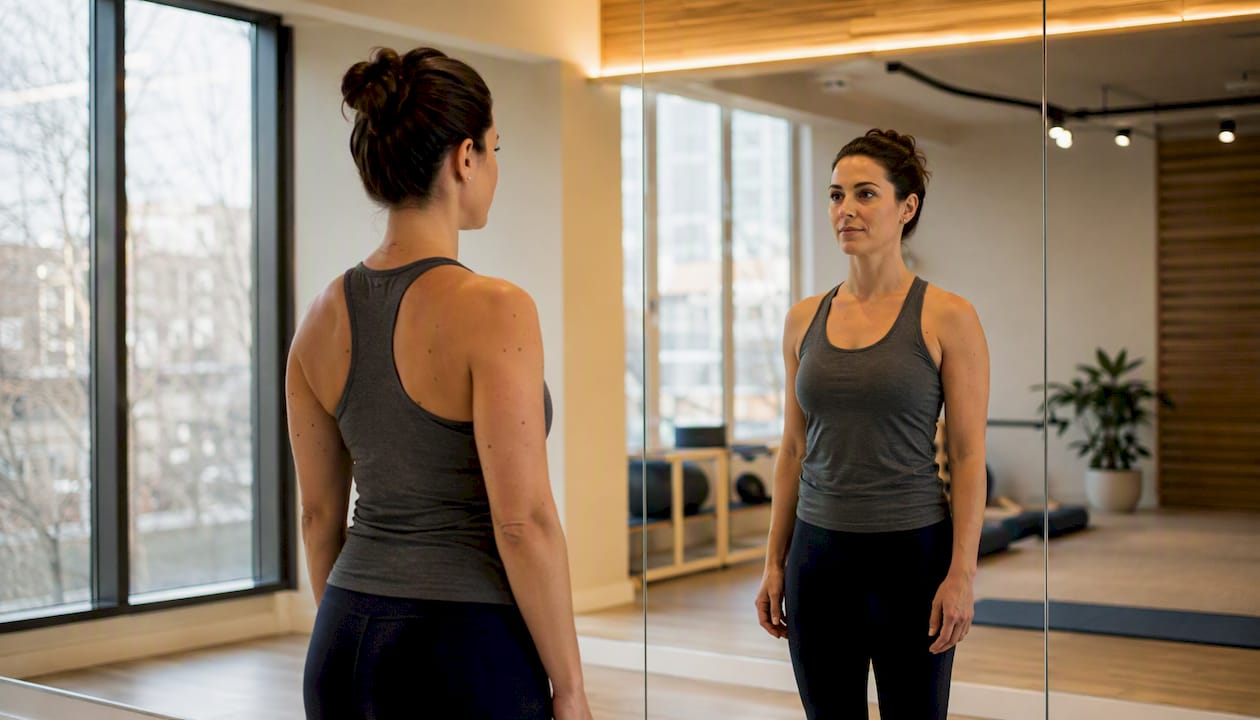
The chin tuck is the single most useful daily drill. Pull your chin straight back (not down) until you feel a gentle stretch at the base of your skull. Hold for five seconds, repeat ten times.
This repositions the head over the shoulders and activates the deep cervical flexors that tend to weaken with forward head posture. Pair it with a shoulder-drop cue: consciously let your shoulders fall away from your ears several times throughout the day.
Sleep position and pillow selection
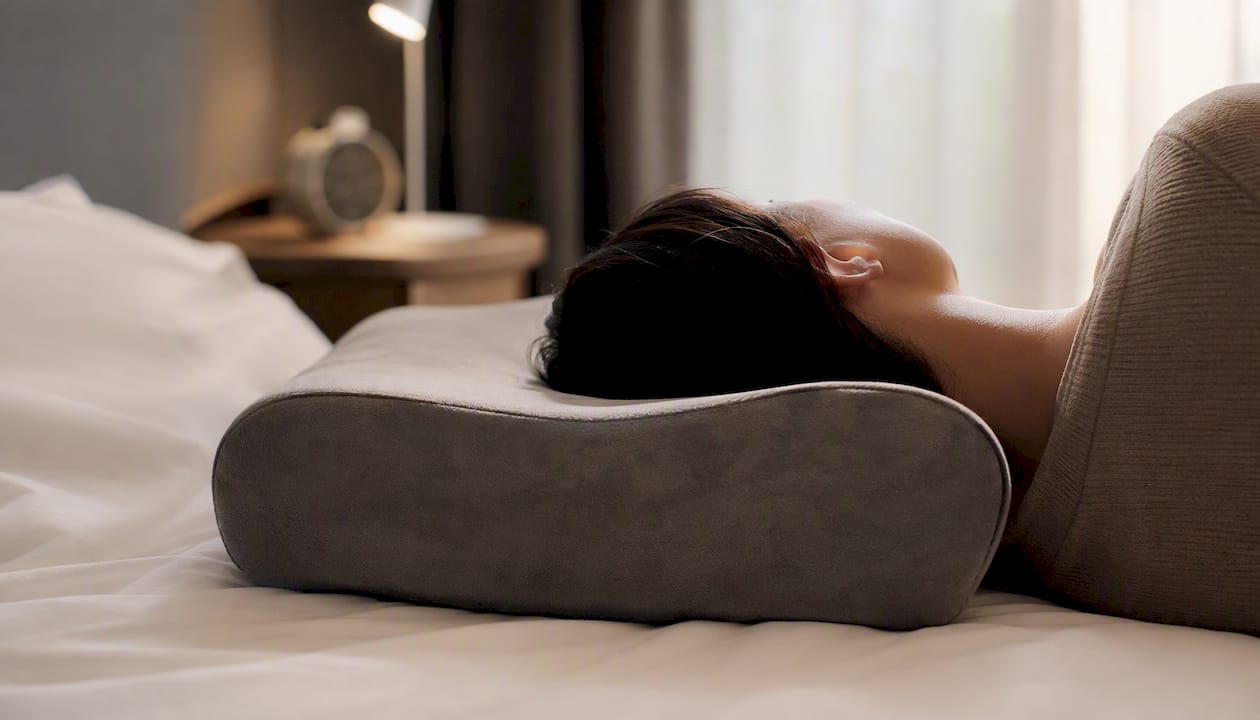
Side and back sleeping are far easier on the cervical spine than face-down.
A contoured cervical pillow or a medium-firm pillow that keeps your head in neutral alignment (not propped up or dropped down) makes a measurable difference.
Poor sleep quality actively contributes to chronic musculoskeletal pain by impairing muscle recovery, so the goal is not just position but sleep quality overall.
Why your neck stiffens: the mechanism behind the symptom?
Neck stiffness is not random. It is the body’s protective response to perceived instability or injury in the cervical region.
When muscles sense strain, damage, or threat, the nervous system triggers a spasm that effectively splints the area, limiting movement to prevent further harm. That is useful acutely; it becomes a problem when the spasm outlasts the original injury.
The levator scapulae is central to this story. It connects the cervical spine to the shoulder blade, which is why poor neck posture strains the cervical muscles and simultaneously produces shoulder and upper-back symptoms.
Sedentary behavior amplifies this: sustained static loading without movement breaks keeps the muscle in a low-level contracted state that eventually tips into spasm.
Stress adds another layer. Clinicians at Mass General Brigham describe how emotional stress causes people to unconsciously brace their shoulders toward their ears, sustaining cervical muscle contraction through the day and into sleep. The result is morning stiffness that feels physical but has a significant psychological driver.
Sleep quality closes the loop. Harvard Health research shows that poor sleep impairs muscle recovery and raises the risk of chronic musculoskeletal pain.
Stiffness disrupts sleep; disrupted sleep prevents the tissue repair that would resolve the stiffness. Breaking that cycle requires addressing both the mechanical cause and the sleep environment simultaneously.
Key Takeaways
Most neck stiffness is mechanical in origin and responds to early movement, posture correction, and basic self-care, but red-flag symptoms require immediate emergency evaluation.
| Point | Details |
|---|---|
| Most common causes | Muscle strain, forward head posture, facedown sleep, and stress-related guarding account for the majority of cases. |
| Act on red flags immediately | Fever, severe headache, confusion, rash, or neurologic symptoms with neck stiffness require emergency care, not home treatment. |
| Sedentary risk threshold | Sitting for six or more hours daily significantly raises neck pain and stiffness risk; micro-breaks every 20 minutes help interrupt this. |
| Recovery timeline | Minor strains resolve in 1–3 days; most cases clear within 3 weeks; stiffness beyond 6 weeks warrants professional evaluation. |
| Bestforwardheadposturefix approach | Structured posture education, habit-change frameworks, and exercise progressions address the mechanical root causes of recurring stiffness. |
The part most people skip — and why it keeps the stiffness coming back
Here is what I keep coming back to when thinking about neck stiffness: the vast majority of people treat it as a one-time event rather than a signal.
They take ibuprofen, feel better in three days, and go right back to the same posture, the same sleep position, and the same stress habits that caused it. Then it comes back. And the next time, it takes a little longer to resolve.
The research on this is consistent. Sedentary behavior, forward head posture, and poor sleep quality are not just contributors to individual episodes — they are the conditions that make the cervical spine chronically vulnerable.
Treating the episode without addressing those conditions is like mopping the floor without fixing the leak.
What actually works long-term is habit change: adjusting screen height, building a daily mobility routine, learning to recognize the shoulder-elevation pattern that stress creates, and protecting sleep quality.
These are not complicated interventions. They are just boring, which is why most people skip them in favor of passive treatments that feel more like doing something.
Posture correction, specifically, is underrated as a clinical tool. Repositioning the head over the shoulders reduces the mechanical load on cervical extensors and gives the strained muscles a chance to recover without constant re-loading.
Bestforwardheadposturefix structures this kind of education in a way that makes the habit changes concrete and sustainable, rather than leaving people with a vague instruction to “sit up straight.”
If your stiffness keeps coming back, the question worth asking is not “what should I do when it flares?” but “what am I doing every day that keeps setting it off?”
Recurring neck stiffness often has a fixable root cause
If your neck stiffness keeps returning, the problem is almost always mechanical: forward head posture, a poor sleep setup, or a sedentary work routine that loads the cervical muscles for hours without relief. Those are addressable with the right education and habit framework.

Bestforwardheadposturefix offers structured posture education built specifically for people dealing with recurring neck discomfort from forward head posture.
The site covers the biomechanics of why your neck stiffens, step-by-step habit-change frameworks, and exercise progressions designed to rebalance the muscles that drive the problem.
It is not a substitute for medical care — if you have any of the red-flag symptoms described above, see a clinician first.
But for the large majority of people whose stiffness is mechanical and recurring, posture correction techniques are the highest-leverage place to start.
Ready to address the root cause? Visit Bestforwardheadposturefix for science-backed guides on restoring natural neck alignment.
This article provides general health information and is not a substitute for professional medical advice. Consult a qualified clinician for diagnosis and treatment of your specific condition.
Useful sources and further reading
- Stiff neck – Cleveland Clinic
- Occupational & Environmental Medicine study (sedentary duration and neck pain)
- Stiff Neck Remedies | Mass General Brigham
- Say “good night” to neck pain – Harvard Health
- Stiff Neck Causes, Symptoms, and Treatment | Spine-health
- Neck pain – Symptoms and causes | Mayo Clinic
- Treating Vitamin D Deficiency and Insufficiency in Chronic Neck … – PMC
- Stiff neck after sleeping: treatment & prevention | mHealth