
Imagine a scenario wherein you are walking to school or work, backpack loaded with everything but the kitchen sink, and feeling like a camel carrying its weekly water supply.
Your neck starts to ache, your shoulders are screaming, and you suddenly understand why neck massages exist.
We do not often think about how much damage a heavy backpack can do, but lugging around all that weight can mess with your neck alignment in some seriously unpleasant ways.
In this article, we shall explore the anatomy of neck alignment, the science of muscle strain caused by heavy loads, and real-life stories of people who have learned this the hard way.
From understanding what happens when you cannot turn your head to recognizing signs your neck is out of alignment, we will cover it all.
In This Article:
- The Anatomy of Neck Alignment and How It’s Supposed to Work
- How Heavy Backpacks Disrupt Your Neck’s Balance
- The Role of Muscle Strain in Neck Pain
- Real-Life Example: The High Schooler Carrying a Mini Library
- Why the Right and Left Sides of Your Neck Feel Uneven
- The Chain Reaction: How Shoulder Pain Extends to Your Neck
- Recognizing the Signs Your Neck is Out of Alignment
- FAQs on Tech Neck caused by Heavy Backpacks
- Conclusion: Understanding the Toll of Heavy Backpacks
The Anatomy of Neck Alignment and How it is Supposed to Work
Before we dive into why heavy backpacks are the arch-nemesis of good posture, let’s talk about neck anatomy.
Your neck, or cervical spine, consists of seven vertebrae that act like a well-oiled machine, balancing your head (which, by the way, weighs about as much as a bowling ball).
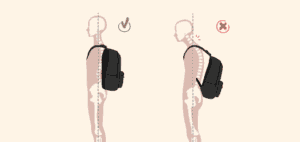
Ideally, your neck should be in a neutral position, aligning your head directly above your shoulders.
This keeps stress on the neck muscles and vertebrae to a minimum.
However, when you sling a heavy backpack onto your shoulders, your neck has to compensate to keep your body upright.
According to research in the Journal of Physical Therapy Science, even a slight forward tilt of the head can double the strain on your neck muscles, leading to discomfort and long-term misalignment.
How Heavy Backpacks Disrupt Your Neck’s Balance?
Let us walk you through how your neck takes unnecessary stress when you are adding weight to your upper back and shoulders:
Load-Bearing Gone Wrong:
Your body was not designed to haul around a mini-fridge disguised as a backpack. When you sling on a heavy load, it shifts your center of gravity backward. To avoid falling over like a cartoon character, you instinctively lean forward.
Your Neck Pays the Price:
This lean causes your head to protrude in front of your shoulders, a classic case of forward head posture. According to The Spine Journal (2022), this position increases compressive forces on the cervical vertebrae and soft tissues by up to 60%.
Muscles Cry for Help:
The deeper cervical flexors and stabilizers are now working overtime to keep your head from dangling like a broken puppet. Fatigue sets in, leading to pain, stiffness, and tension headaches.
Chronic Adaptation = Bad News:
The body starts adapting to this “temporary” posture. Over time, forward head posture becomes the new normal—even when the backpack is off. Researchers in The Journal of Physical Therapy Science found a direct correlation between prolonged backpack use and persistent cervical spine misalignment in adolescents.
Strain Triggers a Domino Effect:
Tight upper traps, overstretched lower cervical extensors, and rounded shoulders (also known as mom’s shoulders) come as a package deal. Long-term, this posture can lead to thoracic kyphosis, restricted breathing, and decreased visual field.
Backpack Weight Limits Matter:
As per guidelines from the American Academy of Pediatrics, your backpack should not exceed 10–15% of your body weight. Exceed that, and your neck might just start its own protest march.
So yes, heavy backpacks are neck saboteurs in disguise—and your cervical spine is not amused.
The Role of Muscle Strain in Neck Pain
Ever experienced neck pain after lifting something heavy? You are among many more.
The muscles in your neck, including the trapezius and levator scapulae, work overtime when you carry heavy loads.
This muscle strain leads to inflammation, stiffness, and a burning sensation, especially if the load is not evenly distributed across both shoulders.
A 2018 study from Clinical Biomechanics found that carrying asymmetrical loads (like a backpack slung over one shoulder) exacerbates muscle imbalance, making you more prone to injury.
When you add weight that exceeds 10-15% of your body weight, your neck’s ability to maintain alignment decreases, making it susceptible to strain and even microtears.
The High Schooler Carrying a Mini Library
Meet Emily, a high school junior who loves her books so much she practically carries a mini library in her backpack.
With textbooks, binders, and snacks, Emily’s bag easily weighs over 20 pounds.
Within a semester, she noticed persistent neck pain and struggled to turn her head to the right.
After a visit to her physical therapist, she discovered she had pulled neck muscles and could not rotate her head without discomfort.
Emily’s story is not unique. Students and professionals alike are dealing with neck pain because of the heavy loads they carry.
The Journal of Adolescent Health states that up to 80% of school-aged children report shoulder and neck pain on the right side, often linked to carrying heavy backpacks.
Why the Right and Left Sides of Your Neck Feel Uneven?
If you’ve ever noticed one shoulder sitting higher than the other or felt uneven tension in your neck, you’re not alone. Uneven shoulders can stem from various daily habits and underlying conditions. Here are some common causes:
One-Sided Bag Carrying – Regularly carrying a heavy bag on one side forces the muscles on that side to work harder, creating imbalances. Over time, this can pull one shoulder downward, leading to strain and discomfort. As per Campbell Clinic, consistently carrying heavy bags can contribute to shoulder and back pain.
Poor Posture Habits – Slouching or leaning to one side while sitting or standing puts uneven stress on your muscles. As per Healthline, prolonged poor posture can lead to long-term shoulder imbalances.
Sedentary Lifestyle – Sitting for long hours without proper movement weakens some muscles while overworking others, leading to asymmetry.
Injury or Trauma – Previous injuries such as fractures, dislocations, or muscle tears, whiplash injury may cause compensatory movements, which result in uneven shoulders. According to Medical News Today, past injuries often lead to postural imbalances.
Scoliosis – A spinal curvature condition that causes one shoulder to sit higher than the other. As per Medical News Today, scoliosis is a common cause of uneven shoulders.
Nerve Impingement – Compressed nerves in the neck or upper back can lead to muscle weakness, making one shoulder appear lower. Healthline notes that nerve issues can significantly impact muscle function.
Sleeping Position – Consistently sleeping on one side can tighten muscles on that side, contributing to imbalance. You would therefore need to learn how to adjust your sleep position to ease the neck and shoulder discomfort.
Stress and Anxiety – Emotional stress often leads to muscle tension, particularly in the neck and shoulders, creating an uneven feeling. According to Centeno-Schultz Clinic, stress-related tension can cause persistent discomfort.
Improper Exercise Form – Performing exercises with incorrect form can strengthen one side more than the other, creating muscle imbalances.
Structural Issues – Flat feet or a slight difference in leg length can alter posture, leading to uneven shoulder positioning. Healthline reports that lower body misalignments can affect upper body posture.
Addressing these factors with proper posture, balanced exercise routines, and stress management can help restore alignment and reduce discomfort. If the issue persists, seeking professional guidance may be beneficial.
The Chain Reaction: How Shoulder Pain Extends to Your Neck?
Your body is like a chain; when one link is off, the rest are affected.
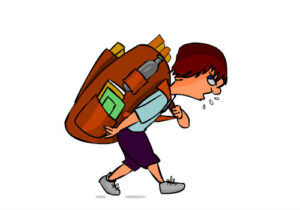
Shoulder pain caused by heavy backpacks often extends to the neck.
The upper trapezius and levator scapulae muscles, which connect your shoulders to your neck, bear the brunt of the weight.
Over time, this can lead to neck pain and even conditions like thoracic outlet syndrome, where nerves and blood vessels are compressed between the collarbone and first rib.
If you have ever thought, “I have shoulder and neck pain on the right side, and I don’t know why,” it could be due to your backpack habits.
The American Journal of Sports Medicine suggests that uneven shoulder loads are a major contributor to chronic neck and shoulder pain.
Recognizing the Signs Your Neck is Out of Alignment
How do you know if your neck is crying for help?
Common signs your neck is out of alignment include headaches, difficulty turning your head, and that all-too-familiar forward head posture.
You may even experience numbness or tingling in your hands if nerves are compressed.
If you feel like you have pulled a neck muscle and cannot turn your head, it is a clear indicator that your neck alignment is compromised.
Experts from Orthopedic Clinics of North America emphasize that prolonged misalignment can lead to degenerative disc disease or cervical spondylosis.
Ignoring these signs can result in long-term damage, so it is crucial to recognize and address the symptoms early.
FAQs on Tech Neck caused by Heavy Backpacks
Q-1: How do heavy backpacks affect neck alignment and posture?
A-1: Heavy backpacks shift the body’s center of gravity backward, forcing the head and neck to move forward to maintain balance. Studies show this leads to measurable forward head posture, a key sign of poor neck alignment. Even moderate loads can significantly alter cervical spine positioning.
Q-2: What happens to your neck when carrying a heavy backpack daily?
A-2: Daily use of heavy backpacks increases strain on neck muscles and joints. Over time, this can lead to stiffness, discomfort, and reduced mobility. Research indicates that repeated exposure to heavy loads contributes to chronic neck pain and long-term postural changes.
Q-3: Can heavy backpacks cause forward head posture in students and adults?
A-3: Yes, forward head posture is one of the most common effects. Studies show that carrying loads of 15–20% of body weight significantly increases forward head positioning, with more than 50% of individuals reporting neck discomfort under these conditions.
Q-4: What is the ideal backpack weight percentage to avoid neck strain and misalignment?
A-4: Experts recommend keeping backpack weight below 10% of body weight. Research shows that postural changes begin at around 10%, while heavier loads (15% or more) significantly increase neck strain and discomfort.
Q-5: How does backpack weight change cervical spine alignment?
A-5: Increasing backpack weight reduces the craniovertebral angle, which indicates a forward shift of the head. Studies demonstrate that loads as low as 10% of body weight begin to alter neck alignment, with more pronounced changes as weight increases.
Q-6: What are the effects of carrying heavy backpacks on neck and shoulder muscles?
A-6: Heavy loads increase muscle activation in the neck and shoulders, leading to fatigue. At around 15% body weight, muscle activity rises significantly, and discomfort levels increase, especially in the neck and upper shoulder region.
Q-7: Can heavy backpacks cause long-term neck pain and posture problems?
A-7: Yes, prolonged use of heavy backpacks can lead to chronic neck pain and postural imbalances. Studies show that poor posture habits developed early—such as leaning forward while carrying weight—can persist and contribute to long-term musculoskeletal issues.
Q-8: How can you prevent neck alignment issues from heavy backpack use?
A-8: To prevent problems, keep backpack weight under 10% of body weight, use both shoulder straps, and adjust the bag so it sits close to the body. Regular breaks and strengthening exercises also help maintain proper neck alignment.
Q-9: What is the impact of using one shoulder vs two shoulders on neck posture?
A-9: Carrying a backpack on one shoulder creates uneven weight distribution, leading to spinal misalignment and increased neck strain. Balanced use of both straps helps distribute weight evenly and reduces the risk of posture-related issues.
Q-10: What are the best ergonomic tips to reduce neck strain from heavy backpacks?
A-10: Use padded straps, keep the load centered, and position the backpack near the upper back. Studies show that higher backpack placement can increase neck discomfort, so proper positioning and weight distribution are key to reducing strain.
Understanding the Toll of Heavy Backpacks
Carrying a heavy backpack might seem like a minor inconvenience, but it can wreak havoc on your neck alignment over time.
From muscle strain and imbalance to more serious conditions like nerve compression, the consequences are real and often painful.
While this article does not offer solutions, it should serve as a wake-up call for anyone who thinks neck pain is a trivial matter.
So, the next time you load up your backpack with everything but the kitchen sink, think about what your neck is going through.
After all, a little awareness can go a long way in preventing chronic pain.
References: