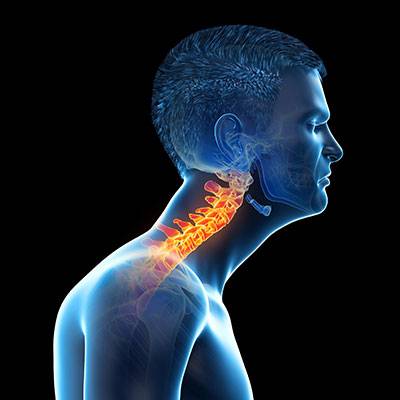
Forward head posture (FHP) is a postural position in which the head is positioned farther forward relative to the trunk than it is during a more neutral posture.
It may be noticed by looking in a mirror while sitting at a computer, talking on a cell phone, reading, or simply sitting still.
But what is it exactly?
Common symptoms that may occur alongside forward head posture include neck pain, stiffness, upper-back discomfort, shoulder tension, headaches, and reduced neck range of motion. But these signs and symptoms are not specific to FHP, as there are many other causes of neck pain.
Studies have shown an association between FHP and neck pain in some adults, but it is not a direct cause and effect relationship, and there are many other factors to consider. There have also been systematic reviews performed that have shown differences in certain measurements of the head and neck in people with neck pain compared to people without neck pain.
In this article, learn about the symptoms of FHP, what the science actually says, and when to see a doctor.
Quick Answer: What Are the Symptoms of Forward Head Posture?
Possible symptoms of forward head posture can include:
- Neck pain or discomfort
- Neck stiffness
- Limited range of motion in the neck
- Upper-back discomfort or tightness
- Shoulder discomfort or tightness
- Headaches (often when neck problems are also present)
- Changes in the appearance of the shoulders or scapulae
- Jaw or facial discomfort in some people
- Changes in breathing mechanics in certain postures
Not everyone with forward head posture will have these symptoms.
Similarly, it is possible to have some of these symptoms without forward head posture.
The best course of action is to evaluate forward head posture in the context of symptoms, range of motion, activities, medical history, and other possible causes.
Article Index:
- Quick Answer: What Are the Symptoms of Forward Head Posture?
- What Is Forward Head Posture?
- What Are the Most Common Forward Head Posture Symptoms?
- Can Forward Head Posture Cause Breathing Problems?
- Can Forward Head Posture Cause Dizziness?
- Can Forward Head Posture Cause Numbness or Tingling?
- How Can You Tell Whether Your Symptoms Are Related to Forward Head Posture?
- How Is Forward Head Posture Evaluated?
- Can Forward Head Posture Symptoms Be Improved?
- When Should You See a Healthcare Professional?
- Frequently Asked Questions
- Bottom Line
- References
- Why Trust Us
- Medical Review Process
What Is Forward Head Posture?
Forward head posture (FHP) is a descriptive term of the position of the head and neck.
It is most often used to describe the head deviated farther forward relative to the trunk than is normal when viewed from the side.
The posture of your body can change depending on if you are sitting, standing, walking, talking on the phone, working at the computer, driving, exercising, and more.
Because of this, just because you see someone’s head slightly forward in a picture, it does not mean they have some sort of medical issue.
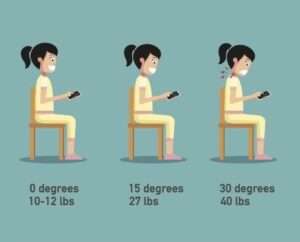
Health care providers and researchers can analyze your posture by eye or with special tools that measure the craniovertebral angle (CVA).
There is no single posture measurement that can establish that forward head posture is the cause of someone’s symptoms. Studies on the methods for measuring FHP reveal that the accuracy can vary for different approaches.
What Are the Most Common Forward Head Posture Symptoms?
Neck Pain or Discomfort
Neck discomfort is one of the symptoms that are most commonly associated with forward head postures.
Some studies have found a link between forward head postures and neck pain. A 2019 systematic review and meta-analysis found that adults with neck pain were more likely to exhibit increased forward head postures than asymptomatic adults, although the researchers noted that this relationship was partially explained by other factors.
A later systematic review and meta-analysis also found that the craniovertebral angle differed between neck-pain patients and pain-free individuals, although other indices of forward head posture were less consistent.
This does not mean that your forward head posture is necessarily the reason for your neck pain.
Neck discomfort can also be caused by muscular, joint, and traumatic causes as well as prolonged static postures, stress, degenerative changes, or other conditions.
Neck Stiffness
Some people with postural or musculoskeletal disorders may also experience stiffness around the neck.
You may feel stiff after:
- Sitting at a desk for a long time
- Looking down at a phone
- Driving
- Reading
- Working in one position
- Waking after an uncomfortable sleeping position
If your stiffness occurs repeatedly in certain situations, you may want to consider talking to a health care professional, especially if it occurs with pain or restricted mobility.
Reduced Neck Movement
Forward head posture may be associated with altered ranges of motion in the neck and upper back.
Limited or restricted ranges of motion may be noticed during activities such as:
- Turning the head
- Looking over the shoulder
- Looking up
- Looking down
- Holding the head in a fixed position for a long period of time
However, restricted range of motion is not specific to forward head posture.
A physical therapist can evaluate range of motion and determine if there are any limitations that may be contributing to your symptoms.
Upper-Back Discomfort
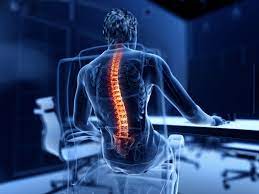
Forward head posture commonly accompanies the altered position of the upper back and shoulders.
As a result of prolonged sitting or working at a computer, a person may experience discomfort between or around the shoulder blades.
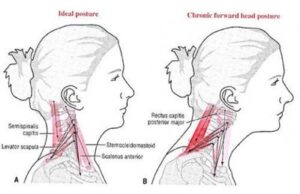
Studies have found differences in the activity of some neck and upper-back muscles in people with forward head posture, although these changes are complex and do not mean that one muscle group is always weak or another is always overactive.
Upper-back discomfort might be due to various reasons, so it should not be attributed to FHP right away.
Shoulder Tension or Discomfort
The muscles of the neck, shoulders, and shoulder blades are responsible for the movement of the head and upper body.
By changing the postures of the head, neck, and thorax, these muscles can be subjected to different mechanical stresses.
Some people may experience shoulder tension or discomfort when they spend prolonged periods in a forward head or slouched position.
However, shoulder discomfort may also stem from rotator-cuff problems, injuries, forms of arthritis, nerve problems, and other causes.
Headaches
Headaches may accompany neck disorders, and patients with chronic headaches may present with altered postures of head and neck.
As per a systematic review and meta-analysis, patients with chronic primary headaches presented with increased forward head posture as compared to asymptomatic individuals and those with episodic primary headaches.
However, this does not imply that forward head posture is the sole cause of headaches.
There are various possible causes of headaches.
If your headache is severe, sudden, new, worsening, associated with neurological symptoms, or otherwise different from your typical headaches, it should not be considered due to just one factor.
Jaw or Facial Discomfort
Some studies have evaluated possible associations between head and cervical posture and temporomandibular disorders.
However, systematic reviews of the literature have concluded that the evidence is inconsistent and insufficient to support causation.
As such, it is more accurate to say that jaw symptoms may occur alongside postural differences rather than to assert a causal relationship between forward head posture and TMJ disorders.
A dental or medical professional should be consulted if symptoms persist.
Changes in Shoulder or Scapular Position
Forward head posture often occurs in combination with changes in the position of the shoulders and shoulder blades.
You may observe:
- Rounded shoulders
- Protruding shoulder blades
- A forward carrying of the shoulders (rounded shoulders)
- Discomfort associated with the shoulder blades
These are not indications for the diagnosis of a musculoskeletal condition.
Shoulder and scapular position can alter in relation to the activity being performed, arm position, thoracic posture, muscle control, and anatomical variation.
Can Forward Head Posture Cause Breathing Problems?
While forward head posture can affect the mechanics of breathing in specific conditions, studies have found associations between FHP and lung function parameters.
But we must be prudent not to confuse correlation with causation.
A decrease in FEV1 or FVC does not necessarily mean that blood oxygen saturation has decreased.
Similarly, feeling that it is more difficult to take a deep breath while slouching does not necessarily mean that blood oxygen levels are compromised.
Because this is a separate and more detailed topic, see our guide:
Does Forward Head Posture Affect Breathing? What the Evidence Shows.
Breathing symptoms should never automatically be attributed to posture, particularly when they are persistent, severe, sudden, or unexplained.
Can Forward Head Posture Cause Dizziness?
Dizziness should not automatically be attributed to forward head posture.
Dizziness may arise from a variety of causes, including inner-ear problems, nervous-system disorders, cardiovascular conditions, medication effects, dehydration, vision problems, migraine, and other factors.
Various studies have looked at relationships between head posture, balance, and bodily functions, but that does not imply that normal forward head postures are the precursors to dizziness.
If a person is suffering from recurring or non-specific dizziness, especially in conjunction with weakness, slurred speech, severe headache, fainting, chest pain, or walking difficulties, then the individual should seek medical attention.
Can Forward Head Posture Cause Numbness or Tingling?
Numbness, tingling, or weakness should not automatically be attributed to forward head posture.
Symptoms such as these may result from irritation of a nerve, but there are many other possible causes as well.
If you have numbness, tingling, weakness, loss of coordination, or radiation into an arm or hand that is persistent, occurs suddenly, following an injury, or is getting worse, you should seek medical advice from a healthcare professional.
How Can You Tell Whether Your Symptoms Are Related to Forward Head Posture?
This is an important question as posture can be just one potential contributor to musculoskeletal symptoms.
A useful assessment considers the following:
Your Symptoms
Where are you feeling discomfort?
When does it occur?
What activities make it better or worse?
Your Movement
Is neck movement normal?
Are there painful or restricted ranges of motion?
Your Posture
Does your head posture change significantly between sitting/standing, walking, and working?
Your Daily Activities
Do you sit at a computer for long durations?
Do you look down at a phone a lot?
Do you do repetitive work?
Do you stay in one position for too long?
Your Medical History
Have you had an injury?
Do you have another medical condition?
Are you taking medications that could be contributing?
If you want to learn how FHP can be assessed, see our guide to how to test for forward head posture.
How Is Forward Head Posture Evaluated?
There is no one particular test that can tell if forward head posture is the underlying cause of your symptoms.
An evaluation may involve:
- Observation of posture
- Cervical range of motion tests
- Assessment of mobility in the neck and upper back
- Muscle performance tests
- Scapular and shoulder assessment
- Functional assessment of movement
- Review of work and activities
- Evaluation of symptoms and medical history
A physical therapist can use any combination of these assessments to determine what’s going on.
For a detailed explanation, see: How a Physical Therapist Evaluates Forward Head Posture.
Can Forward Head Posture Symptoms Be Improved?
If your symptoms are related to musculoskeletal factors, addressing those factors should be beneficial.
Management may include:
- Modifying activity patterns
- Avoiding prolonged periods of sitting
- Making workstation adjustments
- Becoming more physically active
- Exercises to address specific limitations in range of motion or muscle strength
- Cervical and upper-back range-of-motion exercises
- Scapular or postural-control exercises
- Physical therapy, if self-care measures fail to provide sufficient improvement
In studies of patients with FHP and neck pain, therapeutic exercise has been found to be beneficial in improving posture, reducing pain, and enhancing physical function, although there was a variation in outcomes between studies and exercise regimens.
You can learn more in our guide to forward head posture exercises.
The goal is not to hold one perfect posture all the time.
A better goal is to change positions and to be active.
Another thing you can do is to find out what is causing your symptoms and take steps to avoid those causes.
When Should You See a Healthcare Professional?
Consider professional evaluation if your symptoms are:
- Persistent
- Getting worse
- Interfering with normal activities
- Associated with significant loss of neck movement
- Associated with numbness or tingling that is present
- Associated with weakness
- Present after an injury
- Associated with recurrent or severe headaches
- Associated with unexplained dizziness
Seek urgent medical attention for severe or sudden symptoms such as:
- Sudden severe headache
- New weakness or numbness
- New impairment of speech
- Loss of coordination
- Fainting
- Chest pain
- Sudden or severe difficulty breathing
- Other unusual or rapidly developing symptoms
Do not assume that such symptoms are caused by forward head posture.
Frequently Asked Questions:
What are the symptoms of forward head posture?
FHP by itself is often asymptomatic. Symptoms that may accompany it are often nonspecific, including neck pain, stiffness, discomfort around the upper back, shoulders, headaches, and decreased range of motion in the neck.
Can it cause neck pain?
It has been associated with neck pain in some studies, although causation is not definitively established. There are numerous possible causes of neck pain, and it should not be considered a default explanation.
Can it cause headaches?
Some studies suggest that chronic headache sufferers have less optimal FHP than those without headaches, but headaches also have numerous other possible causes.
Can it cause shoulder pain?
It may accompany altered posture in the shoulder and upper back, which can lead to discomfort, but there are many other possible causes of shoulder pain as well.
Can it cause jaw pain?
There has been some research into the relationships between postures of the head and neck and temporomandibular joint disorders, but systematic review of the literature suggests that the evidence is inconclusive.
Can it cause breathing difficulties?
Research suggests that forward head posture may be associated with changes in some measures of breathing or lung function, but this does not establish that ordinary forward head posture causes low blood oxygen levels or respiratory disease.
Can it cause numbness and tingling?
Numbness and tingling are not typical symptoms of FHP, and should be evaluated as potential indications of neurological issues.
Should I see a physical therapist about it?
You may want to consider seeing one if you are experiencing other symptoms in addition to aesthetic dissatisfaction. A physical therapist can assess your movement, posture, symptoms, and functional limitations and determine whether physical therapy may be appropriate. If your pain or restriction is persistent or affects your ability to perform daily tasks, physical therapy may be appropriate.
Bottom Line
Forward head posture does not necessarily cause symptoms, and having symptoms does not prove that FHP is the cause.
When they do occur alongside it, they may be related to neck discomfort or stiffness, upper back discomfort or stiffness, shoulder tension, headaches, restricted range of motion in the neck, and other musculoskeletal issues.
Studies do show a link between forward head posture and certain measurements of neck pain and disability, but the connection is complicated.
Forward head posture is better viewed as a postural finding rather than a diagnosis that automatically explains your symptoms.
Instead, look at your symptoms, movement, activity, medical history, and posture in conjunction with one another.
If they persist, become severe, or are otherwise concerning, see the appropriate professional.
References:
- 2019 systematic review and meta-analysis — Forward Head Posture and Neck Pain
- 2023 systematic review and meta-analysis — Head and Neck Posture and Neck Pain
- Systematic review — Forward Head Posture and Chronic Primary Headache
- Systematic review — Head/Cervical Posture and Temporomandibular Disorders
- Systematic review — Measuring Forward Head Posture
- Systematic review and meta-analysis — Therapeutic Exercise for Forward Head Posture