
Forward head posture describes a position in which the head sits farther forward relative to the shoulders and upper body.
It may be noticeable during computer or phone use, or after spending long periods in one position. However, this posture does not necessarily indicate a medical condition.
Some people may benefit from physiotherapy. This can involve an individual assessment, neck and upper back exercises, movement re-training, ergonomic advice and manual therapy.
Depending on your symptoms, physical capabilities, medical history and goals the therapist will decide on the best treatment for you.
Research has suggested therapeutic exercise can help improve measurements of forward head posture. However, there is not enough evidence to guarantee complete correction and everyone will gain the same benefits.
This guide will describe what physiotherapy can involve, what the therapist may assess, what treatments may be used and how realistic you can be about your progress.
Article Index
- Can physiotherapy help forward head posture?
- What causes forward head posture?
- How a physiotherapist assesses forward head posture
- Physiotherapy treatments that may help
- Exercises a physiotherapist may recommend
- How long does physiotherapy take to work?
- Can the results last?
- When should you see a physiotherapist or doctor?
- Frequently asked questions
- Bottom line
- References
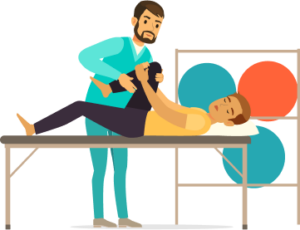
Can Physiotherapy Help Forward Head Posture?
Physiotherapy may help improve forward head posture, particularly when treatment includes appropriate neck and upper-back exercises. It may also help some people manage neck pain, stiffness, and limitations in everyday activities.
However, it is important to distinguish between three possible outcomes:
- Improved posture measurement: A clinical measurement of head position changes.
- Improved symptoms or function: Neck discomfort, movement, or the ability to complete daily tasks improves.
- Long-term maintenance: Improvements remain over time as the person continues everyday activities.
Although these outcomes are related, they are not the same. One person may show an improvement in posture measurements without much reduction in pain, while another may experience less discomfort and better movement without a noticeable change in posture.
Overall physiotherapy should be seen as a personal approach to improving your movement, strength, function and managing symptoms where required, rather than a guarantee of achieving perfect posture.
What Causes Forward Head Posture?
Forward head posture may become more noticeable during activities that involve sustained head-forward positioning, such as working at a computer, reading on a phone, or looking down for extended periods.
There are a variety of reasons that can cause someone to have forward head posture. This can be affected by movement patterns, thoracic mobility, muscle capacity, past injuries, pain and individual anatomy.
You should not automatically assume forward head posture is causing your neck pain. There are many factors that can contribute to neck pain symptoms such as work load, physical activity, stress, sleep and other health conditions.
For more detail, see our guide to forward head posture symptoms and our article on how to assess neck alignment for forward head posture.
How a Physiotherapist Assesses Forward Head Posture
A physiotherapist assesses more than how far forward your head appears. They will consider your symptoms, physical abilities, medical history, and other factors that may influence your posture and function.
Discussing your symptoms and daily activities
Your physio may ask questions such as:
When did the symptoms start? Do they get worse or better with work or exercise? Have you suffered any injuries?
They will also ask about your lifestyle including sleep, work station, activity levels and what movements make your symptoms better or worse.
This will help determine what factors are important to consider and not assume everything is due to poor posture.
Checking neck and upper-back movement
The therapist will assess your range of movement, muscle strength, muscle endurance, coordination and functional ability in the neck and upper back area of your body.
If you experience symptoms such as numbness, tingling, or weakness, the therapist may perform an appropriate neurological assessment. They may also recommend further medical evaluation when necessary.
Measuring head posture when useful
Some clinicians may use a lateral image or measure the Craniovertebral Angle (CVA). CVA is a common measurement used in research relating to forward head posture.
A consistent measurement may help track changes in head position over time. However, it cannot provide a complete picture of neck health, identify the cause of pain on its own, or determine by itself whether treatment is needed.
Setting practical treatment goals
Your physiotherapist can help you set practical goals, such as improving neck movement, increasing exercise tolerance, or reducing discomfort during computer use and everyday activities.
You may wish to improve your posture however this should not be the only outcome. The plan should be focused on what is important to you and what your assessment shows.
Physiotherapy Treatments That May Help
Treatment varies according to the individual. A physiotherapist may combine several approaches rather than rely on a single technique.
Therapeutic exercise
Exercise is an important part of treatment for many patients with forward head posture. Depending on the assessment, exercises may target deep neck muscle control, neck strength and endurance, shoulder-blade control, or upper-back mobility.
The goal is to improve your ability to perform everyday tasks and to improve the measurement of your head posture where appropriate. The exercises must be chosen and progressed based on your level and reaction to the exercise.
Movement and postural-control training
A Physiotherapist can help you practice good head and neck positioning during specific activities to increase your awareness and control of the movement of your body.
The goal is not to hold your head or body in one fixed position throughout the day. Regular movement and changes in position are normal, and your physiotherapist can help you find comfortable ways to move during daily activities.
Manual therapy
Manual therapy can be used to help with pain or a loss of mobility. It may be used if the assessment indicates it could be helpful.
Manual therapy should not be described as a manipulation that puts the neck into place and should generally only be used in conjunction with an active approach including education and exercises to help you manage your activities.
Ergonomic and activity advice
You may be asked to adjust your workstation, how high your screen is, or the way your chair is set up by your physiotherapist. This can help ease any discomfort when working and avoid having to stay in an uncomfortable position for long periods of time.
There is no perfect workstation or sitting position for everybody. It is simply about finding something which works for you and changing positions regularly.
You can read more in our guide to fixing forward head posture with ergonomics.
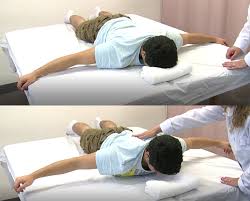
Exercises a Physiotherapist May Recommend
The following are examples of exercises that may be used. This should not be considered a personal recommendation and not all exercises will be suitable for everyone.
Chin tucks or cervical retractions
This is a controlled movement of the head into retraction. It may be used by a physiotherapist to help teach control of the muscles in the neck.
Learn more in our guide to fixing forward head posture with chin tucks.
Scapular retractions
Scapula retraction involves a gentle movement of bringing the scapulae together. This can be used by a therapist to help develop shoulder blade control and upper back musculature depending on your needs.
See our instructions for scapular retraction exercises.
Upper-back mobility exercises
If you are experiencing some limited mobility in your upper back then it may be beneficial to incorporate some active movements. The type of exercise will depend on the amount of mobility you have, what symptoms you are experiencing and what you want to achieve from treatment.
Strength and endurance exercises
A physiotherapist can introduce exercises slowly. The amount and type of exercise will depend on your ability and response. The amount of resistance used, number of repetitions and how often you perform the exercises will be modified to suit your needs.
Avoid straining to keep your head in a particular position. Stop an exercise if it causes new or worsening pain, dizziness, tingling, numbness, or weakness, and seek appropriate professional advice before continuing.
What Does the Research Say About Physiotherapy?
Research has examined whether therapeutic exercise can improve measured forward head posture and related outcomes, including neck pain and disability.
A systematic review and meta-analysis of seven RCTs (n=627) from 2018 concluded therapeutic exercises may improve objective measures of forward head posture; however there may only be a small improvement in neck pain. Relationships between head posture and musculoskeletal pain are unclear.
A systematic review and meta-analysis of 13 RCTs (n=819) from 2026 concluded that neck specific and combination neck and upper back exercise interventions improved some short-term outcomes related to posture and neck pain when compared to controls. Combination interventions also reduced pain post treatment. However, certainty of evidence was low to very low.
Taken together, these reviews suggest that exercise-based physiotherapy may be useful, but several limitations remain:
- Research programmes differ in the exercises used, duration, and intensity.
- Improvements in posture measurements do not always correspond to improvements in pain or function.
- Short-term findings do not establish that the results will last indefinitely.
- Results from a study cannot predict the outcome for an individual person.
The choice of physiotherapy treatment should depend on the individual’s assessment, goals, symptoms, and response to treatment.
How Long Does Physiotherapy Take to Work?
There is no single timeline that applies to everyone. The time needed depends on factors such as the nature and duration of your symptoms, your physical capacity, the treatment program, consistency, and the outcome being measured.
Some people may notice changes in comfort or movement before they notice a visible change in posture. Others may see a change in a posture measurement without a similar improvement in symptoms.
Your physiotherapist can help you review progress at appropriate intervals. Rather than focusing only on appearance, consider whether you can move more comfortably, tolerate your usual activities, or meet the goals agreed upon at the beginning of treatment.
Be cautious of claims that physiotherapy will fix forward head posture within a specific number of days or guarantee permanent correction.
Can the Results Last?
You may also find that improvements can be sustained by continuing to perform the correct types of exercise and activity. However, long-term improvements are not guaranteed.
Some practical steps you can take to help you sustain improvements include:
- Continuing with exercises that are relevant to your goals.
- Gradually strengthening and building up endurance in your neck and upper back.
- Having regular breaks to move around.
- Modifying your workstation to reduce discomfort and encourage good posture.
- Reviewing the program if symptoms or demands change.
You don’t need to sit in one position all day. It may be more practical to regularly change positions and move.
If you start to experience symptoms again, this doesn’t necessarily mean you have failed, or that your posture has got worse permanently. A review of your program may be required or there may be other factors which can be addressed.
When Should You See a Physiotherapist or Doctor?
Consider seeking an assessment if neck pain or stiffness persists, repeatedly returns, worsens, or interferes with work, sleep, exercise, or everyday activities. A physiotherapist can assess your movement and function to determine whether posture-focused treatment is appropriate.
Seek medical attention promptly if you have any new or worsening arm weakness, constant numbness/tingling or shooting pain in your arm. If you have neck pain following a significant trauma you should have appropriate medical assessment.
Seek emergency medical attention if you develop sudden, severe neurological symptoms or new loss of bladder or bowel control.
For more information about clinical assessment, see our guide to how a physical therapist evaluates forward head posture.
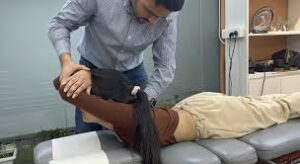
Frequently Asked Questions:
Can physiotherapy correct forward head posture completely?
Physiotherapy may improve measured head posture and help some people manage neck-related symptoms. However, complete or permanent correction cannot be guaranteed. Results depend on the individual, the treatment program, and the outcome being measured.
Is physiotherapy better than exercising at home?
Not necessarily. Some people can follow a suitable home exercise program, while others benefit from a professional assessment, individualized guidance, and help progressing their exercises. A physiotherapist can help determine which approach is appropriate for your needs.
Can manual therapy cure forward head posture?
Manual therapy may help some people manage pain or stiffness, but it should not be considered a permanent solution for forward head posture. When appropriate, it can be combined with exercise, movement training, and advice on managing daily activities.
Do I need to have perfect posture throughout the day?
No. There isn’t one perfect posture for everyone. Generally it is more beneficial to have comfortable movement and variety in your posture. You want to build up your ability to do daily tasks.
Can forward head posture cause neck pain?
Forward head posture can often occur alongside neck pain however posture doesn’t necessarily mean this is the cause. There can be many factors affecting your symptoms therefore it is important to look at the whole picture.
Should I use a posture corrector?
A device to support your posture can be useful for some as a reminder however shouldn’t be seen as a permanent solution. It depends on the individual and why you are using it.
Bottom Line
Physiotherapy may help improve measured forward head posture, neck movement, and related symptoms through an individualized combination of exercises, movement strategies, ergonomic advice, and other treatments when appropriate.
Research suggests that therapeutic exercise may improve measured forward head posture and some neck-related outcomes, although the certainty of the evidence is limited. A treatment plan should focus on meaningful improvements in comfort, movement, and everyday function rather than promising perfect alignment.
If your symptoms persist, worsen, or interfere with daily activities, seek advice from a qualified healthcare professional.
For information about our editorial approach, read Why Trust Us and our Medical Review Process.
References
- Sheikhhoseini R, Shahrbanian S, Sayyadi P, O’Sullivan K. Effectiveness of Therapeutic Exercise on Forward Head Posture: A Systematic Review and Meta-analysis. Journal of Manipulative and Physiological Therapeutics. 2018;41(6):530–539. Read the study on PubMed.
- Carrasco-Uribarren A, Ceballos-Laita L, Pérez-Guillén S, et al. Impact of therapeutic exercise on craniovertebral angle in forward head posture: a systematic review and meta-analysis. Journal of Manual & Manipulative Therapy. Published online June 11, 2026. Read the study on PubMed.
- Occupational Safety and Health Administration (OSHA). Computer Workstations eTool.
Editorial note: This article is for educational purposes only and is not a substitute for individual medical advice, diagnosis, or treatment.