Forward neck syndrome, also known as forward head posture, is not just a pain in the neck (literally)—it is a whole-body disruptor.
While it might seem far-fetched that something happening up in your neck could throw off the muscles in your thighs, the reality is more interconnected than you might imagine.
Your body operates as a finely tuned machine, and when one part is out of alignment, the effects ripple through the entire system.
In this article, we shall unravel how forward neck syndrome disrupts the balance of your thigh muscles.
From the biomechanical chain reaction to the specific muscle imbalances it causes, we will break it down with science-backed insights and relatable examples.
Article Index:
- What is Forward Neck Syndrome? A Quick Overview
- How Forward Neck Syndrome Shifts Your Body’s Balance
- The Biomechanical Connection Between Your Neck and Thighs
- Muscle Imbalances: Tight Hip Flexors and Weak Hamstrings
- Real-Life Example: Emma’s Desk Job Dilemma
- Scientific Studies on Forward Neck Syndrome and Muscle Imbalance
- The Long-Term Effects on Thigh Function and Mobility
- FAQs on Thigh Imbalance caused by Computer Neck
- Conclusion: Understanding the Neck-Thigh Chain Reaction
What is Forward Neck Syndrome? A Quick Overview
Forward neck syndrome is a postural misalignment where the head juts out in front of the shoulders instead of sitting directly above them.
This misalignment is often caused by prolonged desk work, excessive screen time, or poor ergonomics.
Over time, the forward position of the head places strain on the neck and upper back muscles.
But here is the kicker: this is not just a neck problem.
The body compensates for the shifted center of gravity by altering muscle activation patterns all the way down to your thighs.
How Forward Neck Syndrome Shifts Your Body’s Balance?
Your body is a finely tuned system designed to keep its center of gravity aligned over your feet.
This alignment ensures balance, stability, and efficient movement.
However, when your head moves forward—a hallmark of forward neck syndrome—this delicate balance is disrupted.
To prevent you from toppling over, other parts of your body, like your pelvis and thighs, step in to compensate for the misalignment.
This compensation triggers a domino effect throughout your body:
- Increased Upper Back Curvature: The thoracic spine rounds forward to accommodate the head’s shifted position, placing additional strain on the upper back.
- Pelvic Tilt: To balance the upper body’s forward lean, the pelvis tilts anteriorly (forward), shifting your body’s alignment further out of sync.
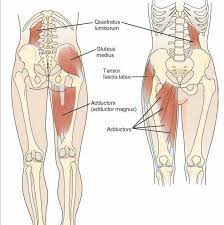
- Thigh Muscle Imbalances: The forward tilt of the pelvis disrupts the natural tension between the quadriceps, hamstrings, and hip flexors. The hip flexors and quadriceps become tight and overworked, while the hamstrings and glutes are overstretched and weakened.
The result?
Thigh muscles that are overworked in some areas and underutilized in others, leading to imbalances, reduced mobility, and an increased risk of injury.
What starts as a postural issue in the neck can cascade down to affect your lower body, highlighting the interconnected nature of the body’s musculoskeletal system.
The Biomechanical Connection Between Your Neck and Thighs
The body is a beautifully interconnected system, often referred to as a kinetic chain, where each part influences the next.
When one part of this chain is misaligned, like in forward neck syndrome, the effects ripple throughout the body.
This postural misalignment alters the natural alignment of the spine and pelvis, creating a cascade of changes that directly impact the thighs.
How It Happens?
- Anterior Pelvic Tilt: The forward position of the head shifts the body’s center of gravity. To maintain balance, the pelvis tilts forward, disrupting its neutral alignment. This tilt acts as the starting point for further muscle imbalances.
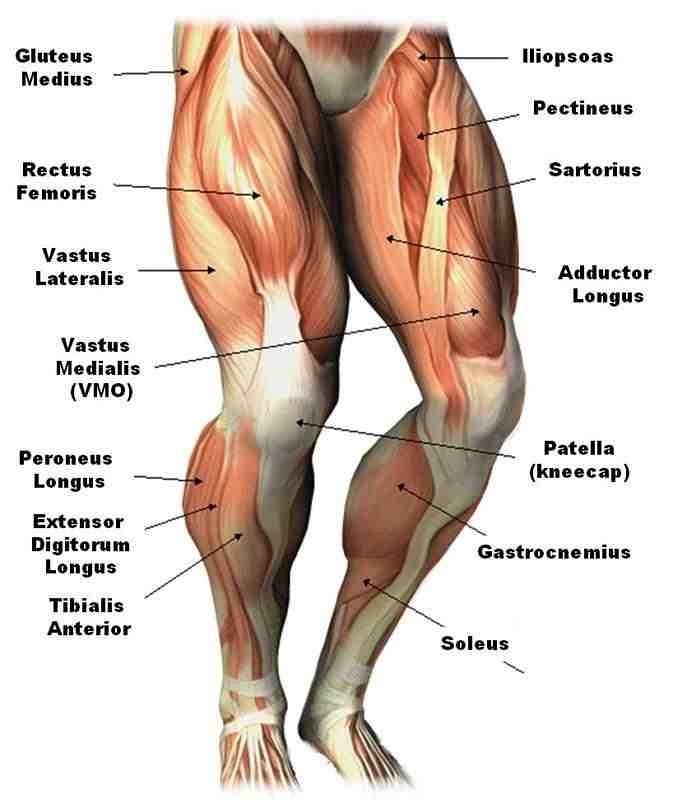
- Tight Hip Flexors: The anterior pelvic tilt shortens the iliopsoas and rectus femoris muscles, causing the hip flexors to tighten. This tension pulls the thighs into a shortened, stiff position, reducing flexibility and creating discomfort.
- Weak Hamstrings and Glutes: While the hip flexors bear the brunt of the tension, the hamstrings and glutes are left overstretched and underutilized. These weakened muscles struggle to stabilize the pelvis and thighs, leading to poor posture and inefficient movement.
This imbalance makes everyday movements like walking, climbing stairs, or exercising more challenging and inefficient.
Over time, the strain increases the risk of injuries, such as hamstring strains or lower back pain.
Forward neck syndrome demonstrates how a seemingly isolated problem can disrupt the entire kinetic chain, highlighting the importance of addressing postural imbalances.
Muscle Imbalances: Tight Hip Flexors and Weak Hamstrings
Forward neck syndrome might sound like a problem confined to your upper body, but it sets off a chain reaction that disrupts muscle balance all the way down to your thighs.
This postural issue leads to a classic muscle imbalance, where some muscles become overactive and tight while others are left overstretched and weak, resulting in discomfort, reduced mobility, and potential injury.
Tight Hip Flexors:
The forward pelvic tilt caused by forward neck posture is a key culprit in this imbalance.
As your head moves forward, your pelvis compensates by tilting anteriorly (forward).
This misalignment shortens the hip flexor muscles, such as the iliopsoas and rectus femoris, increasing tension in the upper thighs.
Over time, tight hip flexors lead to stiffness and discomfort, limiting your range of motion in the hips and thighs.
Everyday activities like walking, climbing stairs, or bending can feel strained and unnatural.
Weak Hamstrings:
While the hip flexors and quadriceps take on extra tension, the hamstrings—located at the back of your thighs—are left overstretched and weakened.
Weak hamstrings reduce stability in your lower body, making movements like squats, lunges, or running less efficient and potentially painful.
This imbalance not only affects athletic performance but also increases the risk of strains and injuries.
Together, tight hip flexors and weak hamstrings create a thigh muscle imbalance that impacts posture, mobility, and overall functionality, underscoring the far-reaching effects of forward neck syndrome.
Real-Life Example: Emma’s Desk Job Dilemma
Emma, a 29-year-old graphic designer, spent long hours glued to her laptop, hunched over in the typical desk-worker posture.
At first, she brushed off the occasional stiffness in her thighs as a minor inconvenience.
But as weeks turned into months, the discomfort grew worse, accompanied by lower back pain that made even simple activities like climbing stairs or bending down uncomfortable.
Frustrated and unsure of what was happening, she sought help from a physical therapist.
To Emma’s surprise, the therapist pointed to her neck—not her thighs—as the root cause of her problems.
Her forward neck posture had created a domino effect throughout her body.
With her head jutting out in front of her shoulders, her center of gravity had shifted forward, causing her pelvis to tilt forward as well.
This misalignment tightened her hip flexors, leaving her hamstrings overstretched and weakened.
The therapist prescribed targeted exercises to correct her posture and strengthen the imbalanced muscles in her thighs.
Over several weeks, Emma noticed significant relief—not just in her thighs, but also in her lower back.
Emma’s story is a powerful reminder that the body functions as an interconnected system.
A problem in one area, like the neck, can ripple down and affect seemingly unrelated parts, like the thighs.
Her journey demonstrates the importance of addressing postural imbalances to achieve overall well-being.
Scientific Studies on Forward Neck Syndrome and Muscle Imbalance
The connection between forward neck syndrome and muscle imbalance is not just anecdotal—it is grounded in science.
Researchers have extensively studied how poor posture, particularly forward head posture, disrupts the body’s mechanics, leading to muscle imbalances and discomfort in the thighs.
Here is a look at key studies that highlight this link:
1. “Postural Adjustments in Forward Head Posture” (Journal of Physical Therapy Science, 2020)
This study found that forward neck posture significantly increases anterior pelvic tilt, a condition where the pelvis tilts forward.
This tilt disrupts the natural alignment of the lower body, creating uneven tension in the thigh muscles.
Tight hip flexors and overstretched hamstrings were identified as common consequences.
2. “The Impact of Anterior Pelvic Tilt on Lower Limb Function” (Clinical Biomechanics, 2019)
Researchers in this study focused on how anterior pelvic tilt affects the thighs.
They discovered that the misalignment caused by poor posture increases strain on the quadriceps while simultaneously weakening the hamstrings.
This imbalance impairs lower limb function, making movements less efficient and more injury-prone.
3. “Kinetic Chain Disruptions in Forward Head Posture” (Gait & Posture, 2021)
This research demonstrated how forward neck posture disrupts the body’s kinetic chain.
It showed that lower body movement, particularly thigh muscle engagement during walking and running, becomes inefficient due to poor postural alignment.
These studies highlight the interconnected nature of posture and muscle function, proving that forward neck syndrome is not just a neck issue but a full-body disruptor.
The Long-Term Effects on Thigh Function and Mobility
As per BestForwardHeadPostureFix research, “Ignoring forward neck syndrome might seem harmless at first, but it can set the stage for long-term complications, particularly in your thighs”.
Here is how this seemingly small posture problem can lead to big issues:
1. Chronic Muscle Imbalances
Forward neck syndrome often creates persistent tightness in the hip flexors while leaving the hamstrings overstretched and weak.
This imbalance forces your body to adopt compensatory movement patterns—essentially, it recruits the wrong muscles to perform everyday tasks.
Over time, these imbalances worsen, placing strain on the thighs and surrounding joints.
2. Reduced Mobility
Tight hip flexors and misaligned pelvis mechanics do not just cause discomfort; they restrict your range of motion.
Tasks as simple as climbing stairs, bending down to tie your shoes, or getting out of a chair can feel increasingly challenging.
Poor mobility also impacts athletic performance, making activities like running or weightlifting less effective and more prone to errors.
3. Increased Risk of Injury
When thigh muscles are imbalanced, they are more susceptible to strains, tears, and overuse injuries, especially during high-impact activities.
Whether you are jogging or tackling a compound workout for weight loss, these imbalances put extra pressure on your joints, increasing the likelihood of injuries that sideline your fitness goals.
A study in the European Spine Journal (2020) confirmed that individuals with poor posture are significantly more likely to develop chronic musculoskeletal issues, including thigh pain and reduced mobility.
Forward neck syndrome is more than a neck issue—it is a full-body disruptor.
FAQs on Thigh Imbalance caused by Computer Neck
In today’s screen-driven world, posture problems are no longer limited to occasional discomfort—they’ve become a widespread health concern.
In the United States, studies suggest that over 65% of adults experience neck pain, often linked to prolonged smartphone and computer use. One of the most common culprits? Forward Neck Syndrome, also known as forward head posture (FHP).
But here is what most people don’t realize: this isn’t just a neck issue. It is a full-body problem. When your head shifts forward, your entire body compensates—affecting spinal alignment, pelvic position, and ultimately, thigh muscle balance.
This FAQ guide answers the most searched questions in the U.S. around forward neck syndrome and its surprising impact on lower body muscles—especially the thighs—while offering practical, science-backed solutions.
Q-1. How does forward head posture affect lower body muscle balance?
A-1. Forward head posture shifts your center of gravity forward, forcing the rest of your body to compensate.
This creates a chain reaction down the spine, altering pelvic alignment and muscle activation patterns in the lower body.
Research in U.S. posture studies shows that postural deviations can reduce muscle efficiency by up to 30%, leading to imbalances between muscle groups.
Actionable insight:
Correcting head position can immediately improve overall body alignment and muscle coordination.
Q-2. What is the connection between neck posture and thigh muscle weakness?
A-2. The body works as a kinetic chain, meaning dysfunction in one area affects others.
When the neck is misaligned, it changes spinal curvature, which impacts how the pelvis sits and how thigh muscles engage.
This often leads to underactive glutes and hamstrings, while the quadriceps become overactive.
Actionable insight:
Address posture at the top (neck and shoulders) to restore balance in the lower body.
Q-3. Can forward neck syndrome cause tight hip flexors and weak glutes?
A-3. Yes, forward neck syndrome often contributes to anterior pelvic tilt, a condition where the pelvis tilts forward. This shortens hip flexors and weakens the glutes.
U.S. rehabilitation data shows that over 70% of individuals with poor posture exhibit tight hip flexors and weak glute muscles.
Actionable insight:
Stretch hip flexors daily and strengthen glutes with exercises like bridges and squats.
Q-4. How does poor neck posture impact leg alignment and muscle activation?
A-4. Poor neck posture disrupts spinal alignment, which affects how your legs track during movement. This can lead to improper muscle activation, especially during walking, running, or lifting.
Studies indicate that altered posture can reduce neuromuscular efficiency by 20% to 25%, affecting performance and stability.
Actionable insight:
Focus on posture correction before intense lower-body workouts.
Q-5. What is the relationship between forward head posture and quadriceps imbalance?
A-5. Forward head posture often leads to quad dominance, where the quadriceps do more work than they should. This happens because glutes and hamstrings are not activating properly.
This imbalance increases the risk of knee pain and injury, a common issue reported in U.S. orthopedic clinics.
Actionable insight:
Strengthen posterior chain muscles to reduce overreliance on quads.
Q-6. Does forward head posture weaken hamstrings and glutes?
A-6. Yes, poor posture can inhibit the activation of hamstrings and glutes. When the pelvis is misaligned, these muscles cannot generate force effectively.
Research shows that muscle inhibition can reduce strength output by up to 15% to 20%.
Actionable insight:
nclude activation drills like glute bridges before workouts.
Q-7. How does posture affect the kinetic chain from neck to legs?
A-7. The kinetic chain connects all body segments. A forward head position disrupts this chain, leading to compensations throughout the spine and lower body.
In U.S. biomechanics research, improper posture has been linked to decreased movement efficiency and increased injury risk.
Actionable insight:
Think of posture as a full-body system—not just a neck issue.
Q-8. What are forward head posture and lower body muscle compensation patterns?
A-8. Common compensation patterns include:
- Tight hip flexors
- Weak glutes
- Overactive quads
- Reduced hamstring engagement
These patterns develop as the body tries to maintain balance despite poor alignment.
Actionable insight:
Identify and correct these patterns early to prevent chronic issues.
Q-9. How does cervical spine misalignment affect thigh muscle strength?
A-9. Cervical spine misalignment alters nerve signaling and muscle coordination, which can reduce strength in lower body muscles.
Studies show that spinal alignment plays a critical role in neuromuscular performance and muscle activation.
Actionable insight:
Improving neck posture can enhance overall strength output.
Q-10. What is the link between neck posture and pelvic tilt muscle imbalance?
A-10. Forward head posture often leads to anterior pelvic tilt, which disrupts muscle balance between the front and back of the thighs.
This imbalance places extra stress on the quadriceps while weakening the posterior chain.
Actionable insight:
Combine posture correction with core strengthening to stabilize the pelvis.
Q-11. Does forward head posture cause anterior pelvic tilt and quad dominance?
A-11. Yes, forward head posture contributes to anterior pelvic tilt, which promotes quad dominance and reduces glute activation.
U.S. fitness assessments show that over 60% of sedentary adults exhibit signs of anterior pelvic tilt.
Actionable insight:
Focus on glute strengthening and hip mobility exercises.
Q-12. How does smartphone posture affect thigh muscles and lower body strength?
A-12. Prolonged smartphone use encourages forward head posture, which cascades into poor spinal alignment and lower body imbalances.
Americans spend an average of over 4 hours per day on mobile devices, increasing the risk of postural issues.
Actionable insight:
Take posture breaks every 30–60 minutes to reset alignment.
Q-13. What exercises fix forward head posture and lower body imbalance?
A-13. Effective exercises include:
- Chin tucks
- Wall angels
- Glute bridges
- Hip flexor stretches
These exercises target both upper and lower body imbalances.
Actionable insight:
Combine posture correction exercises with strength training for best results.
Q-14. How do you correct muscle imbalance caused by poor posture from neck to legs?
A-14. Correction involves three steps: mobility, activation, and strengthening. Address tight muscles, activate weak ones, and reinforce proper movement patterns.
U.S. rehabilitation programs emphasize integrated approaches for long-term success.
Actionable insight:
Follow a consistent routine rather than relying on quick fixes.
Q-15. What are the effects of forward head posture on gait, hip function, and thigh muscles?
A-15. Forward head posture alters gait mechanics, reduces hip mobility, and disrupts thigh muscle coordination. This can lead to inefficient movement and increased injury risk.
Studies show that poor posture can increase joint stress by up to 25%, particularly in the hips and knees.
Actionable insight:
Improving posture can enhance walking efficiency and reduce strain on lower body joints.
Expert Tip of the Day:
Forward Neck Syndrome is more than just a cosmetic or upper-body issue—it is a full-body dysfunction that disrupts muscle balance from head to toe.
For many Americans dealing with sedentary lifestyles and prolonged screen time, this hidden problem often shows up as tight hips, weak glutes, and overworked thighs.
Here is the practical takeaway:
- Posture affects the entire kinetic chain, not just the neck
- Forward head posture can reduce muscle efficiency by up to 30%
- It often leads to anterior pelvic tilt and quad dominance
- Correcting posture improves both strength and movement quality
- A combination of mobility, activation, and strength training is essential
In a world where screen time is unavoidable, posture awareness becomes your competitive advantage.
Fix your alignment, and your body will reward you—not just with less pain, but with better strength, improved balance, and a leaner, more efficient physique.
Takeaway
Forward neck syndrome might appear to be a minor cervical issue, but it initiates a chain reaction that disrupts biomechanics from head to toe—especially in the thighs.
When your head shifts forward, the center of gravity changes, forcing the spine to compensate by exaggerating curves in the thoracic and lumbar regions.
This misalignment causes the pelvis to tilt anteriorly, increasing tension in the hip flexors and quadriceps while overstretching and weakening the hamstrings and gluteal muscles.
Over time, this muscular imbalance can lead to discomfort, reduced mobility, and even chronic lower body dysfunction.
For example, many people with forward head posture unknowingly struggle with iliopsoas tightness, a deep hip flexor muscle that becomes overactive due to pelvic tilt.
This tightness pulls on the femur, disrupting thigh alignment and leading to poor gait mechanics or even knee pain.
Runners may notice decreased stride efficiency, while office workers might experience persistent leg fatigue without a clear cause.
Addressing thigh discomfort requires more than just stretching your legs—it starts with correcting the postural origin.
By realigning the cervical spine and pelvis through targeted posture training, you restore muscular harmony across the kinetic chain. In essence, fixing your neck may be the key to freeing your thighs.
References: