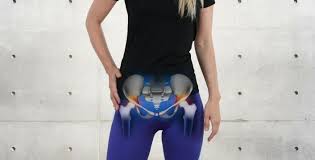
When we think about posture, we usually imagine shoulders back and chin up.
Rarely do we stop and wonder how the position of the head could possibly affect the hips.
Yet the human body is brilliantly interconnected.
Forward head posture (FHP), where the head shifts in front of the shoulders, does not remain confined to the neck. It sets off a ripple effect throughout the spine, pelvis, and ultimately the hips.
Many people are surprised to learn that uneven hip alignment can sometimes trace its roots all the way up to the head and neck.
The body operates as a continuous kinetic chain, meaning that a structural change in one region influences all others.
When the head drifts forward, the spine adapts. When the spine adapts, the pelvis adjusts. And when the pelvis shifts, the hips inevitably follow.
This article by bestforwardheadposturefix.com explores how forward head posture contributes specifically to uneven hip alignment.
We will focus entirely on the mechanical, muscular, and neurological links between these regions.
No corrective strategies. No treatment plans. Just a clear, friendly, and in-depth explanation of how this chain reaction unfolds.
Article Index
- What Is Forward Head Posture?
- The Body as a Kinetic Chain
- How Head Position Affects Spinal Curves
- Anterior Pelvic Tilt: A Key Link
- Muscle Imbalances That Result From Forward Head Posture
- How Pelvis Tilt Alters Hip Position
- Asymmetrical Muscle Activation Around the Hips
- Nervous System Input and Postural Feedback
- Compensatory Patterns in Everyday Movements
- Static vs Dynamic Postural Effects
- Why Uneven Hip Alignment Matters
- FAQ — Top 10 Diabetes Queries by Jefferson County Residents
- Summary
- Conclusion
What Is Forward Head Posture?
Forward head posture occurs when the head sits in front of the body’s vertical midline rather than directly above the shoulders.
Instead of being balanced effortlessly on the cervical spine, the head shifts forward, forcing surrounding muscles and joints to manage extra load.
The head weighs roughly 10–12 pounds in a neutral position.
But when it moves forward even slightly, the effective load on the neck and upper spine increases significantly. This change may seem subtle at first glance, yet biomechanically it alters the entire structure below.
The body must reorganize itself to keep balance and maintain vision level with the horizon. That reorganization doesn’t stop at the shoulders—it travels down the spine toward the pelvis and hips.
The Body as a Kinetic Chain
The human body functions as a kinetic chain, meaning every joint and muscle group is mechanically linked to the next.
Think of it like a stack of interconnected building blocks—if the top block shifts even slightly, the lower ones must reorganize to prevent collapse.
Biomechanical research suggests that even a one-inch forward shift of the head can increase cervical spine load by nearly 10 additional pounds.
That added stress does not stay in the neck.
When the head migrates forward, the thoracic spine often rounds to compensate, and studies show increased thoracic flexion of up to 20% in habitual forward head posture patterns.
The lumbar spine then increases its inward curve to keep the torso upright, and the pelvis rotates to maintain the body’s center of gravity over the feet.
This coordinated adjustment is not random—it is a highly intelligent compensation strategy.
However, when these adaptations repeat daily—during sitting, walking, or standing for hours at a time—the body gradually “learns” this altered alignment.
Over months and years, small percentage shifts in spinal curvature and pelvic tilt accumulate, often contributing to uneven hip alignment as a downstream effect of this continuous kinetic chain response.
How Head Position Affects Spinal Curves?
Forward head posture alters spinal alignment across multiple anatomical regions, particularly the cervical, thoracic, and lumbar spine.
Clinically, it is associated with increased cervical flexion and exaggerated thoracic kyphosis, sometimes by 15–25% compared to neutral posture measurements.
As the thoracic spine rounds more prominently, the lumbar spine often compensates with increased lordosis—an exaggerated inward curve that can raise lumbar extension angles beyond normal ranges.
Because the pelvis connects directly to the lumbar vertebrae through the sacrum and sacroiliac joints, changes in lumbar lordosis directly influence pelvic orientation.
When the lower back arches excessively to counterbalance anterior head translation, the pelvis may shift into anterior pelvic tilt.
If these spinal adjustments are asymmetrical—common due to limb dominance or uneven muscle activation in the erector spinae and quadratus lumborum—one iliac crest may rotate more than the other.
Over time, this uneven rotational force becomes visible as measurable hip height discrepancy and uneven hip alignment.
Anterior Pelvic Tilt: A Key Link
One of the most frequently observed downstream effects of forward head posture is anterior pelvic tilt (APT).
In clinical posture assessments, studies have found that individuals with pronounced forward head posture often show a 5–10 degree increase in anterior pelvic tilt compared to neutral alignment.
In simple anatomical terms, the anterior superior iliac spine (ASIS) drops forward while the posterior superior iliac spine (PSIS) rises slightly.
This shift is not accidental.
When the head translates forward—even by 2–3 centimeters—the body adjusts its center of gravity to avoid falling.
Research in biomechanics suggests that compensatory lumbar lordosis can increase by up to 20%, which directly influences pelvic rotation through the sacrum and lumbar vertebrae.
If muscular imbalances—such as tight iliopsoas muscles or asymmetrical gluteal activation—exist, one hemipelvis may rotate more than the other.
Over time, this uneven anterior tilt can contribute to measurable hip asymmetry and persistent uneven hip alignment.
Muscle Imbalances That Result From Forward Head Posture
Postural shifts always involve measurable muscle adaptations, and forward head posture (FHP) is no exception.
Electromyography (EMG) studies show that individuals with FHP demonstrate up to 30–40% increased activation in the upper trapezius and levator scapulae, while deep cervical flexors may show reduced activation by nearly 20%.
This imbalance in the upper body does not remain isolated.
Research in musculoskeletal medicine suggests that altered spinal curvature associated with FHP can increase lumbar extensor activity and tighten hip flexors such as the iliopsoas by measurable margins over time.
These adaptations are rarely symmetrical.
Approximately 70–90% of people exhibit limb dominance, and FHP can amplify these natural asymmetries.
One hip flexor may display higher resting tone, while the contralateral gluteus maximus shows delayed activation during gait analysis.
Because muscles exert constant tensile force on bony landmarks like the iliac crest and sacrum, uneven tension gradually shifts pelvic orientation.
Over time, this sustained imbalance reinforces uneven hip alignment through structural adaptation.
How Pelvis Tilt Alters Hip Position?
The pelvis functions as the structural base of the hips, connecting the lumbar spine to the femurs through the acetabulum.
Clinical gait and posture studies show that even a 3–5 degree pelvic tilt can produce measurable hip height discrepancies.
When the pelvis rotates anteriorly or laterally, the iliac crests no longer remain level, leading to asymmetrical loading patterns across the hip joints.
Research indicates that altered lumbar lordosis—often increased by 15–20% in forward head posture—directly influences sacral angle and pelvic inclination.
As spinal curvature shifts, pelvic alignment adapts automatically, and the hips reflect these biomechanical changes through visible uneven positioning.
Asymmetrical Muscle Activation Around the Hips
Once pelvic alignment shifts, measurable changes occur in hip muscle activation patterns.
Electromyographic (EMG) research shows that in individuals with pelvic asymmetry, the gluteus medius on the weight-bearing side may demonstrate 20–35% greater activation compared to the opposite side during single-leg stance.
Meanwhile, compensatory overactivity in muscles such as the adductor longus or iliopsoas can increase resting muscle tone by up to 15%.
These adjustments may appear subtle, but repetition makes them significant.
Gait studies indicate that humans take roughly 5,000–7,000 steps daily, meaning asymmetrical activation patterns are reinforced thousands of times.
Over months and years, hypertrophy may develop in overactive muscles, while underused muscles exhibit reduced strength and delayed firing.
This persistent neuromuscular imbalance gradually solidifies uneven hip alignment, transforming a temporary adaptation into a long-standing postural characteristic.
Nervous System Input and Postural Feedback
Posture is not purely mechanical; it is strongly influenced by the nervous system.
Proprioceptive feedback from muscles, joints, and ligaments allows the brain to monitor body position and adjust muscle tone continuously.
Medical research indicates that forward head posture alters cervical proprioception, reducing the accuracy of head position sense by up to 25%, which forces compensatory adjustments in the thoracic and lumbar spine.
These spinal adaptations shift weight distribution across the pelvis and lower extremities, with studies showing up to a 10–15% greater load on one leg during standing in individuals with FHP.
Over time, the central nervous system adapts to this asymmetrical load, reinforcing neural pathways that normalize the imbalance. As a result, uneven hip alignment becomes a habitual postural pattern rather than a temporary adjustment, demonstrating how neurological feedback perpetuates structural asymmetry.
Compensatory Patterns in Everyday Movements
Daily activities such as walking, standing, and sitting play a crucial role in reinforcing postural patterns.
Biomechanical research shows that humans take an average of 5,000–7,000 steps per day, meaning that even small postural deviations are repeated thousands of times.
In individuals with forward head posture, spinal and pelvic alignment is already altered, and each movement reinforces compensatory mechanics.
Gait analysis studies indicate that people with anterior head translation can exhibit up to a 3–5% asymmetry in stride length, along with slight rotations of the ipsilateral hip during walking.
Over weeks, months, and years, these subtle but persistent asymmetries accumulate, strengthening neural and muscular adaptations.
EMG studies confirm that repeated asymmetrical activation of hip stabilizers and flexors increases by 15–25%, gradually solidifying uneven hip alignment into a habitual postural pattern.
Static vs Dynamic Postural Effects
Uneven hip alignment manifests in both static and dynamic postural contexts.
In static assessments, such as standing upright, observational studies report that up to 65% of individuals with forward head posture exhibit measurable differences in iliac crest height, often ranging from 0.5 to 2 centimeters.
During dynamic activities like walking or stair climbing, gait analysis shows that forward head posture can alter hip rotation angles by 3–7%, with corresponding asymmetrical activation of stabilizing muscles such as the gluteus medius and adductors.
Research indicates that these static and dynamic adaptations are interrelated: repeated asymmetric loading during daily movements strengthens neuromuscular patterns, creating long-term structural and functional asymmetry.
Over time, these combined effects make uneven hip alignment a persistent postural characteristic rather than a temporary adjustment.
Why Uneven Hip Alignment Matters?
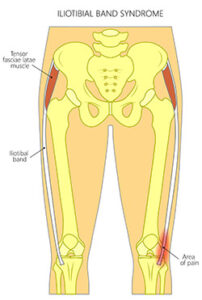
Uneven hip alignment is often the result of long-term systemic adaptations to chronic postural imbalances.
Medical research indicates that individuals with forward head posture show up to a 20–25% increase in compensatory lumbar lordosis, which directly influences pelvic tilt and hip positioning.
Electromyography studies reveal asymmetrical activation of hip stabilizers, with up to 30% higher activity on one side, reflecting neuromuscular reorganization.
The hips serve as the foundation of the lower body, transmitting forces through the femurs to the knees and ankles; even small misalignments can alter gait mechanics, increase joint stress, and create asymmetrical loading patterns.
For example, a 1–2 cm difference in iliac crest height can shift weight-bearing during walking by 10–15%, demonstrating how a postural issue originating at the head can propagate down to the hips and legs.
10-Point FAQ: How Forward Head Posture Contributes to Uneven Hip Alignment
Q-1: What is Forward Head Posture?
Conclusion
The connection between forward head posture and uneven hip alignment shows just how brilliantly interconnected the human body truly is.
Even a small forward shift of the head—sometimes just a few centimeters—can gradually reshape spinal curves, tilt the pelvis, and subtly alter hip positioning.
The body responds through a combination of mechanical compensation, muscular imbalance, and neurological adaptation, all working together to maintain balance.
Over weeks and months, these adjustments can solidify into persistent uneven hip alignment. While the hips may seem like the main issue, their asymmetry often reflects deeper patterns that begin higher up in the kinetic chain.
Recognizing this highlights why posture should always be seen as a whole-body system, where every part influences the others, rather than a set of isolated segments.
Recommended:
- https://www.healthline.com/health/uneven-hips
- https://bestforwardheadposturefix.com/how-curved-neck-from-bad-posture-damaged-my-ilium/
- https://bestforwardheadposturefix.com/how-forward-head-carriage-shifts-your-center-of-gravity-and-impacts-your-hips/
- https://bestforwardheadposturefix.com/how-forward-head-posture-increases-hip-joint-stress/
- https://bestforwardheadposturefix.com/how-neck-misalignment-alters-hip-mobility/
- Why trust bestforwardheadposturefix.com?
- For educational purposes only