If you spend hours hunched over a computer, staring down at your phone, or sitting in one place, you may find that your neck and upper back are stiff by the end of the day. Or, you might find that your head is continually falling forward of where you’d prefer it to be.
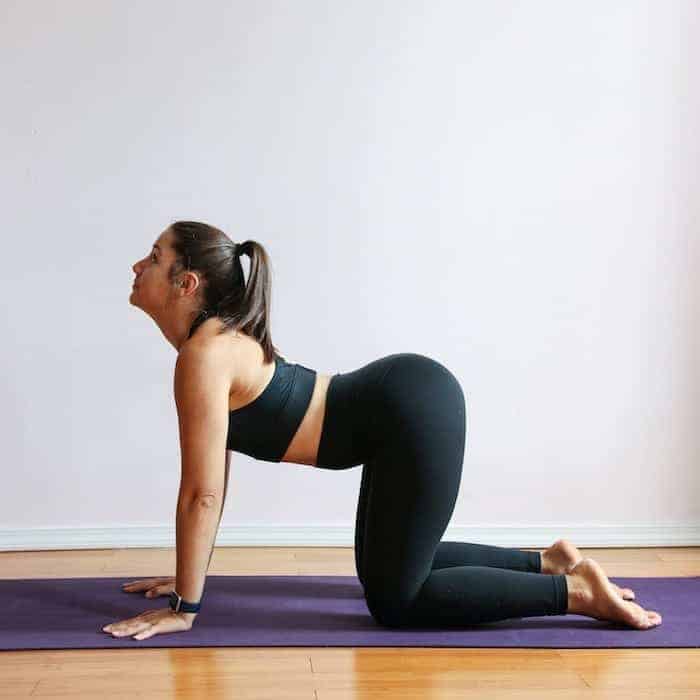
One simple movement that can help is the Cat-Cow pose, a yoga stretch in which you move from a rounded position to gently arching your back.
The Cat-Cow Pose lets you practice gentle spinal movements, but it is not an established treatment for forward head posture. Improving neck comfort and movement may involve a broader approach that includes appropriate strengthening exercises and regularly changing your sitting and standing positions throughout the day.
This article will discuss what the Cat-Cow pose can do, how to move into it comfortably, what studies have to say about working out and forward head posture, and when other movements or experts may be necessary.
Table of Contents
- What Is Forward Head Posture?
- Can Cat-Cow Pose Help Forward Head Posture?
- What Are the Potential Benefits of Cat-Cow Pose?
- How to Perform Cat-Cow Pose Step by Step
- How Many Cat-Cow Repetitions Should You Do?
- What Does the Research Say?
- Exercises That May Complement Cat-Cow Pose
- Common Mistakes to Avoid
- When Should You Seek Professional Advice?
- Frequently Asked Questions
- Bottom Line
What Is Forward Head Posture?
Forward head posture describes a position in which the head sits farther forward relative to the neck and upper trunk when viewed from the side.
It can often be observed when working at a computer, using mobile phones, reading, or sitting for too long. The forward head posture may also be associated with neck stiffness, discomfort, or limited range of motion, though it often occurs regardless of pain.
The head and neck are meant to move constantly throughout the day.
There is no ideal posture that you should maintain, and just based on how someone looks, you can’t tell if they have a certain disease.
If you want to understand the signs in more detail, read our guide to forward head posture symptoms.
The goal is not to hold your head in one rigid position throughout the day. Instead, focus on comfortable movement, adequate strength and endurance, and regularly changing positions rather than remaining seated for long periods.
Can Cat-Cow Pose Help Forward Head Posture?
Although the Cat-Cow pose might be helpful for range of motion improvement in the spine, there is no evidence to suggest that the discussed yoga pose will specifically correct forward head posture on its own.
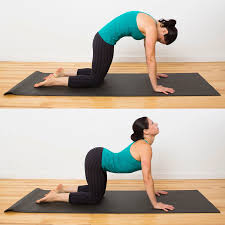
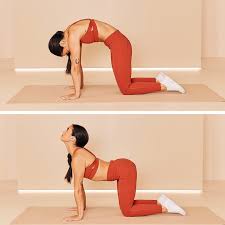
The Cat-Cow or Marjaryasana-Bitilasana is a stretching exercise where a practitioner actively moves their spine from the folded position (flexion) to the arched one (extension) on their hands and knees.
The movement activates the muscles in the upper back and, depending on the variation, can involve the mobilization of the cervical spine and shoulder girdle. Moreover, the Cat-Cow pose, as the name implies, requires coordination of movement with the breathing pattern.
Cat-Cow may be a useful movement break for people who spend long periods sitting or want to practise spinal mobility. However, these potential benefits relate mainly to movement and flexibility; they do not establish that the exercise directly corrects forward head posture.
As mentioned above, forward head posture concerns the orientation of the head and neck in relation to the rest of the body. Therefore, an appropriate program should include not only flexibility and range of motion improvement but also exercises targeting the neck extensor muscles and the strengthening of the shoulder girdle.
Moreover, correction of forward head posture might require an individual to adjust their working environment and ergonomic setup.
It is important to note that Cat-Cow is not a substitute for a comprehensive program discussed above but can be a part of one.
Cat-Cow Pose is a simple, equipment-free movement. Its potential benefits are mainly related to practising controlled movement and exploring spinal mobility.
Encourages spinal mobility
The movement moves from rounding the back to gently arching it. This is a good way to practice moving the spine through a comfortable range rather than staying fixed in one position.
It might help if you’ve been sitting down for a while and feel a bit stiff. How much movement you need will probably be different for everyone.
Helps you practise movement control
Cat-Cow teaches you to move in time with your breath. The slow movements will help you focus on the movement of your trunk, as well as your shoulders and neck.
This is essential in learning to recognize when you are tense or using poor form, so that you can relax unnecessary muscles and avoid straining your neck.
Provides a gentle movement break
A short movement break can help interrupt long periods of sitting. Try Cat-Cow plus standing up, taking a walk, or switching up your working position.
You don’t have to do the exercise over and over to hold an ideal posture all day. A better goal is to move around every once in a while, varying your positions, rather than trying to sit or stand in one best way for too long.
May complement a broader exercise programme
Research on therapeutic exercise for forward head posture suggests that some exercise programmes may improve certain posture measurements and reduce neck pain in some populations.
However, the studies assessed different types of therapeutic exercises and their results cannot confirm the same effectiveness of Cat-Cow exercises.
Therefore, if you want to address forward head posture, it might be helpful to combine mobilization movements that are comfortable for you in the present moment with therapeutic exercises tailored to your needs.
How to Perform Cat-Cow Pose Step by Step
Cat-Cow Pose is generally performed on hands and knees. Move slowly, keep the range comfortable, and avoid forcing your neck into either direction.
Step 1: Start on your hands and knees
Start on a mat or another comfortable surface, positioning yourself on your hands and knees.
- Place your hands approximately beneath your shoulders.
- Position your knees approximately beneath your hips.
- Spread your fingers comfortably and distribute your weight evenly.
- Relax your neck and look toward the floor.
- Allow your back to rest in a comfortable, neutral position without forcing it flat.
Modification: If you find it too uncomfortable to kneel you may want to place a folded towel underneath your knees or consult a qualified practitioner about further modifications.
Step 2: Move into Cow Pose
Breathe in gently as you move your spine into a mild arch.
· Move your chest forward slightly.
· Let your abdomen drop when you do this, but don’t force it.
· Let your pelvis gently tilt.
· Relax your shoulders.
· Your neck should be comfortable, not pulled back with your chin.
You don’t have to look up towards the ceiling. It’s more a question of control than of the biggest possible arch.
Step 3: Move into Cat Pose
Breathe out as you gently round your back.
- Now, draw your abdomen inwards.
- Now, let your shoulder blades move apart.
- Let your upper back round.
- Let your chin go towards your chest, but do not overstrain your neck.
Now, do it all smoothly and controlled. Do not overdo the movements and try to reach an extreme position. Your neck should move at the same time as the rest of your spine.
Step 4: Alternate between the two positions
Continue moving slowly between Cow and Cat.
Let your breathing dictate the movement, but avoid holding your breath and forcing yourself to fit a certain pattern.
Concentrate on moving comfortably through your spine. You don’t have to yank your head back and forth furiously, nor do you need to adjust your head position constantly with every single repetition.
Step 5: Return to a comfortable neutral position
Once you are done with the repetitions, return to the neutral position and stop.
Notice how your back and neck feel. The movement should not worsen your symptoms.
In case of sharp pains, dizziness, tingling, or other uncomfortable sensations, stop exercising.
How Many Cat-Cow Repetitions Should You Do?
There is no proven Cat-Cow dosage for fixing forward head posture.
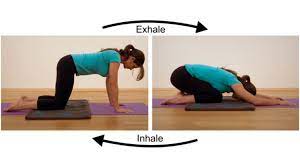
If you are comfortable performing the movement, start with 5 slow cycles. A cycle is one movement from Cat to Cow and back.
You can follow these guidelines:
· Begin with small movements.
· Take your time; don’t rush the motions.
· Don’t push yourself into a painful position.
· Increase repetitions only if you feel comfortable doing so.
· Don’t assume that more repetitions equal a better posture cure.
It’s a good idea to take a Cat-Cow break throughout your day, or make it part of a gentle warm-up or cool-down. It’s not necessary to do it multiple times a day for a proven result; there is no proven dosage.
If you have chronic neck pain, a diagnosed neck disorder, or have trouble getting on your hands and knees, consult with a medical professional before attempting this or any other physical exercise.
What Does the Research Say?
It is important to note that research on cat-cow differs from the studies on yoga and therapeutic exercises in general.
Research on yoga and neck discomfort
A 2016 systematic review examined three randomised controlled trials investigating yoga for chronic neck pain. The findings suggested that yoga may help reduce pain and related functional difficulties. However, the review also identified limitations in the available studies and highlighted the need for further research.
The trials looked at the effects of yoga as a whole, not the Cat-Cow pose. Therefore, it is impossible to tell whether this particular exercise could address forward head posture.
Read the systematic review on yoga and chronic neck pain.
Research on therapeutic exercise and forward head posture
Research has also looked into the effectiveness of therapeutic exercise in individuals presenting with forward head posture.
A systematic review and meta-analysis published in 2018 looked into the effects of different exercise interventions and found that certain types of programmes were associated with improvements in posture and reductions in pain.
However, since the included studies used a variety of different interventions, it is not possible to say with any degree of certainty what specific type of exercise is most effective.
Read the systematic review and meta-analysis on therapeutic exercise for forward head posture.
A 2022 randomized controlled trial evaluated the effectiveness of muscle energy methods plus postural correction exercises in adult populations with forward head postures and chronic nonspecific neck pain.
The interventions yielded greater improvements in outcome measures compared to the control group. However, since the interventions included more than just the Cat-Cow pose, the results cannot be solely attributed to this yoga posture.
Read the clinical trial on posture-correction exercises and forward head posture.
What can you conclude from this evidence?
Overall, the research suggests that some exercise programmes may improve posture measurements or help reduce neck pain in certain populations. However, these findings do not establish Cat-Cow Pose as an effective stand-alone treatment for forward head posture.
If you enjoy doing Cat-Cow and have no problems performing this exercise, it can be a part of your daily mobility. If you want to achieve a long-standing improvement in your posture and reduce symptoms of forward head posture, a personalized program should be beneficial.
Exercises That May Complement Cat-Cow Pose
Cat-Cow primarily involves controlled spinal movement. Depending on your goals and abilities, other exercises may help you work on neck control, shoulder-blade movement, strength, and flexibility.
No single exercise is suitable for everyone. The most appropriate choices depend on your goals, symptoms, and abilities.
Chin tucks
Chin tucks are exercises that gently draw the head backwards, but with no sharp movements upwards or downwards. They’re often incorporated into programmes of exercises designed to practice control of the neck.
They should be done comfortably, without forcing the head into position or persisting with movements that cause discomfort.
For instructions, see our guide to chin-tuck exercises for forward head posture.
Scapular retraction exercises
Scapular retraction is an exercise that involves moving your shoulder blades together. Depending on the type of exercise, this may work various muscles that control your shoulder blades.
The exercises listed here on their own do not address forward head posture, but they may be a useful addition to a general routine if needed.
Learn how to perform scapular retraction exercises for neck posture.
Regular movement breaks
If you sit at a desk for long periods, try taking regular breaks to stand, walk briefly, or change position.
You can also adjust your workstation so that your screen and other frequently used items are positioned comfortably. Try to avoid remaining in one position for long periods, but remember that you do not need to maintain one rigid sitting posture throughout the day.
A tailored exercise programme
Many people who have ongoing neck pain or difficulty with certain movements or activities may benefit from a home exercise program that is based on their individual needs and concerns.
A physical therapist can evaluate and identify factors that contribute to restricted motion and recommend a set of therapeutic activities and stretches.
Read more about how a physical therapist evaluates forward head posture.
The Cat-Cow movement is simple, but some frequent errors in it may be uncomfortable.
Forcing the neck backwards
While in the Cow Pose, do not raise the chin too high. Avoid pressure on your neck and move your head gently.
Rounding the neck too actively
While in the Cat Pose, do not press the chin against the chest. Do not round the upper back unnaturally.
Common Mistakes to Avoid
Cat-Cow is a relatively simple movement, but a few common mistakes can make it less comfortable or useful.
Moving too quickly
Moving too quickly can make it harder to control the movement comfortably. Slow down and move smoothly between the two positions.
Striving for the maximum range of motion
You do not need to stretch as far as possible. A smaller movement is preferable if it allows you to move comfortably and maintain control.
Thinking that one exercise will fix your posture
The Cat-Cow movement alone is not going to fix your Forward Head Posture. There are multiple factors to be considered in each individual case.
Ignoring the warning signs
If something goes wrong, do not continue exercising and seek medical help. Do not force the movement if it begins to cause you discomfort or other symptoms.
When Should You Seek Professional Advice?
Occasionally tight neck muscles following prolonged sitting is common, but if it persists or aggravates, it would be wise to seek an individual assessment.
Consider consulting with a healthcare professional if:
· The pain does not subside
· It is impacting your sleep, work, or daily tasks
· You have frequent headaches as a result of the discomfort
· You are unsure if it is safe to perform Cat-Cow for an underlying condition
· You experience numbness, tingling, or weakness that spreads into one or both arms.
Seek urgent medical attention if you develop sudden or significant weakness, difficulty walking, loss of coordination, or other severe or rapidly developing neurological symptoms.
A physical therapist or other medical professional can evaluate your condition and determine which activities are right for you.
Frequently Asked Questions:
Can Cat-Cow correct forward head posture?
Cat-Cow can help you to practice spinal mobilizations but there is insufficient evidence to claim that this pose corrects forward head posture by itself.
It could be a single component of your exercise regime.
Can Cat-Cow strengthen my neck muscles?
Cat-Cow primarily focuses on mobilizing the spine, and whilst your neck muscles do play a part in performing the movements, it shouldn’t be considered an isolated exercise for strengthening the neck.
Are there any recommendations for how often I should perform Cat-Cow?
There isn’t a scientifically proven frequency for how often you should perform Cat-Cow in order to correct forward head posture but if you find that you’re able to perform the movement comfortably then you could try a couple of sets and see how you feel.
Should I move my head during Cat-Cow?
You could choose to move your head gently up and down with your spine but you shouldn’t over-extend your neck during Cow Pose or push your chin too far in during Cat Pose.
Can I perform Cat-Cow if I have neck pain?
It depends on the cause and severity of your condition.
Some people might find that it aggravates their symptoms so if you’re in any doubt then you should speak to a medical professional.
Is Cat-Cow a better exercise for forward head posture than chin tucks?
They have different aims so it’s hard to say which is definitively better.
Cat-Cow doesn’t directly target the head and neck in the same way that chin tucks do but there isn’t enough evidence to claim that one is definitively better than the other. Your situation may dictate which is more beneficial for you.
How long does it take to improve forward head posture?
There is no definitive time frame as it depends on many factors including what sort of exercises you are doing, how well you are able to do them, and what symptoms you are experiencing. Forward head posture has a variety of impacts on your body so even if you see an improvement in how your posture looks it doesn’t necessarily mean that everything else will improve at the same rate.
Bottom Line
Cat-Cow Pose is a simple exercise for your spine that can assist in a daily routine of mobility practices. This movement can also help you get unstuck from long hours of sitting and encourage you to move in a way that feels right for your back and neck.
However, Cat-Cow Pose has not been established as a stand-alone treatment for forward head posture. Research on yoga and therapeutic exercise offers some encouraging findings, but it does not establish that this particular exercise will correct head position or relieve neck pain.
If you want to try Cat-Cow Pose, begin with a comfortable range of motion and a few slow repetitions. You may also combine it with other suitable exercises as part of a broader routine. If your pain persists, worsens, or limits your ability to move your neck, consult a qualified healthcare professional.
Research Sources
- Kim SD. Effects of yoga on chronic neck pain: a systematic review of randomized controlled trials. Journal of Physical Therapy Science. 2016. Read the study.
- Effectiveness of Therapeutic Exercise on Forward Head Posture: A Systematic Review and Meta-analysis. Read the systematic review.
- The Effect of Muscle Energy Technique and Posture Correction Exercises on Pain and Function in Patients with Non-specific Chronic Neck Pain Having Forward Head Posture: A Randomized Controlled Trial. Read the clinical trial.
Why Trust Us?
For information about our editorial standards, visit our Why Trust Us? page.
Medical Disclaimer
This article is for educational purposes only and is not a substitute for individual medical advice, diagnosis, or treatment. Exercise suitability varies from person to person. If you have persistent pain, an existing medical condition, or symptoms that worsen during exercise, consult a qualified healthcare professional. Read our full Medical Disclaimer.