Do band pull-aparts, prone Y raises, and rowing variations regularly each week to strengthen your rhomboids and pull your shoulders out of that rounded, slumped position. Start with multiple sets of moderate reps on each move, focus on squeezing your shoulder blades together and down, and stop immediately if anything produces sharp pain rather than muscle fatigue.
- Three core moves to start with: band pull-aparts, prone Y raises, seated cable or band rows
- Sets and reps: multiple sets of moderate reps per exercise, multiple times per week
- Placement: slot rhomboid work into your existing upper-body or pull day; warm up your thoracic spine first, and see a clinician if you notice numbness, night pain, or catching in the shoulder
Key Takeaways
Rhomboid strengthening reduces forward-shoulder posture and mid-back pain most effectively when built on activation drills, progressive pulling exercises, and thoracic mobility work.
| Point | Details |
|---|---|
| Start with activation | Scapular squeezes and band pull-aparts build the mind-muscle connection before heavier lifting. |
| Train 2 to 3 times weekly | Match rep ranges to your goal, 8–12 for strength, 12–20 for posture endurance. |
| Watch elbow position | Extended-elbow, externally rotated pulls reduce impingement risk compared to heavy rowing. |
| Pair with thoracic mobility | Stiff mid-back mobility often forces the upper traps to compensate for weak rhomboids. |
| Use Bestforwardheadposturefix guides | Its scapular retraction and posture assessment resources help track progress alongside these exercises. |
Table of Contents
- What Rhomboid Strengthening Actually Does for Your Posture
- Signs Your Rhomboids Might Be Weak
- 8 Rhomboid Exercises Ranked From Activation to Load
- Building a 6-Week Rhomboid Strengthening Program
- What EMG Research Says About Rhomboid Activation and Impingement Risk
- Where Most People Go Wrong With Rhomboid Training
- How Bestforwardheadposturefix Supports Your Posture Correction Plan
- Sources
What Rhomboid Strengthening Actually Does for Your Posture
The rhomboid major and minor sit between your shoulder blades and spine, running from the thoracic vertebrae to the inner border of the scapula. Their main job is pulling your shoulder blades back and stabilizing them against your rib cage, with a smaller role in rotating the scapula downward.
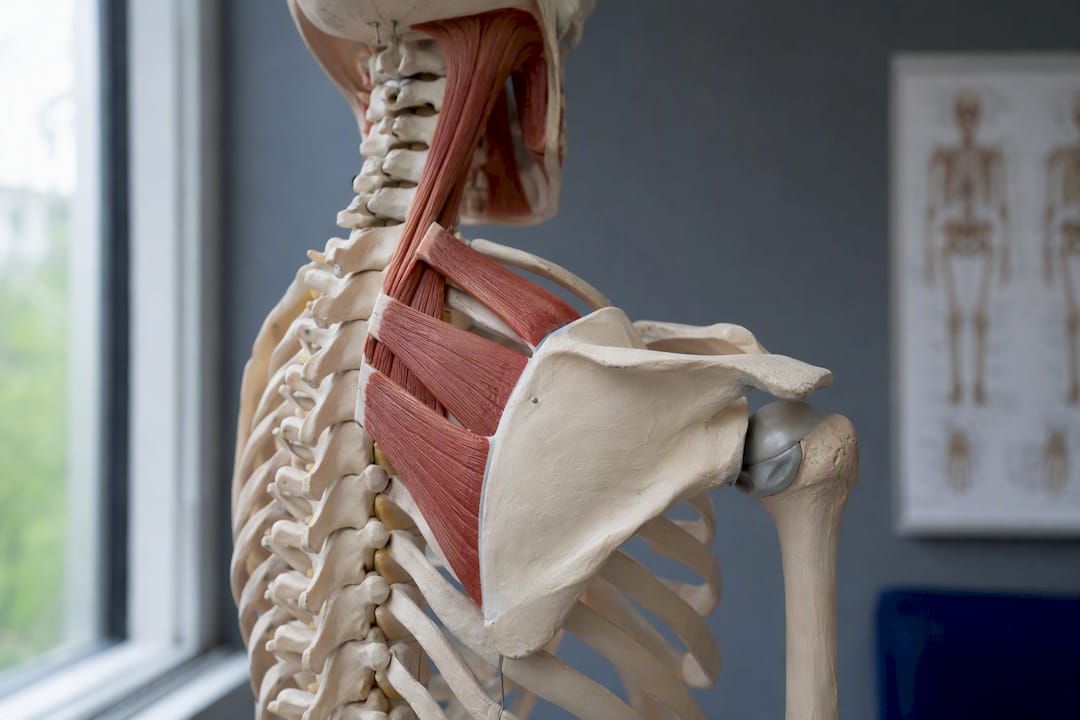
Stronger rhomboids give you better control over where your shoulder blades sit at rest, which directly counters the forward, rounded shoulder position that drives so much neck and upper-back discomfort. When the scapula stays anchored properly, your shoulder joint has a stable base to move from, reducing strain that otherwise gets passed up into the neck.
One clinical caveat worth knowing: you cannot truly isolate the rhomboids. Anatomy references confirm they co-activate with the middle trapezius and other scapular stabilizers during almost every pulling motion.
- Rhomboids retract and stabilize the shoulder blade
- Stronger rhomboids reduce forward-shoulder posture
- They never work alone. Expect middle trapezius involvement in every exercise
Signs Your Rhomboids Might Be Weak
Stand sideways in a mirror. If your shoulders round forward past your ears or your shoulder blades wing outward when you do a push-up, that’s a fairly reliable sign of weak or underactive rhomboids. Fatigue or burning between the shoulder blades during simple rowing motions, or a nagging ache in that same spot after a day at a desk, points the same direction.
- Rounded shoulders or visible scapular winging
- Quick fatigue or a dull ache between the shoulder blades during pulling movements
- Chronic mid-back tightness that doesn’t ease with stretching
Some symptoms need a professional look rather than a home fix: sharp, catching pain with overhead reaching, numbness radiating down the arm, or pain that wakes you at night. A physical therapist can test scapular strength and movement patterns far more precisely than a mirror check, and physiotherapy can correct underlying movement faults a home program might miss.
8 Rhomboid Exercises Ranked From Activation to Load
1. Scapular squeezes
Sit or stand tall, arms relaxed at your sides. Pull your shoulder blades together and slightly down, hold for 3 to 5 seconds, then release with control. This is pure activation, meant to build the mind-muscle connection before you add resistance. Avoid shrugging your shoulders up toward your ears as you squeeze. Regress by doing fewer reps with shorter holds; progress by adding a light resistance band across your chest.

Pro Tip: Do 10 slow reps before any pulling exercise. It wakes up the right muscles so bigger lifts don’t get hijacked by your traps.
2. Band pull-aparts
Hold a resistance band at chest height, arms extended, and pull it apart by driving your elbows back and squeezing your shoulder blades together. Keep your elbows nearly straight throughout. The common error is bending the elbows into a row, which shifts the work elsewhere. Regress with a lighter band; progress with a heavier band or by slowing the tempo to a 3 second pull and 3 second return.
Pro Tip: Exhale as you pull the band apart. It helps you avoid holding tension in your neck.
3. Prone Y raises
Lie face down on a bench or the floor, arms extended overhead in a “Y” shape, thumbs pointed up. Lift your arms a few inches while squeezing your shoulder blades down and together, then lower slowly. This drill is a staple in the prone scapular stabilization series that trainers use to build scapular control before heavier loading. Don’t yank the arms up using lower back extension. Regress by lifting your arms only an inch; progress with light dumbbells.
Pro Tip: Keep your neck neutral and eyes on the floor. Tucking your chin down avoids turning this into a neck exercise.
4. Face pulls
Set a cable or band at chest height. Pull the handle toward your face, leading with your elbows and finishing with your hands beside your ears, elbows high. This move biases external rotation, which research on shoulder mechanics suggests is a safer pattern for anyone managing impingement symptoms. Keep your elbows at or above shoulder height throughout. Regress with a lighter band tension; progress with a heavier band or slower eccentric.
Pro Tip: Picture pulling the band apart, not just toward your face. That cue keeps the rhomboids engaged instead of letting biceps take over.
5. Seated cable row
Sit with knees slightly bent, grip the handle, and pull it toward your torso by driving your elbows back and squeezing your shoulder blades together at the finish. Keep your torso upright rather than rocking. The most common mistake is using body momentum instead of scapular retraction to move the weight. Regress with a resistance band anchored to a sturdy point; progress with heavier load or a slower 4 second return.
Pro Tip: Pause for one full second at the point your shoulder blades are pinched together. That pause is where the rhomboids do their real work.
6. Bent-over dumbbell row
Hinge at the hips with a flat back, dumbbell in each hand, and row your elbows up and back toward your hips. Keep your neck in line with your spine rather than craning it upward. Regress to a single-arm row supported on a bench; progress with heavier dumbbells or a barbell row.
Pro Tip: Think “elbows to pockets,” not “hands to chest.” That path keeps the pull scapular rather than arm-dominant.
7. Reverse fly
Bend forward slightly, hold light dumbbells, and raise your arms out to the sides in a wide arc, squeezing the shoulder blades at the top. Keep a soft bend in the elbows throughout. Regress with very light weight or bands; progress with heavier dumbbells or by performing it on an incline bench for stricter form.

Pro Tip: Lead with your pinkies, not your thumbs. It naturally rotates your shoulders into a safer position.
8. Inverted row or TRX row
Set a bar or straps at a height that lets you hang beneath at an angle, then pull your chest toward the bar while keeping your body straight. This loads the rhomboids with your own bodyweight and scales easily. Avoid letting your hips sag, which turns it into a core exercise instead of a back exercise. Regress with a steeper body angle (more upright); progress by lowering the bar height for a flatter, harder pull.
Pro Tip: Squeeze your glutes throughout the movement. A rigid plank position keeps the tension where it belongs, in your upper back.
Building a 6-Week Rhomboid Strengthening Program
Train your rhomboids two to three times weekly, which aligns with general resistance training guidance for hitting major muscle groups without overtraining. For strength and muscle growth, work in the 8 to 12 rep range with moderate load. For motor control and posture endurance, which matters more for most desk-bound readers, stick to 12 to 20 reps with lighter resistance.
- Weeks 1 to 2: activation and bodyweight only. Scapular squeezes and band pull-aparts, 3 sets of 15, three days a week.
- Weeks 3 to 4: add prone Y raises and face pulls. Increase to 3 sets of 12 across all four moves, still three days weekly.
- Weeks 5 to 6: introduce rows and reverse flies with light load, dropping to 2 sessions of heavier work plus one lighter activation-only day.
Before any session, spend five minutes on thoracic extension drills. Stiff mid-back mobility is one of the biggest reasons people substitute upper traps for rhomboids during pulling exercises, so loosening that area first improves the quality of every rep that follows.
- Warm up thoracic spine mobility before loading the rhomboids
- Place activation drills (squeezes, pull-aparts) first in a session
- Save heavier rows and reverse flies for after activation work
What EMG Research Says About Rhomboid Activation and Impingement Risk
Elbow and shoulder positioning changes which muscle does more of the work. A rowing position with the elbow bent recruits the rhomboids more heavily relative to the middle trapezius, while an extended-elbow, externally rotated position shifts the load back toward the trapezius.
An EMG study measuring this directly found a 22% lower trapezius-to-rhomboid activation ratio during rowing-position retraction compared to the extended-elbow, externally rotated version, in healthy participants. That gap matters if you have a history of shoulder impingement, because rowing positions tend to increase downward scapular rotation, a motion that can compress structures under the acromion in susceptible shoulders.
The practical takeaway: if your shoulder has ever caught, pinched, or ached during overhead reaching, lean on face pulls and externally rotated positions rather than heavy rowing variations early in your program. Exercise mechanics research backs favoring controlled, externally rotated patterns over aggressive downward rotation when impingement is a concern. Stop any exercise that reproduces sharp, catching pain and get a clinician’s opinion before continuing.
Where Most People Go Wrong With Rhomboid Training
The biggest mistake I see is loading up weight before the scapula knows how to move correctly. People grab a heavy dumbbell for rows, and their upper traps and momentum do the work instead of the rhomboids. A second common error is skipping thoracic mobility entirely, which locks the mid-back in place and forces the neck to compensate on every pull.
Technique over tonnage gets you further. Someone who masters a slow, controlled band pull-apart will build more usable posture strength than someone rushing through heavy rows with sloppy form.
How Bestforwardheadposturefix Supports Your Posture Correction Plan
Rhomboid exercises fix one piece of the puzzle. Fixing the habits that caused the rounding in the first place, like how you sit at a desk or hold your phone, is what makes strength gains stick long term. Bestforwardheadposturefix pulls both pieces together in one place: structured guides on scapular retraction technique, habit-change strategies, and ergonomic adjustments that reinforce what you build in the gym.
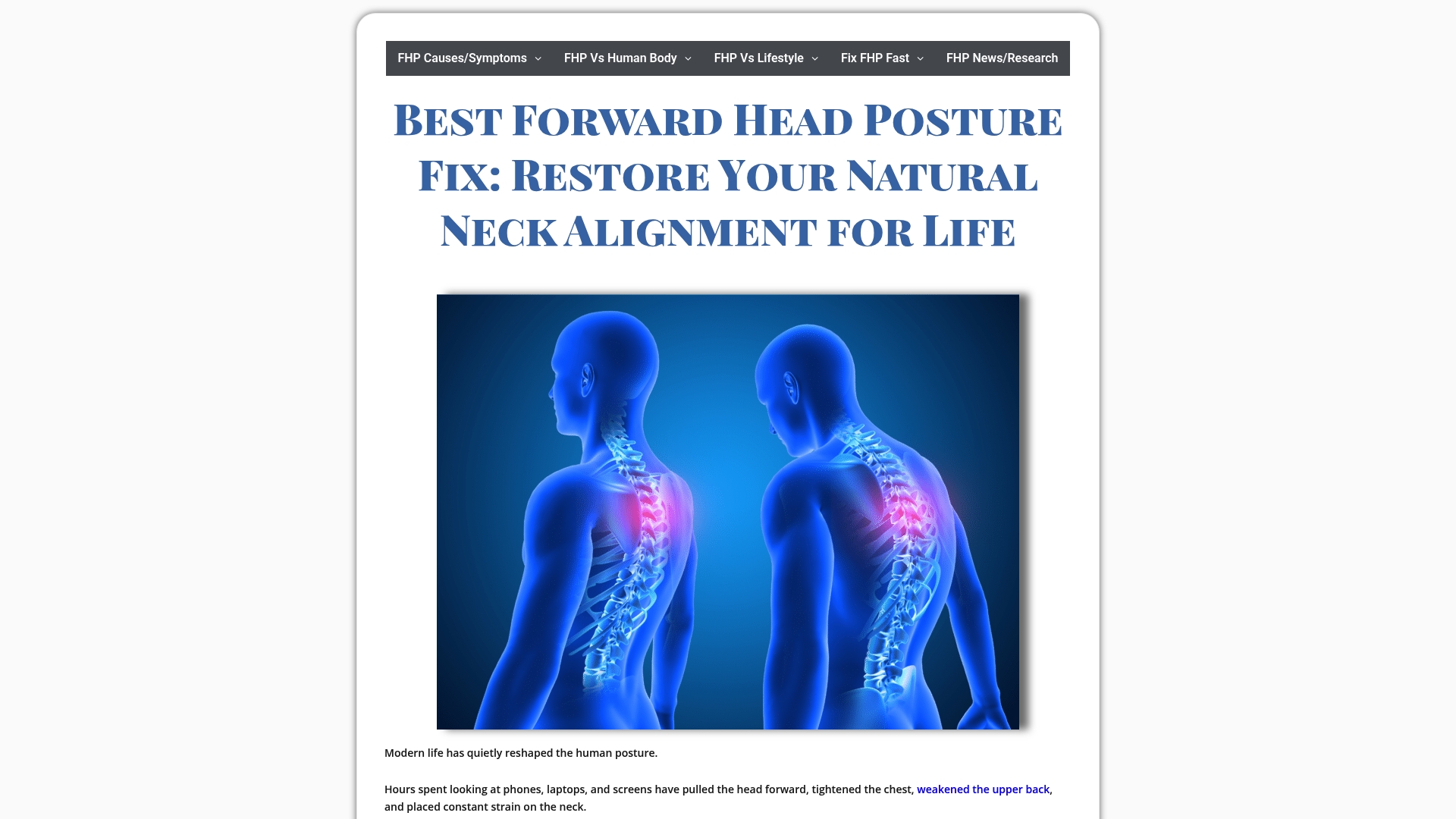
Its guide on performing scapular retraction exercises walks through cues and progressions in more depth than any single article can, and pairs well with the neck alignment self-assessment if you want to track whether your posture is actually shifting week to week. Start there, run the assessment, then build your rhomboid program around what it tells you.
Sources
- Shoulder Retractor Strengthening Exercise to Minimize Rhomboid Muscle Activity and Subacromial Impingement – PMC
- Anatomy/rehab context (NCBI Bookshelf) – NBK534856
- Prone scapular shoulder stabilization series (Y, T, W, O) – ACE Fitness
- Exercise considerations and shoulder mechanics (PMC5468195)
This guidance is an exercise-focused synthesis of published research, not individualized medical advice.
This article is general information, not a substitute for advice from a qualified doctor. Consult a qualified healthcare professional about your own circumstances before acting on anything here.