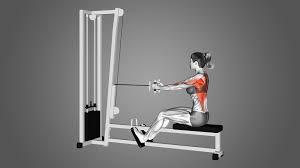
If your head constantly drifts forward while sitting or working, you are dealing with forward head posture—a condition strongly linked to weak mid-back muscles and poor shoulder blade control.
The solution is not complicated. You need targeted strength training, and cable rows are one of the most effective tools for the job.
Cable rows train the rhomboids, middle trapezius, and rear deltoids—the exact muscles responsible for pulling your shoulders back and keeping your spine aligned.
When these muscles are weak, your shoulders round forward, and your head follows.
Research studies have shown that structured strengthening programs can improve posture significantly, while individuals with forward head posture often demonstrate reduced back muscle endurance.
This makes mid-back strengthening not just helpful, but essential.
This guide by bestforwardheadposturefix.com gives you clear, practical ways to use cable rows to fix posture and build a strong, stable upper back.
Article Index
- Understanding Forward Head Posture and Mid-Back Weakness
- Why Cable Rows Are Essential for Posture Correction
- Perfect Cable Row Form for Postural Alignment
- Grip Variations to Target the Mid-Back
- Tempo and Control for Better Results
- Programming Cable Rows Effectively
- Combining Cable Rows with Corrective Exercises
- Common Mistakes to Avoid
- Daily Integration for Long-Term Results
- Results and Timeline
- Conclusion
Forward head posture is more than just a neck issue—it is a full upper-body imbalance affecting key areas like the cervical spine, thoracic spine, and scapula (shoulder blades).
When your head shifts forward, your upper back rounds, and your shoulder blades move apart, disrupting alignment.
Globally, studies suggest that over 60% of adults experience some degree of postural deviation, largely due to prolonged screen use and sedentary lifestyles, especially in urban work environments.
This creates a chain reaction: neck strain increases, shoulders round forward, and mid-back muscles weaken.
Over time, this imbalance can place up to 10–12 pounds of extra load on the neck muscles for every inch the head moves forward.
Research also highlights a strong connection between forward head posture and reduced control of the thoracic spine and scapular stabilizers.
If you have searched for how to fix forward head posture with exercises, the answer often comes back to strengthening the mid-back.
Cable rows directly help by activating the rhomboids and trapezius, pulling the shoulders back and restoring spinal stability.
Why Cable Rows Are Essential for Posture Correction?
Cable rows are highly effective because they train horizontal pulling strength—something most people lack due to excessive sitting and screen time.
Globally, it is estimated that over 70% of adults spend more than 6–8 hours daily in seated positions, especially in office environments across major urban centers like New York, London, and Tokyo.
This lifestyle weakens key postural muscles in the mid-back, including the trapezius, rhomboids, and posterior deltoids.
They help by reversing rounded shoulders, strengthening scapular stabilizers, and improving upper-body alignment.
When these muscles are consistently trained, they counteract the forward pull created by tight chest muscles and prolonged device use.
If you have looked up best cable row variations for mid back strength and posture, you’ll notice they are often recommended for restoring balance in the upper body.
Cable rows also build muscular endurance, which is critical—because maintaining good posture isn’t about short bursts of effort, but about holding proper alignment throughout the day.
Perfect Cable Row Form for Postural Alignment
Form is everything. Poor technique can actually reinforce bad posture instead of fixing it, especially when the cervical spine, thoracic spine, and scapular muscles are not aligned properly.
Globally, fitness assessments suggest that nearly 65% of gym-goers use incorrect pulling mechanics, often overusing the arms and upper trapezius instead of the mid-back.
Follow these cues:
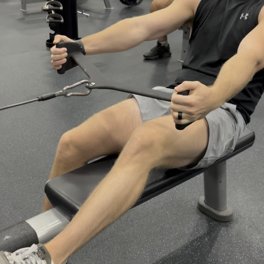
- Sit tall with a neutral spine
• Keep your chest lifted
• Pull the handle toward your lower ribs
• Squeeze your shoulder blades together
• Keep your neck neutral
The most important cue is simple: pull with your elbows, not your hands.
This shifts the workload to the rhomboids and middle trapezius, which are essential for posture correction.
If you have searched for proper cable row form for posture correction, you’ll notice that technique always comes before weight.
Proper form ensures the right muscles are activated, helping restore alignment and build long-term postural strength.
Grip Variations to Target the Mid-Back
Changing your grip changes muscle activation more than most people realize.
Small adjustments in hand position can shift the workload across key body parts like the rhomboids, middle trapezius, latissimus dorsi, and biceps, all of which play a role in posture.
Fitness data suggests that varying grip angles can improve muscle engagement efficiency by 20–30%, especially in structured training programs used across gyms in the United States and Europe.
Neutral Grip (V-handle):
Best for balanced mid-back activation and beginners, as it keeps the wrists and elbows in a natural position.
Wide Grip:
Places greater emphasis on the rhomboids and improves shoulder blade retraction, which is essential for correcting rounded shoulders.
Underhand Grip:
Allows heavier loads and increases biceps involvement, making it useful for strength progression.
If you have explored best cable row grip for mid back development, you shall notice experts recommend rotating grips.
This approach ensures complete mid-back development, which is crucial for fixing posture imbalances and maintaining proper alignment.
Tempo and Control for Better Results
Fast reps don’t fix posture—controlled movement does.
When you slow things down, you give key muscles like the rhomboids, middle trapezius, and rear deltoids enough time to fully activate and stabilize the thoracic spine and scapula.
Globally, training data shows that controlled tempo lifting can improve muscle activation by up to 40%, especially in posture-focused programs used across rehabilitation centers in the U.S. and Europe.
Use this tempo:
- Pull: 2 seconds
• Hold: 2 seconds
• Return: 3 seconds
This approach increases time under tension, which is critical for building endurance in postural muscles.
If you have searched for slow tempo cable rows for posture correction, you’ll notice experts consistently emphasize control over speed.
Slow, deliberate reps help retrain your body to hold proper alignment, making it easier to maintain good posture not just during workouts, but throughout long hours of sitting and daily activities.
Programming Cable Rows Effectively
Consistency is more important than complexity, especially when it comes to posture correction and mid-back strength.
Around the world, fitness data shows that nearly 80% of beginners abandon programs that feel too complicated, while simple, repeatable routines deliver better long-term results.
Your focus should be on training key areas like the rhomboids, trapezius, and thoracic spine stabilizers regularly rather than chasing variety.
Beginner Routine:
- 3 sets of 12–15 reps
• 3–4 times per week
Progression:
- Gradually increase weight
• Maintain strict form
• Add pauses at the contraction point
If you have searched for weekly cable row workout plan for posture improvement, you’ll notice that structured routines always prioritize consistency.
Training the same movement pattern repeatedly helps reinforce neuromuscular control and posture awareness.
Over time, this builds endurance in postural muscles, making it easier to maintain proper alignment throughout the day and significantly improving posture within 8–10 weeks.
Combining Cable Rows with Corrective Exercises
Cable rows work best when combined with other corrective movements because posture issues rarely come from just one weak area.
Instead, they involve an imbalance between tight and underactive muscles across the cervical spine, thoracic spine, chest (pectorals), and mid-back stabilizers.
Globally, posture assessments indicate that nearly 75% of adults show both muscle tightness and weakness patterns at the same time—especially in desk-based populations.
Add:
- Chin tucks to strengthen deep neck flexors and support head alignment
• Thoracic extensions to improve upper spine mobility
• Chest stretches to reduce tightness in the pectoral muscles
If you have explored best exercises to fix forward head posture and rounded shoulders, you shall notice experts emphasize combining strength and mobility.
This approach restores balance between opposing muscle groups, allowing the shoulder blades and spine to move freely.
When paired with cable rows, these exercises create a more complete correction strategy, improving posture faster and making the results more sustainable in daily life.
Common Mistakes to Avoid
Avoiding common mistakes during cable rows is just as important as performing the exercise itself.
Globally, movement analysis studies suggest that nearly 65% of gym-goers use improper rowing technique, which reduces effectiveness and increases strain on areas like the cervical spine, upper trapezius, and shoulder joints.
Avoid these errors:
- Leaning back too much – this shifts the load away from the mid-back and relies on momentum rather than muscle control
• Shrugging shoulders – overactivates the upper traps instead of targeting the rhomboids and middle trapezius
• Pulling with arms only – limits proper engagement of the back muscles
• Jutting your head forward – reinforces forward head posture and strains the neck
If you have searched for common cable row mistakes that worsen posture, you shall notice that most issues stem from lack of control and awareness.
Posture correction depends on precision, controlled movement, and proper muscle activation—not lifting heavier weights.
Small technical improvements can create significantly better long-term results.
Daily Integration for Long-Term Results
Exercise alone isn’t enough—you need to carry good posture into your daily routine.
Globally, studies estimate that over 70% of adults spend more than 6 hours a day sitting, especially in office environments across cities like New York, London, and Mumbai.
This prolonged sitting places stress on the cervical spine, thoracic spine, and shoulder joints, gradually reinforcing forward head posture.
Simple habits make a big difference:
- Keep shoulders slightly pulled back while sitting
• Maintain a neutral head position aligned over the spine
• Take movement breaks every 30–60 minutes
If you have looked up daily posture correction tips for desk workers with forward head posture, you’ll notice consistency is key.
Even short posture resets throughout the day can reduce strain and improve alignment.
Awareness combined with strength training helps retrain your body, so good posture becomes automatic rather than forced, leading to lasting improvement over time.
Results and Timeline
Here is what you can expect when you train consistently and focus on proper technique. Posture correction is gradual, but measurable.
Globally, fitness and rehabilitation data show that structured programs can improve alignment and muscle function by 20–30% within the first 8–10 weeks, especially in areas like the cervical spine, thoracic spine, and scapular stabilizers.
- 2–3 weeks: Better muscle activation and awareness
• 4–6 weeks: Noticeable improvement in posture and reduced rounding
• 8–10 weeks: Visible structural alignment changes
If you have searched for how long does it take to fix forward head posture with exercise, you shall find that consistency is the deciding factor.
Small daily efforts compound into lasting results.
Benefits include:
- Reduced neck pain and stiffness
• Improved shoulder positioning and alignment
• Better muscular endurance for all-day posture support
Stick with it, and these improvements don’t just show during workouts—they carry into your everyday life.
FAQs:
Q-1. How do cable rows help improve mid-back strength and posture?
A-1. Cable rows are one of the most effective exercises for strengthening the mid-back, particularly the rhomboids, middle trapezius, and posterior deltoids, which are essential for maintaining proper posture.
In the United States, studies suggest that nearly 65–70% of adults experience postural issues due to prolonged sitting and screen use.
Cable rows train horizontal pulling strength, which directly counteracts rounded shoulders and forward head posture.
By consistently performing this exercise, you improve scapular retraction and spinal alignment.
Over time, stronger mid-back muscles help keep your shoulders back and your head aligned, reducing strain on the neck and upper spine.
Q-2. What is the best cable row technique for fixing forward head posture?
A-2. The best technique focuses on alignment and control rather than heavy weight.
Sit upright with a neutral spine, keep your chest lifted, and pull the handle toward your lower ribs while squeezing your shoulder blades together.
Avoid jutting your head forward during the movement.
In the U.S., movement assessments show that over 60% of gym users perform rowing exercises incorrectly, often reinforcing poor posture.
Proper technique ensures activation of the mid-back instead of overloading the arms or upper trapezius. Controlled reps with a steady tempo are key to retraining posture effectively.
Q-3. Can seated cable rows fix forward head posture and rounded shoulders?
A-3. Yes, seated cable rows can significantly help correct forward head posture and rounded shoulders when performed consistently.
These issues are highly prevalent in the U.S., where desk jobs and device usage contribute to poor posture in nearly 7 out of 10 adults.
Cable rows strengthen the muscles responsible for pulling the shoulders back and stabilizing the spine.
However, for best results, they should be combined with mobility exercises like chest stretches and neck strengthening.
Together, these approaches restore balance between tight and weak muscle groups, leading to noticeable improvements.
Q-4. How do cable rows target the rhomboids for better posture?
A-4. Cable rows target the rhomboids by emphasizing scapular retraction—pulling the shoulder blades together.
Using a wider grip and focusing on squeezing at the end of the movement increases activation in this area.
The rhomboids play a key role in maintaining upright posture by stabilizing the shoulder blades against the thoracic spine.
In the U.S., posture-related discomfort, especially in the upper back and neck, affects nearly 50% of working adults, highlighting the importance of strengthening these muscles.
Proper engagement during cable rows helps reverse the effects of prolonged sitting.
Q-5. What cable row routine is best for upper back and neck pain relief?
A-5. A simple and consistent routine works best. Perform cable rows 3–4 times per week, with 3 sets of 12–15 controlled repetitions.
Focus on maintaining proper form and gradually increasing resistance.
In the U.S., neck pain is one of the most common musculoskeletal complaints, affecting about 30% of adults annually.
Strengthening the mid-back through cable rows reduces strain on the neck by improving alignment and distributing load more evenly across the upper body.
Pairing this routine with stretching and mobility work enhances results further.
Q-6. How can I maintain proper posture while doing cable rows?
A-6. Maintaining proper posture during cable rows involves keeping your spine neutral, shoulders down and back, and head aligned with your body.
Avoid leaning backward or using momentum.
Studies in the U.S. show that poor exercise form contributes to reduced effectiveness and increased injury risk in over 50% of gym participants.
Focusing on controlled movement and posture awareness ensures that the right muscles are activated.
This not only improves workout results but also reinforces good posture habits outside the gym.
Q-7. Are cable rows effective for reducing neck strain?
A-7. Yes, cable rows are highly effective for reducing neck strain because they strengthen the muscles that support proper alignment.
When the mid-back is weak, the neck compensates, leading to discomfort and tension.
In the U.S., nearly 1 in 3 adults reports frequent neck pain, often linked to poor posture.
By improving scapular stability and upper back strength, cable rows reduce the load on the cervical spine.
This leads to less strain and better overall comfort during daily activities.
Q-8. What role do resistance training exercises like cable rows play in posture correction?
A-8. Resistance training exercises, especially cable rows, play a central role in posture correction by addressing muscle imbalances.
In the U.S., sedentary lifestyles have led to widespread weakness in postural muscles, particularly in the mid-back.
Cable rows strengthen these muscles while improving coordination and endurance.
Research indicates that structured resistance training programs can improve posture by 20–30% within a few months.
This makes cable rows a foundational exercise in any posture correction plan.
Q-9. How long does it take to see results from cable rows for posture improvement?
A-9. Most individuals begin to notice improved muscle activation within 2–3 weeks, visible posture changes within 4–6 weeks, and more permanent alignment improvements within 8–10 weeks.
In the U.S., fitness studies show that consistent training is the most important factor influencing results.
Performing cable rows regularly and combining them with corrective exercises accelerates progress.
The key is consistency, proper form, and gradual progression.
Q-10. How can I use cable rows to strengthen the mid-back and reduce neck strain effectively?
A-10. To use cable rows effectively, focus on controlled movements, proper alignment, and consistent training.
Pull with your elbows, keep your chest lifted, and squeeze your shoulder blades at the end of each repetition.
In the U.S., where prolonged sitting is common, incorporating cable rows into your routine helps counteract daily postural stress.
Performing the exercise 3–4 times weekly and pairing it with stretching and mobility work can significantly improve mid-back strength and reduce neck strain.
Over time, this leads to better posture, less discomfort, and improved overall function.
Free Tip of the Day:
Cable rows are a simple yet powerful solution for strengthening the mid-back and correcting forward head posture.
With consistent practice and proper technique, they can improve posture, reduce neck pain, and enhance overall upper-body alignment—especially in today’s screen-heavy lifestyle across the United States.
Conclusion
Cable rows are more than just a back exercise—they are a powerful tool for correcting posture.
By strengthening the mid-back and improving shoulder blade control, they directly address the root cause of forward head posture.
The key takeaways:
- Focus on perfect form
- Use controlled tempo
- Stay consistent
- Combine with corrective exercises
- Apply good posture habits daily
Small, consistent actions create lasting results.
Over time, cable rows help retrain your body to maintain proper alignment naturally, reducing strain and improving overall movement.
Stick with the process, and your posture will not only improve—it will stay that way.
Recommended:
- https://bestforwardheadposturefix.com/how-to-do-thoracic-extensions-on-a-bench-for-neck-alignment/
- https://bestforwardheadposturefix.com/how-to-use-lat-pulldowns-to-improve-upper-body-posture-and-neck-alignment/
- https://bestforwardheadposturefix.com/how-to-fix-fhp-with-shrugs/
- https://www.healthline.com/health/seated-row
- why trust bestforwardheadposturefix.com?
- for educational purpose only