Pilates can improve posture when practiced consistently, and it does so measurably rather than cosmetically. Consistent guided sessions a couple of times a week, focused on core and upper-back work, is a safe starting point supported by clinical trials. Give it several weeks for early signs of change and a couple of months for results you can actually see in a mirror or a photo.
TL;DR:
- Most posture improvements from Pilates develop after several weeks of consistent practice, with visible changes typically appearing around months two to three.
- Exercise routines focusing on deep core activation, scapular stability, and thoracic mobility are essential for measurable posture correction.
- Pilates programs delivered twice weekly over 6 to 10 weeks show consistent improvements in posture markers, pain, and daily function, but long-term durability remains less established.
- Proper ergonomic setup and daily habit cues, like micro-resets and breath awareness, reinforce posture gains outside of exercise sessions.
- Individuals with specific conditions such as severe scoliosis or osteoporosis should seek professional assessment before starting Pilates, and modifications may be necessary for safety.
Table of Contents
- How Pilates Improves Posture: Mechanisms and Evidence
- What Posture Problems Does Pilates Actually Target?
- A Practical Pilates Routine for Posture
- How Often Should You Practice, and What’s a Realistic Timeline?
- Mat Pilates vs. Reformer: Which One Fixes Posture Faster?
- Is Pilates Safe for Everyone With Posture Problems?
- Making Posture Gains Stick Outside the Workout
- The Evidence Base Behind This Guide
- Consistency Beats Intensity Every Time
- Sources
How Pilates Improves Posture: Mechanisms and Evidence
Posture is not really about “sitting up straight.” It’s about which muscles fire, in what order, and whether your spine has the mobility to sit in a neutral position without effort. Pilates addresses all three, which is why it shows up so often in physical therapy clinics and posture-correction programs rather than staying a fitness trend.
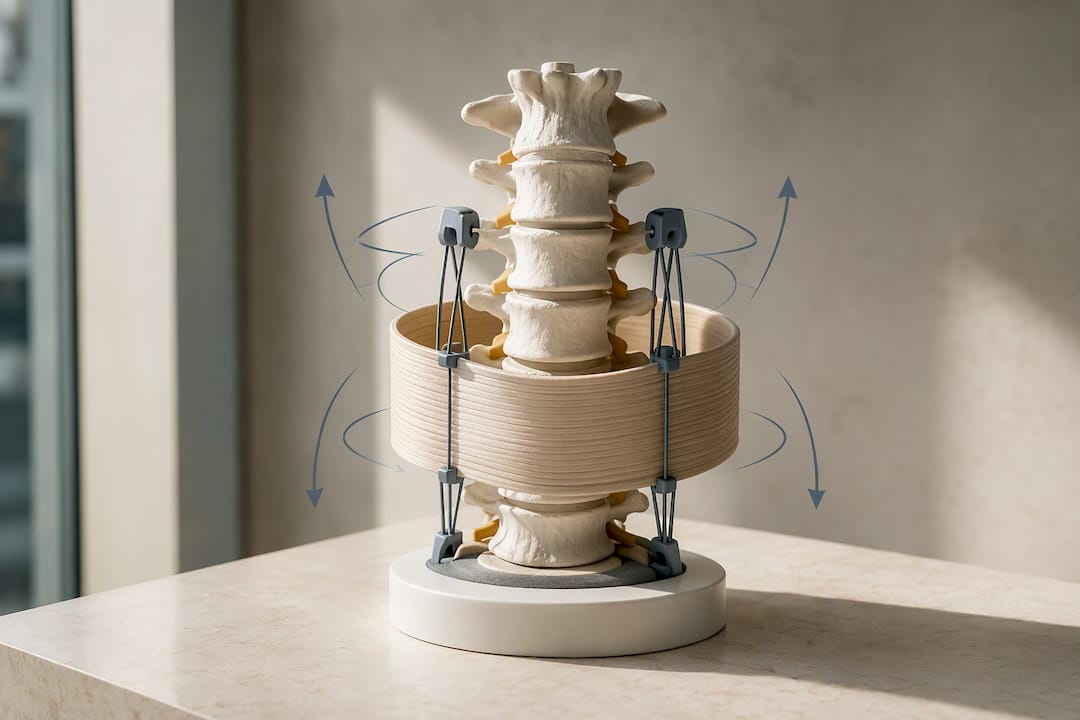
The core mechanism is activation of deep stabilizing muscles, particularly the transversus abdominis and multifidus. These aren’t the muscles you see in a mirror. They wrap around the spine like a corset and a series of small guy wires, holding vertebrae in position during movement. Most posture problems trace back to these muscles going quiet from years of sitting, not from weak abs in the traditional sense. Pilates drills like the hundred, dead bug, and pelvic curls specifically wake these muscles up before adding load, which is a different approach than a typical ab workout that just burns through reps.
The second mechanism is upper-back and scapular strengthening paired with thoracic mobility. A slumped, forward-leaning posture usually isn’t a tight-muscle problem alone. It’s a strength deficit in the rhomboids, mid-trapezius, and rotator cuff combined with stiffness in the mid-back that keeps the spine locked into a rounded shape. Pilates exercises like swimming, prone extension, and scapular retraction work directly train the muscles that pull shoulders back and down, while spinal articulation movements restore the extension range that a hunched thoracic spine has lost.
Breath is the third piece, and it’s the one most exercise programs skip entirely. Pilates trains lateral, ribcage-expanding breath instead of shallow chest breathing, which helps keep the ribcage stacked over the pelvis rather than flared or collapsed. That ribcage position directly affects whether the spine can rest in neutral without muscular effort.
Pilates promotes neutral spine alignment, activates deep postural muscles, and teaches movement awareness that reduces spinal strain and supports posture improvement, according to clinical guidance on Pilates and back pain.
The evidence backs this up, with real limitations. A systematic review of Pilates and body posture found that targeted programs produced measurable improvements in posture markers, including reduced thoracic kyphosis and a better craniovertebral angle, the standard measurement for forward head posture. That effect held across different age groups in the studies reviewed, which suggests the mechanism is fairly durable rather than a fluke of one population.
The limitation worth knowing: most trials run multiple weeks, so long-term durability past a few months is less established than the short-term effect. Study sizes also tend to be modest, and posture measurement methods vary between trials, which makes it harder to compare results directly. None of that undermines the core finding. It just means “Pilates fixes posture forever after one course” isn’t a claim the research supports, while “Pilates measurably improves posture markers over weeks of consistent practice” is.
Musculoskeletal problems are common enough that this matters at a population level. The World Health Organization identifies musculoskeletal conditions as a leading contributor to disability worldwide, and notes that physical activity is a key lever in both prevention and management. Posture-focused movement work isn’t a niche wellness habit. It’s one of the few interventions with a plausible mechanism and trial support for a problem that affects an enormous share of desk-bound adults.
What Posture Problems Does Pilates Actually Target?
Not every posture complaint responds to the same exercises. Matching your specific pattern to the right Pilates focus saves you months of guessing.
Forward head posture, also called tech neck, shows up as the head sitting ahead of the shoulders instead of stacked over them. It usually comes from hours of looking down at phones and laptops, and it strains the neck extensors that have to work overtime holding the head up against gravity. Pilates targets this through deep neck flexor activation, chin nods, and thoracic extension work, since a stiff mid-back often forces the neck to compensate. If this is your main issue, thoracic kyphosis exercises that open the mid-back will do more for your neck than neck stretches alone.
Rounded shoulders and thoracic kyphosis go hand in hand. The upper back rounds forward, shoulders roll in, and the chest muscles shorten while the mid-back muscles lengthen and weaken. This pattern responds well to scapular stabilization drills, prone extension, and thoracic rotation, all staples of a well-built mat routine.
Anterior pelvic tilt tips the pelvis forward, exaggerates the low-back arch, and often comes paired with tight hip flexors and an underactive glute and deep core system. Pelvic curls, glute bridges, and pelvic neutral drills retrain the hips and core to share the load instead of dumping it all on the lumbar spine.
A short checklist for when to get a professional look rather than guessing:
- Pain that radiates down an arm or leg rather than staying local
- Numbness, tingling, or noticeable weakness anywhere
- Posture that has changed suddenly rather than gradually over years
- Pain that doesn’t ease with rest or position changes
- A visible spinal curve asymmetry, especially in younger people
A Practical Pilates Routine for Posture
This is a mat-based sequence you can do in a living room with nothing but a mat and, optionally, a resistance band. It targets the three mechanisms above: core stability, scapular strength, and thoracic mobility. Do the full sequence two to three times a week, resting a day between sessions early on.
1. Thoracic rotation warm-up (2 minutes). Sit cross-legged or kneel, hands behind your head, elbows wide. Rotate your torso slowly to one side, then the other, keeping your hips still. This wakes up the mid-back before you ask it to do real work. Ten slow rotations per side.
2. Cat-cow with a pause (1 minute). On hands and knees, arch and round your spine slowly, pausing for two seconds at full extension. This is basic, but the pause is what actually builds the mobility instead of just moving through the range. Eight full cycles.
3. Pelvic curls for core and pelvic control (2 minutes). Lying on your back, knees bent, feet flat. Tilt your pelvis to flatten your low back into the mat, then curl your tailbone up one vertebra at a time until your hips lift slightly. Roll back down slowly. This teaches segmental spinal control, which is the foundation for everything else on this list. Ten reps.
4. The hundred, modified (1 minute). Lying on your back, lift your head and shoulders slightly, arms pumping at your sides, legs either bent at 90 degrees or extended if your core can handle it. Breathe in for five pumps, out for five. This is the classic Pilates core-activation drill, and it earns its reputation. One set of 60 to 100 pumps, breaking the set up if needed.
5. Dead bug (2 minutes). On your back, arms reaching toward the ceiling, knees bent at 90 degrees. Slowly extend one arm overhead and the opposite leg out straight, keeping your low back pressed into the floor the entire time. Return and switch sides. This exercise is unglamorous and extremely effective at teaching your core to stabilize while your limbs move independently, which is exactly what good posture requires all day. Eight reps per side.
6. Swimming or bird dog for scapular stability (2 minutes). Bird dog: on hands and knees, extend one arm forward and the opposite leg back, keeping your hips level and core braced. Swimming (mat Pilates version): lying face down, lift opposite arm and leg simultaneously in small, controlled pulses. Either builds the scapular and spinal stabilizers that hold your shoulders back. Eight reps per side, or 20 seconds of pulsing per side for swimming.
7. Prone extension, or a gentler regression (1 minute). Lying face down, hands by your temples, lift your chest slightly off the mat using your upper back, not your neck. If you have any neck sensitivity, skip this and do a supine thoracic lift instead, lying on your back over a rolled towel placed under your shoulder blades, gently extending over it. This regression removes cervical compression while still training thoracic extension, and it’s a better starting point for anyone with neck pain. Eight reps.
8. Wall roll-down for spinal articulation (1 minute). Stand with your back against a wall, feet a few inches out. Roll down slowly, vertebra by vertebra, reaching toward your toes, then roll back up the same way. This trains the spine to move through its full range instead of staying locked in one posture. Five slow reps.
9. Doorway chest stretch (1 minute per side). Stand in a doorway, forearm against the frame at shoulder height, and gently rotate your body away to open the chest. This directly counters the shortened chest muscles that pull rounded shoulders forward. Hold 30 seconds per side.
10. Plank hold, full or modified (1 to 2 minutes). Full plank on toes, or modified on knees or forearms if a full plank is too much load right now. Keep your body in a straight line, ribs pulled down rather than flared. This is a functional test of whether your core can hold the position your other exercises just built. Start with three holds of 20 to 30 seconds, resting between them.
Progressions: once the modified versions feel easy, add resistance with a light band on the swimming and bird dog exercises, extend plank holds toward 45 to 60 seconds, and move the hundred toward straight-leg position. Regressions: if any exercise causes pain rather than a normal working sensation, shrink the range of motion before you drop the exercise entirely. Pain during pelvic curls often means the range is too big, not that the exercise is wrong for you.
Pro Tip: Do this sequence right before you sit down at your desk, not just at the end of a long day. The postural gains carry over much better when your muscles are already activated going into hours of sitting, rather than trying to undo eight hours of slump after the fact.
How Often Should You Practice, and What’s a Realistic Timeline?
A moderate frequency consistent with clinical studies is a reasonable place to start rather than an arbitrary number. Trials on Pilates and posture commonly used sessions of 50 to 60 minutes, twice weekly, over 8 to 10 weeks, and reported measurable improvements in posture, pain, and daily function.
Here’s what to actually expect week by week. In the first several weeks, most people notice less stiffness and better body awareness before anything visibly changes in a mirror. That’s your nervous system relearning movement patterns, not your muscles getting stronger yet. Somewhere around week 4, a 4-week reformer Pilates study found real improvements in pain and quality-of-life measures, but no change yet in the muscle’s viscoelastic properties, meaning tissue stiffness takes longer to shift than symptoms do. After several weeks of practice, structural changes such as reduced thoracic kyphosis and improved craniovertebral angle become measurable, not just felt.
Tracking progress doesn’t require expensive equipment. A few low-tech methods work well:
- Posture photos, taken from the side in the same spot, same time of day, once every two weeks
- Craniovertebral angle checks, roughly eyeballed by measuring how far forward your ear sits relative to your shoulder in a side photo
- A simple pain and function scale, rating daily discomfort from 0 to 10 and noting which activities feel easier
- A basic wall test, standing with your back against a wall to see how much your lower back and neck naturally hollow away from it
A sample week for someone starting out looks like this: Monday, full mat sequence, 20 to 25 minutes. Wednesday, rest or a short 10-minute mobility-only version. Friday, full sequence again. Weekend, just the wall roll-down and chest stretch if you’re feeling stiff from sitting. Consistency beats intensity here by a wide margin.
Mat Pilates vs. Reformer: Which One Fixes Posture Faster?
The reformer machine adds spring-based resistance and assistance that a mat alone can’t replicate, which makes certain exercises easier to control and load progressively. Reformer footwork and rowing series, for example, let a beginner practice scapular stabilization with support that would otherwise require significant core strength on the mat.
Mat work, though, covers the majority of what matters for posture correction and requires nothing but floor space. Pelvic curls, dead bug, swimming, bird dog, and wall roll-downs all translate directly from a studio setting to a living room. The reformer mainly adds value for people who need graded resistance, either because they’re deconditioned and need assistance, or because they’ve plateaued on mat work and need more load to keep progressing.
For at-home practice, a few cheap substitutes do real work:
- A resistance band in place of reformer springs for rowing and scapular retraction movements
- A sturdy chair for supported squats, tricep dips, and balance-assisted stretches
- A rolled towel under the shoulder blades for supine thoracic extension, a gentler alternative to prone work
- A wall for roll-downs, posture checks, and doorway chest stretches
If you do move to a reformer, get at least a few sessions with an instructor first. The springs change the mechanics of familiar exercises enough that self-teaching from a video risks reinforcing the exact compensation patterns you’re trying to fix.
Is Pilates Safe for Everyone With Posture Problems?
Most people can start a beginner mat routine safely, but a few situations call for caution or a clinician’s input before you begin.
Stop and seek medical evaluation if you notice:
- Sudden neurological signs, such as numbness, tingling, or weakness in an arm or leg
- Severe pain that comes on abruptly rather than building gradually
- Progressive weakness that’s getting worse week over week rather than staying stable
Extra caution is warranted with:
- Osteoporosis or low bone density, where spinal flexion exercises like deep roll-downs may need to be modified or avoided
- Recent fractures anywhere in the spine, pelvis, or ribs
- Severe scoliosis, which needs individualized exercise selection rather than a generic routine
- Advanced degenerative disc or joint disease, where range of motion may need to stay conservative
For anyone in these categories, or anyone whose pain doesn’t improve after a few weeks of gentle practice, a physiotherapist can build a program tailored to your specific spine rather than a one-size-fits-all sequence. That’s a reasonable next step rather than a failure of the exercise approach itself. In some cases involving significant instability, a clinician may also discuss whether a spinal support brace has a temporary role alongside exercise, though bracing is typically a bridge, not a long-term fix.
Modifying for pain is simple in practice: shrink the range of motion, slow the tempo, or swap a prone exercise for a supine version before you decide the whole movement is off-limits.
Musculoskeletal pain is common enough that most adults will encounter some version of this at some point. The WHO lists these conditions among the leading causes of disability globally, which is exactly why “modify and continue” is usually a better default than “stop entirely” unless a genuine red flag shows up.
Making Posture Gains Stick Outside the Workout
Twice-weekly Pilates sessions build the strength and awareness. What happens during the other five days determines whether that awareness turns into a habit or fades by Thursday.
1. Fix your screen height first. Your monitor’s top edge should sit at or just below eye level, and your chair should support your low back without forcing you to lean forward to see the screen. Basic ergonomic adjustments to workstation setup reduce the postural strain that undoes exercise gains during work hours.
2. Build in 30-second micro-resets. Set a recurring reminder every hour: stand up, do five wall roll-downs or a chest opener, sit back down. These tiny breaks interrupt the slow slide into a slumped position far better than one long stretch break at lunch.
3. Attach posture cues to tasks you already do. Every time you pick up your phone, pull it up to eye level instead of dropping your chin down to it. Every time you stand in line, do a quick chin tuck and shoulder roll. This is habit stacking: pairing a new cue to an existing routine so you don’t have to remember it cold.
4. Use breath as your posture alarm. Shallow, high-chest breathing is often the first sign your ribcage has collapsed forward. When you catch yourself breathing that way at your desk or in the car, that’s your cue to reset your ribcage over your pelvis and take a few slow breaths from your belly and sides instead.
Pro Tip: Pair your posture reset with something you already do every day without thinking, like brewing coffee or waiting for a page to load. The habit sticks because you’re not relying on willpower to remember it; the trigger is already built into your day.
None of these replace the actual exercise. They just make sure the strength you’re building during your Pilates sessions doesn’t get erased by seven hours of unconscious slumping in between.
The Evidence Base Behind This Guide
This guide draws on a systematic review of Pilates and body posture covering multiple studies across age groups, alongside intervention trials measuring posture, pain, and function outcomes over structured multi-week programs. A 4-week reformer-based trial specifically informed the realistic timeline section, since it’s one of the few studies to separate symptom relief from slower-moving structural changes.
The strongest available evidence points to a consistent pattern: Pilates programs delivered two to three times weekly over 6 to 10 weeks produce measurable changes in posture markers, not just subjective comfort. That’s a meaningfully different claim than “Pilates feels good,” and it’s the one worth building a practice around.
These findings represent population-level results from clinical research, not a guarantee for any individual spine. Scoliosis severity, prior injury history, bone density, and general activity level all shape how quickly, and how much, any one person will respond. A personalized assessment from a physical therapist or posture specialist remains the most reliable way to know exactly which exercises and progressions fit your specific pattern, particularly if pain has been present for months rather than weeks.
Bestforwardheadposturefix builds its recommendations around this kind of evidence base, favoring structured habit change and muscle rebalancing over quick fixes that don’t hold up past the first few weeks.
Consistency Beats Intensity Every Time
Here’s the uncomfortable truth about posture correction: it’s rarely the exercises that fail people. It’s the adherence. A perfectly designed routine done once a week for two weeks and abandoned will do less for your posture than a mediocre routine done consistently for three months.
Pilates works for posture because it retrains movement patterns your body has practiced wrong for years, sometimes decades. That retraining takes repetition, not intensity. The research backs this up: measurable improvements to pain and function often arrive before the structural markers, like thoracic curvature, actually shift. That gap between feeling better and measuring better is exactly where most people quit, right before the deeper changes catch up.
Start with two guided sessions a week. Not five, not “every day until I burn out.” Two sessions you can actually sustain for two months beats an ambitious schedule you abandon in two weeks. Pair those sessions with the small daily cues, screen height, micro-resets, breath awareness, that carry the strength work into the other hours of your day. If pain persists past a few weeks of consistent, modified practice, bring in a physiotherapist rather than pushing through on your own.
Posture built up over years doesn’t reverse in a week. But it does reverse, and the evidence for that is stronger than most people assume before they start.
— Madhukar
This article is general information, not a substitute for advice from a qualified doctor. Consult a qualified healthcare professional about your own circumstances before acting on anything here.
Sources
- Effects of Pilates on Body Posture: A Systematic Review
- Pilates-Based Training and Its Influence on Muscle Viscoelasticity and Health-Related Outcomes in Chronic Low Back Pain
- Pilates Exercise and Back Pain (Spine-health)