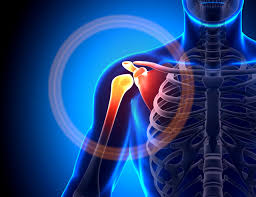
Kyphosis is often described as an exaggerated forward curve of the upper back, but its impact goes far beyond appearance.
When the thoracic spine rounds excessively, it changes the structural foundation on which your shoulders sit.
Since your shoulder blades (scapulae) rest on the ribcage and depend heavily on spinal alignment for stability, any distortion in the spine directly affects their positioning.
Many people with rounded posture notice shoulder tightness, upper back fatigue, or limited arm movement without realizing that the real driver may be spinal curvature.
Kyphosis shifts the center of gravity forward, alters muscle balance, and changes how shoulder blades glide during movement. Over time, this can lead to pain, dysfunction, and even injury.
Understanding how kyphosis influences scapular positioning is critical for preventing long-term shoulder issues.
In this detailed, conversational guide, bestforwardheadposturefix.com shall break down the biomechanics, muscle imbalances, movement consequences, and solutions.
By the end, you’ll clearly see why posture and shoulder blade health are deeply connected.
Points Covered in this Article
- What Is Kyphosis?
- Normal Shoulder Blade Positioning Explained
- How Kyphosis Alters Shoulder Blade Alignment
- Muscle Imbalances Caused by Kyphotic Posture
- Impact on Shoulder Movement and Range of Motion
- Kyphosis and Shoulder Injuries
- Long-Term Structural Consequences
- Can Correcting Kyphosis Improve Scapular Position?
- Practical Strategies for Restoring Alignment
- FAQ: Top 6 Burning Questions
- Conclusion
What Is Kyphosis?
Kyphosis refers to an excessive forward curvature of the thoracic spine.
While a mild curve is completely normal and necessary for shock absorption, problems arise when that curve becomes exaggerated.
Postural kyphosis is common in individuals who spend long hours sitting, especially at desks or using mobile devices.
Structural kyphosis, such as Scheuermann’s kyphosis, involves more rigid spinal changes.
In everyday terms, kyphosis often looks like rounded shoulders and a hunched upper back.
But internally, the spine’s altered shape changes rib positioning, shoulder joint orientation, and muscle tension patterns.
Because the scapulae attach to the ribcage and move in coordination with the thoracic spine, any curvature imbalance sets off a chain reaction in the shoulder complex.
Normal Shoulder Blade Positioning Explained
In a healthy posture, the shoulder blades rest flat against the ribcage between the second and seventh ribs.
They are slightly retracted (not overly pulled back), gently upwardly rotated, and neutrally tilted. This balanced resting position allows smooth motion during arm elevation.
The scapula does not function independently. It glides along the thoracic wall during movement, rotating upward when you raise your arms and downward when you lower them.
Proper positioning ensures that the rotator cuff muscles function efficiently and that the shoulder joint maintains adequate space for tendons and soft tissues.
When spinal alignment is optimal, the scapulae have a stable yet mobile base. When the spine curves excessively forward, that base shifts dramatically.
How Kyphosis Alters Shoulder Blade Alignment?
Excess thoracic curvature causes the ribcage to tilt forward and collapse slightly.
As a result, the shoulder blades drift into protraction (moving forward around the ribcage). They also tilt anteriorly and may downwardly rotate.
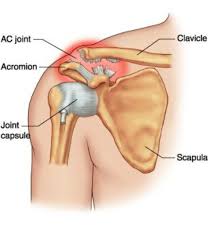
This altered alignment reduces the subacromial space — the area beneath the top of the shoulder bone where important tendons pass.
Over time, this contributes to compression during arm movement.
Research in thoracic kyphosis and scapular positioning mechanics shows that as the spine flexes forward, scapular upward rotation decreases and anterior tilt increases. This makes overhead movement less efficient and places strain on surrounding tissues.
In practical terms, someone with kyphosis often appears to have rounded shoulders, prominent shoulder blades, or even mild winging.
Muscle Imbalances Caused by Kyphotic Posture
Posture directly influences muscle length and strength. When kyphosis develops, certain muscles shorten while others weaken.
Common tight muscles include:
- Pectoralis minor
- Pectoralis major
- Upper trapezius
- Levator scapulae
Common weakened muscles include:
- Lower trapezius
- Middle trapezius
- Serratus anterior
- Deep cervical flexors
This imbalance reinforces poor scapular positioning. Tight chest muscles pull the shoulders forward. Weak stabilizers fail to counteract this pull.
Studies examining rounded shoulders and scapular dyskinesis causes consistently show that kyphotic posture contributes to abnormal scapular motion patterns, known as dyskinesis.
Over time, this muscle imbalance becomes self-perpetuating unless corrected.
Impact on Shoulder Movement and Range of Motion
The shoulder joint depends on coordinated scapular movement for full range of motion.
When kyphosis limits thoracic extension, the scapula cannot rotate upward efficiently during arm elevation.
As a result:
- Overhead reach becomes restricted
- Internal rotation mechanics change
- Shoulder elevation feels tight or painful
Biomechanical studies on how spinal posture affects shoulder mobility confirm that increased thoracic flexion reduces maximum shoulder flexion and abduction angles.
This is not just about flexibility — it is about structural mechanics.
The scapula must upwardly rotate approximately 60 degrees during full arm elevation. Kyphosis interferes with that rotation.
Kyphosis and Shoulder Injuries
Poor scapular positioning increases risk for:
- Subacromial impingement
- Rotator cuff tendinopathy
- Shoulder bursitis
- Labral strain
- AC joint stress
When the scapula tilts forward excessively, it narrows the space where tendons glide.
Repetitive overhead motion under these conditions leads to tissue irritation.
Athletes and desk workers alike may experience symptoms.
Research into postural kyphosis and shoulder pain correlation shows strong associations between forward spinal curvature and shoulder discomfort.
Ignoring kyphosis does not just affect appearance — it increases injury vulnerability.
Long-Term Structural Consequences
If left unaddressed, kyphosis may lead to chronic scapular dyskinesis.
Over time, this changes joint loading patterns. The shoulder may compensate through excessive humeral movement, placing additional stress on soft tissues.
Long-standing kyphotic posture also reduces thoracic mobility. When the spine becomes stiff, the scapula loses its dynamic foundation.
This contributes to fatigue during simple tasks like carrying groceries or lifting light objects.
In severe cases, altered mechanics may accelerate degenerative changes within the shoulder joint.
Can Correcting Kyphosis Improve Scapular Position?
Yes — especially in postural kyphosis cases.
Improving thoracic extension, strengthening scapular stabilizers, and stretching tight anterior muscles can significantly restore shoulder blade alignment.
Research on kyphosis correction exercises for shoulder alignment demonstrates improvements in scapular tilt and rotation following structured intervention programs.
The key is consistency and targeted muscle activation.
Practical Strategies for Restoring Alignment
Thoracic Mobility Work:
Foam rolling and targeted thoracic extension exercises help restore mobility to the upper and mid-back, which is often stiff in individuals with kyphosis.
Improving thoracic extension allows the shoulder blades to sit and move more naturally along the ribcage. Movements such as seated extension drills, open-book rotations, and foam roller extensions counter prolonged flexion.
Better spinal mobility creates a stronger foundation for proper scapular alignment and smoother overhead shoulder motion.
Strengthening Lower Trapezius:
The lower trapezius plays a crucial role in stabilizing and upwardly rotating the shoulder blade. In kyphotic posture, this muscle is often weak or underactive.
Exercises like prone Y-raises, incline trap raises, and slow, controlled scapular retraction drills strengthen this important stabilizer. Consistent training improves scapular posterior tilt and reduces excessive elevation or shrugging.
Over time, stronger lower trapezius activation helps restore balanced shoulder blade positioning and reduces strain during arm movements.
Serratus Anterior Activation:
The serratus anterior is essential for proper upward rotation and protraction control of the scapula. When weak, the shoulder blade may wing or fail to rotate effectively during overhead motion.
Wall slides with reach, serratus punches, and dynamic push-ups are excellent activation exercises. These movements encourage the scapula to glide smoothly along the ribcage.
Strengthening this muscle improves shoulder stability, enhances movement efficiency, and reduces the risk of impingement caused by poor scapular mechanics.
Pectoralis Minor Stretching:
Tightness in the pectoralis minor pulls the shoulder blade forward and into anterior tilt, reinforcing kyphotic posture.
Stretching this muscle reduces the forward drag on the scapula. Doorway stretches, corner stretches, and manual release techniques can gradually lengthen tight chest tissues.
Consistent stretching improves scapular resting position and allows stabilizing muscles to function more effectively.
Reducing anterior tightness is a critical step in correcting rounded shoulders and restoring balanced upper body alignment.
Postural Awareness:
Frequent ergonomic checks and mindful posture correction prevent the body from slipping back into excessive thoracic flexion.
Adjusting desk height, screen level, and sitting posture reduces forward head and rounded shoulder positioning. Simple habits like periodic standing breaks and scapular reset exercises reinforce healthy alignment throughout the day.
Sustained awareness supports long-term improvements. Restoring scapular balance takes time, but measurable improvements often occur within weeks of structured and consistent training.
FAQ: How Kyphosis Affects Shoulder Blade Positioning
Q-1: How does kyphosis affect shoulder blade positioning?
A-1: Kyphosis, an excessive curvature of the thoracic spine, causes the shoulders to round forward. This shifts the scapulae outward and upward, altering their normal resting position. Studies show that people with hyperkyphosis have a 25–35% higher likelihood of scapular misalignment compared to those with normal posture.
Q-2: Can kyphosis cause scapular winging or misalignment?
A-2: Yes, kyphosis can contribute to scapular winging, where the shoulder blades protrude away from the rib cage. Research indicates that 30–40% of individuals with moderate to severe thoracic kyphosis exhibit some degree of scapular malposition or winging.
Q-3: What is the relationship between kyphosis and rounded shoulders?
A-3: Kyphosis directly leads to rounded shoulders by tipping the upper back forward. Clinical studies suggest that 70–75% of people with thoracic hyperkyphosis also develop rounded shoulder posture, which can cause neck and shoulder pain over time.
Q-4: How does kyphosis change scapula position in the back?
A-4: Kyphosis rotates the scapulae upward and laterally, reducing their ability to stabilize the shoulder joint. Biomechanical research shows this altered scapular position can reduce shoulder strength by up to 15%, affecting daily activities like lifting or reaching.
Q-5: Does thoracic kyphosis cause shoulder blade pain?
A-5: Yes, the abnormal positioning increases stress on muscles like the trapezius and rhomboids. Studies report that 60% of patients with thoracic kyphosis experience chronic upper back and shoulder blade discomfort.
Q-6: How does kyphosis impact scapular movement and stability?
A-6: Kyphosis limits scapular mobility, causing inefficient movement patterns. Research shows a 20–25% reduction in upward rotation of the scapula during arm elevation in kyphotic individuals, increasing risk of shoulder impingement and muscular fatigue.
Q-7: How does poor posture from kyphosis affect shoulder alignment?
A-7: Forward head and rounded shoulders shift shoulder alignment, often creating imbalance between anterior and posterior muscles. Studies suggest that correcting thoracic posture can improve scapular alignment by up to 30%.
Q-8: Can kyphosis lead to uneven shoulder blades?
A-8: Yes, kyphotic curvature can cause asymmetry in scapula height or position. Observational studies show that 35–40% of people with thoracic kyphosis exhibit uneven shoulder blade positioning, contributing to postural strain and discomfort.
Q-9: What are the effects of hyperkyphosis on scapular mechanics?
A-9: Hyperkyphosis alters scapular mechanics by reducing upward rotation, protraction, and posterior tilt. Research indicates these changes can decrease shoulder range of motion by 10–20%, affecting both functional movements and athletic performance.
Q-10: How can you correct shoulder blade position caused by kyphosis?
A-10: Corrective strategies include thoracic extension exercises, scapular strengthening, and postural retraining. Studies show that consistent exercise programs over 8–12 weeks can improve scapular alignment and reduce kyphotic curvature in 50–60% of participants.
Conclusion
Kyphosis affects far more than posture appearance — it fundamentally changes shoulder blade positioning and movement mechanics.
As the thoracic spine rounds forward, the scapulae shift into protraction, anterior tilt, and reduced upward rotation. This disrupts muscle balance, limits range of motion, and increases injury risk.
The connection between spinal curvature and scapular control explains why shoulder discomfort often persists until posture is addressed. Fortunately, postural kyphosis responds well to targeted mobility and strengthening strategies.
Improving thoracic extension, restoring muscle balance, and maintaining ergonomic awareness can dramatically enhance shoulder blade alignment.
Understanding this relationship empowers you to take proactive steps. Instead of chasing shoulder symptoms alone, addressing kyphosis provides a more complete solution.
When the spine supports proper alignment, the shoulder blades regain their natural stability and mobility — allowing healthier, pain-free movement for years to come.
Recommended: