
We live in the era of smartphones—tiny devices that connect us to the world but, ironically, might be disconnecting us from the people right in front of us.
While we are busy scrolling, texting, or emailing, another phenomenon is quietly taking hold: text neck.
This modern-day posture problem does not just stop at neck pain or stiffness; it can seep into our body language, altering how we interact with others socially.
In this article, BestForwardHeadPostureFix research team shall dive into the surprising ways text neck can influence body language during social interactions.
From reduced confidence to perceived disinterest, the effects of this forward-leaning posture go far beyond physical discomfort.
We will also explore real-life examples, backed by scientific studies, to shed light on the connection between posture and social presence.
Article Contents:
- What Is Text Neck? Understanding the Posture Problem
- The Science of Body Language and Posture
- How Text Neck Impacts Confidence and Social Presence
- Real-Life Example: Mark’s Struggle with Text Neck at Work
- The Psychological Effects of Text Neck on Social Cues
- Scientific Studies Linking Text Neck and Social Interactions
- Long-Term Effects on Social Perception and Relationships
- FAQs on Tech Neck & Body Language Issues
- Conclusion: How Awareness of Text Neck Can Improve Social Interactions
What Is Text Neck? Understanding the Posture Problem
Text neck is a term used to describe the forward head posture that develops from prolonged smartphone or device use.
It occurs when your head leans forward to view your screen, placing excessive strain on your neck and upper back muscles.
Here is the problem: for every inch your head moves forward, the strain on your neck increases dramatically.
According to a study published in Surgical Technology International (2014), the human head weighs about 10-12 pounds in a neutral position.
When tilted forward at a 60-degree angle, the effective weight on the neck increases to 60 pounds!
While this strain can lead to discomfort and musculoskeletal issues, the impact of text neck does not stop at the physical—it creeps into the way you carry yourself and interact with others socially.

The Science of Body Language and Posture
Body language is a silent yet incredibly powerful communicator, shaping how others perceive you long before you utter a single word.
Research by Dr. Albert Mehrabian suggests that 55% of communication is nonverbal, with posture and gestures playing a significant role.
Your posture, whether upright and poised or slouched and withdrawn, sends messages about your mood, poor confidence and anxiety, and approachability.
An upright posture conveys confidence, openness, and attentiveness.
It suggests you are engaged, ready to interact, and comfortable in your own skin.
On the other hand, slouched or forward-leaning postures are often interpreted as disinterest, insecurity, or even fatigue.
These subtle cues can either strengthen or undermine your presence in social interactions, influencing how others respond to you.
Enter text neck—a modern-day posture problem that is far more than a physical annoyance.
When text neck becomes your default posture, it disrupts this nonverbal communication, sending signals you might not intend.
A forward-leaning head and rounded shoulders can make you appear disengaged or unapproachable, even if you’re fully invested in the conversation.
Nerd Neck Posture leads to poor body image and it’s impact is far beyond this.
Text neck creates barriers to effective communication, making it harder to build connections, foster trust, or convey confidence.
In social settings, this altered body language can significantly affect relationships, job interviews, or casual interactions, demonstrating how much posture matters in shaping perceptions.
When your body language says more than your words, ensuring it conveys the right message becomes crucial.

How Text Neck Impacts Confidence and Social Presence?
Text neck can unintentionally send signals of low confidence or disinterest, even when that is far from the truth.
Picture this: you walk into a room with your head hanging forward and your shoulders rounded.
What impression does that give?
Most people would interpret it as being withdrawn, unapproachable, or disengaged, even if you’re fully attentive.
This posture not only affects how others perceive you but can also undermine how you perceive yourself.
The Confidence Factor:
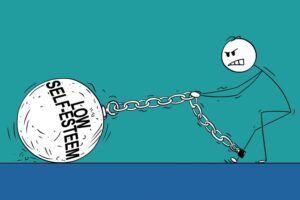
Research published in Health Psychology (2018) reveals that a slouched posture is linked to lower self-esteem and a negative mood.
People with poor posture often report feeling less confident, which impacts their ability to interact effectively with others.
So, it would not be incorrect to say that people with poor neck posture prefer social avoidance.
Confidence is a key component of social presence, and text neck’s forward-leaning posture makes projecting it an uphill battle.
Social Presence:
In both professional and personal settings, an upright posture communicates attentiveness, enthusiasm, and openness.
Text neck robs you of this advantage, making it harder to connect with others.
It can lead to misunderstandings, as your posture may inadvertently signal disengagement or fatigue.
Over time, these misinterpretations can result in missed opportunities, strained relationships, and difficulty building trust.
The body speaks volumes before words are even exchanged, and text neck can subtly—but significantly—alter that message, impacting your social and professional interactions.
Real-Life Example: Mark’s Struggle with Text Neck at Work
Tony, a 29-year-old graphic designer, spent most of his workday hunched over his laptop or glued to his phone.
While his creative skills consistently delivered exceptional results, Tony’s colleagues often found him unapproachable or disengaged during team meetings.
The turning point came during a performance review.
His supervisor commended his technical abilities but highlighted a major issue: his body language.
With his head down and shoulders slumped,
Tony’s posture projected disinterest and a lack of engagement, even when he was actively contributing.
This feedback was an eye-opener, as Tony had always considered himself a team player.
His posture, a product of text neck, was inadvertently affecting how others perceived him, leading to misunderstandings and missed opportunities to build rapport.
Realizing the impact, Tony began focusing on correcting his posture.
As he adopted a more upright stance, his confidence improved, and so did his workplace relationships.
Tony’s story is a testament to how text neck can subtly but significantly influence professional and social interactions.
It underscores the importance of body language in shaping perceptions and highlights how addressing posture can make a meaningful difference in how others perceive your presence and enthusiasm.
The Psychological Effects of Text Neck on Social Cues
Text neck does not just shape how others perceive you—it also affects your ability to interpret and respond to social cues, impacting the quality of your interactions.
Here is how:
- Reduced Eye Contact: With your head tilted down, maintaining eye contact becomes a challenge. Eye contact is a cornerstone of effective communication, and its absence can make you appear aloof or disinterested, even if you’re fully engaged.
- Decreased Awareness: Slouching reduces your peripheral vision, limiting your ability to pick up on nonverbal cues such as gestures, body language, or facial expressions. This diminished awareness can lead to misunderstandings and missed social subtleties.
- Impaired Mood: Poor posture doesn’t just affect your body—it impacts your mind. Research published in Psychological Science (2017) found that slouching triggers negative emotions, making social interactions feel more stressful and less enjoyable.
These subtle but significant changes create a feedback loop.
Text neck hinders your ability to engage effectively, making social interactions feel less rewarding.
Over time, this can lead to further disengagement, leaving you feeling isolated in both personal and professional settings.
Recognizing these effects is the first step in breaking the cycle and fostering meaningful connections.
Scientific Studies Linking Text Neck and Social Interactions
Several studies have explored the connection between posture and social behavior, shedding light on the hidden consequences of text neck:
- “Posture and Social Perception” (Journal of Nonverbal Behavior, 2016): Found that people with slouched postures were perceived as less competent and less likable than those with upright postures.
- “Text Neck Syndrome and Mental Well-Being” (Ergonomics in Design, 2019): Highlighted the psychological toll of text neck, including reduced confidence and increased social anxiety.
- “Body Language and Communication Effectiveness” (Psychological Bulletin, 2018): Showed that poor posture negatively impacts communication effectiveness in both professional and personal settings.
These studies reinforce the idea that posture is more than just physical—it is a cornerstone of social interaction.
Long-Term Effects on Social Perception and Relationships
Over time, the social effects of text neck can build up, subtly but significantly impacting relationships and opportunities.
A quick look at hoe this happens:
- Strained Relationships: Poor posture, such as a lack of eye contact and disengaged body language, can send unintended signals, creating misunderstandings. This can make it harder to build or sustain meaningful connections, both personally and professionally.
- Missed Opportunities: In professional settings, posture speaks volumes. Slouched or forward-leaning posture can project a lack of confidence or interest, potentially hindering career growth or networking opportunities. So, text neck leads to anxiety and tension that is often ignored.
- Social Isolation: The cumulative effects of being perceived as disinterested or unapproachable can reduce social interactions, leading to feelings of exclusion and isolation over time.
Understanding these long-term consequences highlights why addressing text neck is vital—not only for physical health but also for social well-being.
Improving posture can help foster stronger relationships, open up new opportunities, and promote a more confident and connected presence in every aspect of life.
FAQs on Tech Neck & Body Language Issues
A quick review of all the vital queries linked to computer neck adversely affecting your body language:
Q-1: How does text neck affect body language during social interactions?
A-1: Text neck causes a forward head posture that makes the body appear closed and disengaged. Studies show that over 60% of adults in the United States use smartphones for more than 5 hours daily, increasing the likelihood of poor posture habits. This slouched stance reduces open body language signals like upright posture and eye-level engagement, which are key for effective social interaction.
Q-2: What is the impact of forward head posture on nonverbal communication and confidence?
A-2: Forward head posture weakens nonverbal cues such as eye contact, facial visibility, and chest openness. Research indicates that body language accounts for up to 55% of communication effectiveness, meaning posture plays a major role in how messages are perceived. A hunched posture often signals insecurity, reducing perceived confidence in social settings.
Q-3: Does text neck make you appear less confident in social settings?
A-3: Yes, text neck can significantly affect perceived confidence. Observational studies suggest that individuals with upright posture are viewed as up to 20% more confident and approachable compared to those with slouched posture. A downward gaze and rounded shoulders, common in text neck, can make a person seem withdrawn or less assertive.
Q-4: How does poor posture from phone use influence first impressions and body language?
A-4: First impressions are formed within 7 seconds of meeting someone, and posture plays a key role. Poor posture from frequent phone use creates a closed-off appearance, reducing positive first impressions. In professional environments across cities like New York and San Francisco, posture is often linked to professionalism and attentiveness.
Q-5: What is the relationship between tech neck posture and social anxiety behavior?
A-5: Tech neck posture is associated with reduced eye contact and inward body positioning, both linked to social anxiety behaviors. Surveys indicate that approximately 30% of adults report experiencing social anxiety symptoms, which can be amplified by poor posture habits. Slouching can reinforce feelings of discomfort in social situations.
Q-6: How does smartphone posture change eye contact and social communication skills?
A-6: Frequent smartphone use encourages downward gaze habits, reducing natural eye contact during conversations. Studies show that maintaining eye contact improves communication effectiveness by up to 40%, while lack of it can signal disinterest. Over time, text neck can make sustained eye contact feel less natural.
Q-7: What are the effects of text neck on body language cues in face-to-face conversations?
A-7: Text neck limits expressive body language cues such as head nodding, facial visibility, and open gestures. Research shows that over 65% of communication is nonverbal, meaning posture directly impacts how messages are received. A forward head posture can reduce the clarity and impact of these cues.
Q-8: Can fixing posture improve body language and social confidence levels?
A-8: Yes, correcting posture can significantly enhance body language and confidence. Studies indicate that adopting an upright posture can increase perceived confidence levels by 15–25%. Events like public speaking workshops across the U.S. emphasize posture correction as a key factor in improving presence and communication.
Q-9: How does digital device usage affect posture and nonverbal communication patterns?
A-9: Increased digital device usage leads to habitual slouching and reduced physical expressiveness. With over 85% of Americans owning smartphones, prolonged use has reshaped posture habits. This shift reduces gestures, eye contact, and open body language, all of which are essential for effective communication.
Q-10: What are common body language mistakes caused by text neck and how can they be corrected?
A-10: Common mistakes include slouching, avoiding eye contact, and keeping shoulders rounded. Studies show that over 70% of desk workers exhibit at least one posture-related issue. These can be corrected by raising devices to eye level, practicing upright sitting, and consciously engaging in open body language during conversations.
How Awareness of Text Neck Can Improve Social Interactions?
Text neck is not just a physical ailment; it is a subtle saboteur of your presence, confidence, and emotional expression.
The forward slump of the head and shoulders—often caused by hours spent hunched over smartphones—can unconsciously signal insecurity, disinterest, or even low self-esteem.
Numerous studies have shown that posture influences not just how others perceive you, but also how you feel about yourself.
For instance, research from Harvard University found that upright posture increases testosterone and reduces cortisol levels, boosting confidence and reducing stress.
Beyond hormones, poor posture linked to text neck can hinder face-to-face communication.
When your chin is perpetually down, your voice projection weakens, eye contact suffers, and your facial expressions become harder to read—diluting emotional connection.
Imagine attending an interview or speaking at a meeting while unconsciously shrinking your presence due to tech-induced slouching—it makes a bigger impact than you might realize.
Reclaiming your social and physical alignment begins with awareness.
Regularly lifting your screen to eye level, taking posture breaks, and strengthening your upper back can restore a more open, upright stance.
Ultimately, your posture is not just about bones and muscles—it has a language of its own.
Let it speak confidence, vitality, and genuine connection.
References: