Posture is like the body’s internal GPS—it determines how forces travel through muscles and joints during everyday movements.
When posture shifts out of alignment, the body doesn’t simply adjust locally; it compensates from head to toe.
One of the most common modern postural distortions is forward head posture, where the head sits in front of the shoulders instead of being stacked directly above them.
While many people associate this issue with neck pain or upper back tension, its effects can travel much farther down the body.
The human musculoskeletal system functions as a kinetic chain. This means that when one segment of the body moves out of alignment, other segments adapt to maintain balance and stability.
As forward head posture shifts the body’s center of gravity, the lower body must compensate to prevent falling forward.
These compensations gradually alter muscle activation patterns in the hips, knees, ankles, and especially the calves.
Calf muscles play a critical role in maintaining upright posture, absorbing ground forces, and stabilizing the ankle during standing and walking.
When posture shifts forward, the calves often become overworked, shortened, or unevenly activated.
Over time, these adaptations can create calf muscle imbalance—where one portion of the calf complex becomes tight and dominant while others weaken.
Understanding how forward head posture contributes to calf muscle imbalance helps reveal why calf tightness, fatigue, or asymmetry may persist even when stretching or massage is applied directly to the calves.
The root cause may actually originate much higher in the body.
This article by bestforwardheadposturefix.com focuses specifically on how forward head posture influences calf muscle imbalance, exploring the biomechanical chain reactions that occur from the neck down to the lower leg.
Article Index
- Understanding Calf Muscle Structure and Function
- How Forward Head Posture Alters Whole-Body Alignment
- The Kinetic Chain Connection Between Head Position and Calf Muscles
- Forward Weight Shift and Increased Calf Muscle Load
- Neuromuscular Compensation in the Calf Complex
- Gastrocnemius Dominance and Soleus Weakness Patterns
- Effects of Postural Instability on Calf Muscle Symmetry
- Walking Mechanics and Calf Muscle Imbalance
- Long-Term Adaptations in Calf Muscle Length and Strength
- FAQs on Computer Neck Posture & Calf Muscle Tension
- Why Correcting Calf Imbalance Requires Addressing Posture
Understanding Calf Muscle Structure and Function
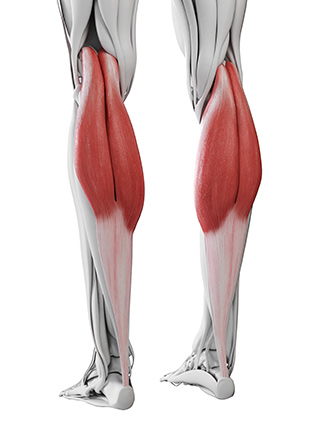
To understand how posture influences calf imbalance, it helps to first examine how the calf muscles function. The calf region is primarily composed of two major muscles: the gastrocnemius and the soleus.
Together, they form the triceps surae, the muscle group responsible for plantarflexion of the ankle—pointing the foot downward.
The gastrocnemius is the larger, more visible muscle that creates the rounded shape of the calf. It crosses both the knee and ankle joints, making it highly active during movements such as jumping, sprinting, and pushing off the ground while walking.
The soleus sits deeper beneath the gastrocnemius and primarily contributes to endurance and postural stability. It works continuously during standing to prevent the body from falling forward.
The calves function like the body’s “postural brakes.” As the body leans forward, the calf muscles contract eccentrically to control that movement and keep the center of gravity balanced over the feet.
Under ideal alignment, the calves share workload efficiently with muscles in the hips, glutes, and core. However, when posture shifts—particularly when the head moves forward—the body’s weight distribution changes.
This can increase reliance on the calves to stabilize the body, gradually altering how these muscles activate.
Over time, this imbalance between workload and recovery can cause one part of the calf complex to become overactive while another becomes underutilized, creating the conditions for calf muscle imbalance.
How Forward Head Posture Alters Whole-Body Alignment?
Forward head posture might appear to be a simple neck issue, but its influence extends through the entire skeletal chain. When the head moves forward, it increases the load placed on the cervical spine.
To compensate for this shift, the thoracic spine rounds slightly and the pelvis may tilt forward or backward depending on the body’s strategy for balance.
These adjustments alter the vertical alignment of the body. Instead of the ear, shoulder, hip, knee, and ankle forming a straight line, the head sits forward and the torso subtly leans.
This change shifts the body’s center of mass anteriorly—toward the front of the feet. The body must then recruit muscles in the lower leg to prevent falling forward.
The calves become particularly involved because they control forward sway. The soleus muscle, in particular, works constantly to counteract forward lean during standing.
If the forward head posture becomes chronic, the calves are forced to perform this stabilizing role for extended periods throughout the day. The result is sustained tension within certain calf fibers, especially those responsible for maintaining upright balance.
Over time, this persistent activation can lead to uneven muscle tone, tightness in certain calf regions, and reduced activation in others—creating calf muscle imbalance.
The Kinetic Chain Connection Between Head Position and Calf Muscles
The body operates as an interconnected system where movement in one region influences movement elsewhere. This concept is known as the kinetic chain.
When the head shifts forward, the body attempts to maintain balance by making subtle adjustments throughout the chain.
The shoulders may round, the spine may curve, and the pelvis may shift position. These changes alter the distribution of forces through the hips, knees, and ankles.
Because the ankle joint sits at the base of this chain, it becomes one of the final structures responsible for stabilizing the body. The calf muscles play a critical role in this stabilization process.
Imagine a tower leaning forward slightly. The base must work harder to prevent collapse.
Similarly, when the upper body leans forward due to forward head posture, the calves must contract more frequently and with greater intensity to maintain balance.
This increased reliance on the calves can create a situation where certain muscle fibers are repeatedly recruited while others remain underutilized.
Over time, these differences in recruitment patterns can cause asymmetrical strength and tension within the calf muscles.
This kinetic chain effect explains why postural changes in the upper body can eventually manifest as muscle imbalance in the lower legs.
Forward Weight Shift and Increased Calf Muscle Load
One of the most significant consequences of forward head posture is a forward shift in body weight. Even a small displacement of the head—just a few centimeters—can increase the load placed on the front of the body.
As the body’s center of gravity moves forward, the calves must counteract this movement to keep the body upright. The soleus muscle becomes particularly active because it functions as a primary stabilizer during standing.
This constant stabilizing effort increases muscular workload. Instead of engaging intermittently, the calves may remain partially contracted throughout the day.
Over time, this chronic contraction can cause muscle stiffness and reduced elasticity. Some fibers adapt by becoming tighter and shorter, while others become inhibited due to fatigue.
This uneven adaptation within the muscle group is a major contributor to calf muscle imbalance. The gastrocnemius may become dominant during dynamic movement, while the soleus may become overworked during standing posture.
The result is a calf complex where different components experience different levels of strain, creating functional imbalance.
Neuromuscular Compensation in the Calf Complex
Muscles do not operate independently; they are controlled by the nervous system, which determines how and when they activate.
When posture changes, the nervous system adjusts muscle recruitment patterns to maintain stability.
Forward head posture alters sensory input from the body’s balance systems, including visual cues, inner ear signals, and proprioceptive feedback from muscles and joints.
As the nervous system perceives a forward shift in balance, it may increase activation of certain calf muscles to prevent forward tipping.
Over time, the nervous system may begin to rely more heavily on specific muscle fibers that it perceives as reliable stabilizers.
This creates a phenomenon known as neuromuscular dominance, where certain muscles become the primary stabilizers while others reduce their activity.
In the calves, this often results in overactivation of the gastrocnemius during movement and excessive reliance on the soleus during standing.
These altered activation patterns can lead to differences in muscle tone, endurance, and strength between the two muscles.
Such neuromuscular adaptations reinforce calf muscle imbalance, making the imbalance persist even when the individual attempts to stretch or strengthen the calves directly.
Gastrocnemius Dominance and Soleus Weakness Patterns
A common pattern associated with postural imbalance is gastrocnemius dominance paired with soleus dysfunction.
The gastrocnemius is designed for powerful, quick contractions, while the soleus specializes in endurance and stabilization.
Forward head posture often increases reliance on the gastrocnemius during walking and movement because the body’s forward lean encourages stronger push-off forces.
Meanwhile, the soleus may become fatigued from continuous stabilization demands during standing. Over time, this muscle imbalance in workload can alter muscle coordination between the two.
The gastrocnemius may become tight and overdeveloped in certain regions, while the soleus may lose endurance capacity. This mismatch creates uneven tension throughout the calf complex.
Because both muscles share the Achilles tendon, imbalances between them can influence how force travels through the ankle joint. This can further reinforce asymmetrical muscle activation patterns.
Ultimately, this pattern contributes significantly to calf muscle imbalance when forward head posture remains uncorrected.
Effects of Postural Instability on Calf Muscle Symmetry
Postural instability caused by forward head posture often results in subtle weight shifts between the left and right sides of the body. Even small asymmetries in weight distribution can influence how the calf muscles engage.
If one side of the body bears slightly more weight due to compensatory posture, the calf muscles on that side may experience greater activation throughout the day.
Over time, the more active side may develop increased muscle tone and tightness, while the less active side may weaken or lose endurance.
This side-to-side difference creates asymmetry in the calf muscles, contributing to imbalance not only within the muscle group but also between the left and right legs.
These asymmetries may be subtle at first but can become more noticeable as the body adapts to the altered postural pattern.
Walking Mechanics and Calf Muscle Imbalance
Forward head posture can subtly influence walking mechanics. When the upper body leans forward, stride patterns may change to maintain stability.
Individuals may take shorter steps or rely more heavily on pushing off with the calves rather than using hip extension to propel the body forward.
This shift increases the mechanical demand placed on the gastrocnemius during the push-off phase of gait.
At the same time, altered posture may reduce efficient energy transfer through the hips and knees, forcing the calves to compensate for lost propulsion.
Repeated thousands of times each day, these small changes in walking mechanics can gradually alter muscle development within the calves. Some fibers may strengthen disproportionately, while others receive less stimulation.
The result is uneven muscle engagement and progressive calf muscle imbalance.
Long-Term Adaptations in Calf Muscle Length and Strength
Muscles adapt to the positions and demands placed on them. When forward head posture persists for months or years, the calves undergo structural adaptations.
Constant low-level contraction can cause certain calf fibers to shorten, reducing their flexibility. At the same time, muscles that are not fully engaged may lose strength and endurance.
These changes alter the balance between muscle length and tension within the calf complex. Shortened muscles generate force differently than properly lengthened muscles, which can further reinforce imbalanced activation patterns.
Because these adaptations occur gradually, individuals may not immediately notice the changes. However, over time, the calf muscles may feel persistently tight, fatigued, or uneven.
These long-term structural changes represent the body’s attempt to adapt to altered posture, but they also deepen the cycle of calf muscle imbalance.
Why Correcting Calf Imbalance Requires Addressing Posture?
Many people attempt to correct calf tightness or imbalance through stretching, massage, or strengthening exercises focused directly on the calves.
While these approaches can provide temporary relief, they may not resolve the underlying cause if posture remains unchanged.
Forward head posture continuously shifts body weight forward, maintaining excessive demand on the calves.
As long as this mechanical stress persists, the calf muscles will continue to adapt in ways that reinforce imbalance.
Addressing the root postural alignment allows the body’s weight to redistribute more evenly through the hips, knees, and ankles.
When the head returns to a more neutral position, the calves no longer need to perform excessive stabilizing work.
This reduction in workload allows previously overactive muscles to relax and underactive muscles to regain normal function.
Understanding this relationship highlights the importance of viewing muscle imbalance through the lens of whole-body posture rather than isolated muscle treatment.
FAQ: The Role of Forward Head Posture in Calf Muscle Imbalance
Q-1: How forward head posture causes calf muscle imbalance?
A-1: Forward head posture shifts the head in front of the shoulders, moving the body’s center of gravity forward. To prevent falling forward, the lower leg muscles—especially the calves—must work harder to stabilize the body. Over time, certain calf muscle fibers become overactive while others remain underused. This uneven workload can gradually create imbalance within the calf muscle complex.
Q-2: Can forward head posture lead to tight calf muscles?
A-2: Yes, forward head posture can contribute to tight calf muscles. When the body leans forward, the calves must stay partially contracted to maintain balance. This constant activation increases muscle tension and may cause the calf muscles to feel stiff or tight. Since the tension is driven by posture, stretching alone may not fully resolve the issue.
Q-3: Connection between forward head posture and calf tightness
A-3: The connection lies in balance control. When the head moves forward, body weight shifts toward the toes. The calf muscles then work continuously to control forward sway at the ankle. This increased workload can cause certain muscle fibers to tighten over time, leading to persistent calf stiffness.
Q-4: How poor posture affects calf muscle function?
A-4: Poor posture changes how body weight is distributed through the legs. With forward head posture, the calves must compensate for the forward lean by stabilizing the ankle joint more frequently. This alters the normal coordination between the gastrocnemius and soleus muscles, which can eventually affect strength, endurance, and muscle balance.
Q-5: Forward head posture impact on gastrocnemius and soleus muscles
A-5: Forward head posture affects both major calf muscles. The soleus works harder during standing to stabilize the body, while the gastrocnemius may become more active during walking and push-off movements. When these muscles experience uneven workloads, their coordination can change, leading to imbalance within the calf complex.
Q-6: Why forward head posture leads to lower leg muscle imbalance?
A-6: Forward head posture alters the alignment of the entire body. To maintain stability, the lower legs must compensate for the shifted center of gravity. This repeated compensation causes some calf muscle fibers to work harder than others, gradually creating muscle imbalance in the lower legs.
Q-7: Postural misalignment and calf muscle tightness relationship
A-7: Postural misalignment increases the stabilizing demand placed on the calves. Because the calf muscles control ankle movement and forward sway, they remain active longer when posture leans forward. Over time, this sustained activity can lead to tightness and uneven muscle tension within the calves.
Q-8: How kinetic chain posture problems affect calf muscles?
A-8: The body works as a kinetic chain where changes in one area affect others. When forward head posture disrupts upper-body alignment, the lower body must compensate to maintain balance. The calf muscles often absorb this extra demand, which can lead to overuse and muscle imbalance over time.
Q-9: Effect of forward head posture on ankle and calf biomechanics
A-9: Forward head posture increases the load on the ankle joint by shifting body weight forward. The calf muscles must contract more frequently to stabilize the ankle. This altered mechanical demand can change how the calf muscles function during standing and walking, contributing to imbalance.
Q-10: Why calf muscles compensate for forward head posture?
A-10: Calf muscles help maintain balance by controlling ankle movement. When the head shifts forward, the body activates the calves to prevent tipping forward. Continuous compensation can lead to overactive calf muscles, uneven muscle recruitment, and eventual calf muscle imbalance.
Conclusion
Calf muscle imbalance is often viewed as a localized issue involving tight muscles, weakness, or overuse.
However, the body rarely functions in isolated segments. Instead, it operates as an integrated kinetic chain where changes in one area influence the behavior of muscles throughout the system.
Forward head posture represents a clear example of how upper-body alignment can affect lower-body muscle function.
By shifting the body’s center of gravity forward, it increases the stabilizing demands placed on the calf muscles.
Over time, this increased workload alters neuromuscular recruitment patterns, encourages dominance of certain muscle fibers, and contributes to uneven development within the calf complex.
These adaptations may manifest as differences in muscle tone between the gastrocnemius and soleus, asymmetry between the left and right calves, or persistent calf tightness during standing and walking.
Because these changes develop gradually, they are often misunderstood as isolated muscular issues rather than consequences of postural imbalance.
Recognizing the link between forward head posture and calf muscle imbalance highlights the importance of addressing posture when analyzing lower-body muscle dysfunction.
When alignment improves, the mechanical stress placed on the calves decreases, allowing the muscles to regain more balanced activation patterns.
In essence, the calves often reflect what is happening higher up in the body.
By understanding how posture influences calf mechanics, it becomes easier to see why calf muscle imbalance can develop—and why correcting the source of the imbalance requires looking beyond the calves themselves.
Recommended:
- https://pmc.ncbi.nlm.nih.gov/articles/PMC4395757/
- https://pmc.ncbi.nlm.nih.gov/articles/PMC9662113/
- Why trust bestforwardheadposturefix.com?
- For educational purposes only
- https://bestforwardheadposturefix.com/how-forward-head-posture-alters-calf-muscle-tension/
- https://bestforwardheadposturefix.com/the-link-between-forward-head-posture-and-tight-calves/
- https://bestforwardheadposturefix.com/how-forward-head-posture-affects-lower-leg-alignment/