Poor head alignment is often brushed off as a minor posture issue, but its effects go much deeper than appearance or neck discomfort.
One of the most overlooked consequences of poor head positioning—especially forward head posture—is its impact on the muscles of the throat. These muscles play a vital role in swallowing, breathing, speech, and airway protection.
When the head drifts forward from its neutral position, the delicate balance of muscle length, tension, and coordination in the throat is disrupted.
In modern life, long hours spent looking at phones, laptops, and tablets encourage the head to migrate forward. Over time, this habitual position changes how the neck and throat muscles function.
The muscles under the jaw and around the hyoid bone are forced to work harder and less efficiently, which can affect everyday activities such as eating, speaking, and even breathing comfortably.
Understanding how poor head alignment affects throat muscles is essential for recognizing early warning signs and preventing long-term dysfunction.
This article by bestforwardheadposturefix.com focuses entirely on how poor head alignment alters throat muscle structure and function.
It explains the anatomy involved, the biomechanical changes that occur, and the real-world consequences of these changes, all in a clear, friendly, and practical way.
Points Covered in this Article
- Understanding Poor Head Alignment
- Forward Head Posture Explained
- Key Throat Muscles Involved
- The Relationship Between Head Position and Muscle Length
- How Poor Head Alignment Changes Throat Muscle Activation
- Effects on Swallowing Mechanics
- Impact on Suprahyoid Muscle Strength
- Influence on Jaw and Hyoid Bone Movement
- Breathing and Airway Implications
- Long-Term Adaptations in Throat Muscles
- Common Symptoms Linked to Throat Muscle Strain
- Postural Assessment and Functional Clues
- Strategies to Reduce Throat Muscle Stress
- Posture Correction and Muscle Retraining
- FAQs on the Impact of Forward Head Slide on Your Throat Muscles
- Conclusion
Understanding Poor Head Alignment
Poor head alignment refers to any position where the head is not stacked directly over the shoulders.
In ideal posture, the ears align vertically with the shoulders, allowing the neck and throat muscles to work efficiently with minimal strain.
When this alignment is lost, the head’s weight shifts forward, increasing the mechanical load on the cervical spine and surrounding soft tissues.
Even a small forward shift of the head significantly increases the demand placed on neck and throat muscles.
Because the human head weighs roughly as much as a bowling ball, moving it forward by just a few centimeters forces muscles to generate much higher levels of tension to support it.
This constant overload sets the stage for muscle fatigue, imbalance, and dysfunction.
Forward Head Posture Explained
Forward head posture is the most common form of poor head alignment. It occurs when the head protrudes forward relative to the torso, often accompanied by rounded shoulders and increased curvature of the upper spine.
This posture is especially prevalent among people who spend long hours sitting or using digital devices.
In forward head posture, the upper cervical spine tilts backward while the lower cervical spine bends forward.
This creates a chain reaction of compensations throughout the neck and throat. Muscles that are meant to provide subtle, coordinated movements are forced into continuous stabilizing roles, which they are not designed to sustain over long periods.
Key Throat Muscles Involved
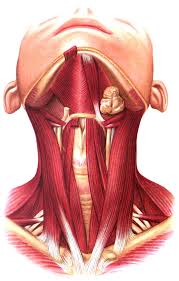
The throat is supported by a group of muscles that connect the jaw, hyoid bone, and cervical spine. Among the most important are the suprahyoid and infrahyoid muscles.
The suprahyoid muscles sit under the jaw and are responsible for lifting the hyoid bone during swallowing. The infrahyoid muscles, located below the hyoid, help stabilize and lower it.
Another crucial muscle is the mylohyoid, which forms the floor of the mouth and plays a central role in the initial phase of swallowing.
These muscles must work in precise coordination to move food safely from the mouth to the esophagus while protecting the airway.
The Relationship Between Head Position and Muscle Length
Muscles function best at an optimal length where they can generate maximum force with minimal effort. Poor head alignment disrupts this balance.
When the head moves forward, many throat muscles become overstretched, while others shorten excessively.
Lengthened muscles lose their ability to contract efficiently, meaning they must work harder to produce the same force.
Over time, this leads to fatigue and reduced endurance. Shortened muscles, on the other hand, may become stiff and less responsive, further impairing coordination during swallowing and breathing.
How Poor Head Alignment Changes Throat Muscle Activation?
Forward head posture alters the way throat muscles are activated during everyday tasks. Instead of firing in a smooth, coordinated pattern, these muscles may activate too early, too late, or with reduced intensity.
This inefficient recruitment increases the energy cost of basic functions such as swallowing saliva or speaking for extended periods.
As posture worsens, compensatory muscle activity increases. Muscles around the neck and jaw attempt to stabilize the head, placing additional strain on throat muscles that are already working at a disadvantage.
Over time, this altered activation pattern can become habitual, even when posture temporarily improves.
Effects on Swallowing Mechanics
Swallowing is a highly coordinated process that relies on precise timing and muscle strength. Poor head alignment interferes with this coordination by altering the position of the hyoid bone and reducing the efficiency of muscle contractions.
When the head is forward, the muscles responsible for lifting the hyoid bone must work harder and travel a longer distance to achieve the same movement. This can make swallowing feel more effortful and less smooth.
While healthy individuals may not notice dramatic symptoms initially, repeated strain over time can contribute to swallowing fatigue and reduced efficiency.
Impact on Suprahyoid Muscle Strength
Suprahyoid muscles are particularly sensitive to head alignment. These muscles are directly affected by changes in jaw and neck position.
In forward head posture, they are often held in a lengthened state, which reduces their force-generating capacity.
Reduced suprahyoid strength can compromise the elevation of the hyoid bone during swallowing. This not only affects swallowing efficiency but may also influence airway protection.
Weakened or fatigued suprahyoid muscles may struggle to maintain optimal function during prolonged eating or speaking.
Influence on Jaw and Hyoid Bone Movement
Poor head alignment alters the resting position of the jaw and hyoid bone.
As the head moves forward, the jaw may retract or shift slightly downward, changing the baseline tension in throat muscles.
These positional changes affect how forces are transmitted during swallowing and speech.
The muscles must adapt to a new mechanical environment, often leading to inefficient movement patterns.
Over time, this can contribute to jaw stiffness, throat tightness, and discomfort during functional activities.
Breathing and Airway Implications
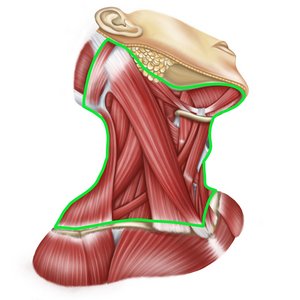
Throat muscles do not work in isolation. They are closely linked to breathing mechanics and airway stability.
Forward head posture can narrow the airway and alter breathing patterns, increasing reliance on accessory muscles of respiration.
As breathing becomes less efficient, throat muscles may experience additional strain to help maintain airway patency.
This added demand can exacerbate muscle fatigue and contribute to sensations of throat tightness or frequent throat clearing.
Long-Term Adaptations in Throat Muscles
When poor head alignment persists for months or years, the body adapts. Throat muscles may undergo structural changes, including altered muscle length and reduced flexibility.
These adaptations make it harder to return to efficient movement patterns even when posture improves temporarily.
Long-term adaptations can also affect neuromuscular control, meaning the brain learns to activate muscles in suboptimal ways. This reinforces dysfunctional patterns and increases the risk of chronic throat discomfort and functional limitations.
Common Symptoms Linked to Throat Muscle Strain
People with poor head alignment may experience a variety of symptoms related to throat muscle stress.
These can include a sensation of tightness under the jaw, fatigue while eating, mild swallowing difficulties, voice fatigue, or a feeling that swallowing requires more effort than it should.
Because these symptoms develop gradually, they are often overlooked or attributed to unrelated issues. Recognizing posture as a contributing factor is key to addressing the root cause.
Postural Assessment and Functional Clues
Assessing head alignment provides valuable insight into throat muscle function.
A visibly forward head position, reduced neck mobility, or difficulty maintaining an upright posture can all signal increased strain on throat muscles.
Functional clues such as shallow breathing, frequent throat clearing, or jaw tension may also point toward posture-related muscle imbalance.
Addressing alignment early can prevent these signs from progressing into more significant problems.
Strategies to Reduce Throat Muscle Stress
Reducing the impact of poor head alignment starts with awareness. Simple adjustments such as raising screen height, sitting with back support, and avoiding prolonged forward head positions can significantly decrease muscle strain.
Regular posture breaks, gentle neck mobility exercises such as chin tucks, and conscious alignment checks throughout the day help reset muscle tension and improve coordination.
Posture Correction and Muscle Retraining
Targeted exercises play an important role in restoring balance to throat and neck muscles. Strengthening deep neck flexors, improving upper back stability, and gently activating suprahyoid muscles can help restore efficient movement patterns.
Consistency is key. Short, frequent sessions focused on quality movement are more effective than occasional intense workouts.
In cases of persistent symptoms, guidance from a trained professional can ensure exercises are performed correctly and safely.
FAQs on Poor Head Alignment & its Impact on Your Throat Muscles:
Forward head posture alters muscle length and activation patterns, making essential functions such as swallowing and breathing less efficient over time.
These changes often develop silently, which is why posture-related throat muscle issues are frequently overlooked.
By understanding how head position influences throat muscle mechanics, individuals can take proactive steps to improve alignment, reduce unnecessary strain, and preserve healthy function.
Addressing head posture is not just about relieving neck discomfort—it is a crucial step in protecting the muscles that support some of the most fundamental activities of daily life.
References: